

Benjamin Perry
@Benjamin_EPerry
Psychology Consultant & Psychometrics.
You might like



I think this is one of the best examples illustrating how LLM Al is a purely statistical model and is not doing any kind of actual "thinking" or "logic" and cannot be trusted for tasks that require even a modicum of reasoning, a short 🧵:

A question indicative of (very approximately) 130 IQ


The Stability of Cognitive Abilities: A Meta-Analytic Review of Longitudinal Studies researchgate.net/publication/37…

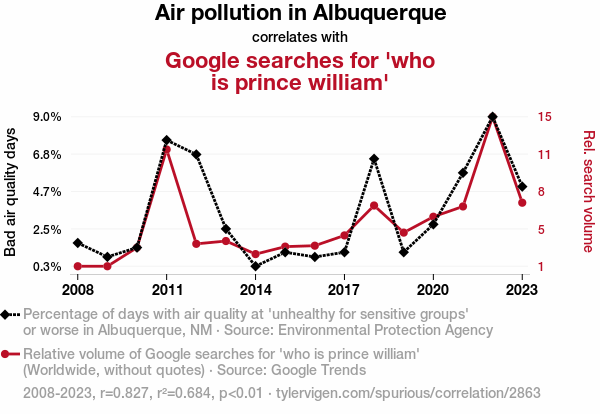
It's new, it's improved, it's got AI-generated explanations for why everything correlates. Today I'm launching the new Spurious Correlations: tylervigen.com/spurious-corre…

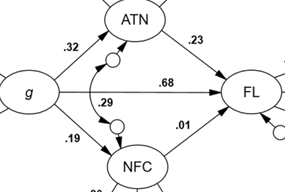
What does it say about your IQ (g) if you prefer numerical (e.g., '20% chance of rain') versus descriptive (e.g., 'small chance of rain') weather forecasts? Attitude Toward Numbers (ATN), Need for Cognition (NFC) and Financial Literacy (FL): new paper tinyurl.com/4wksyrue

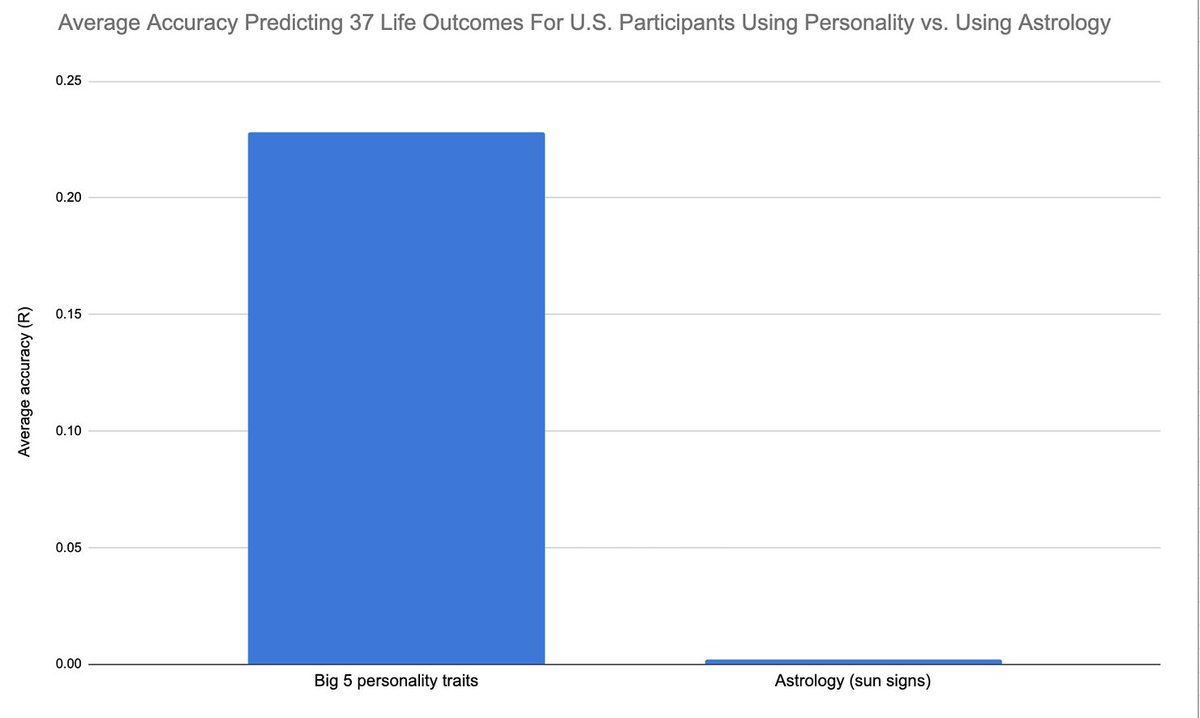
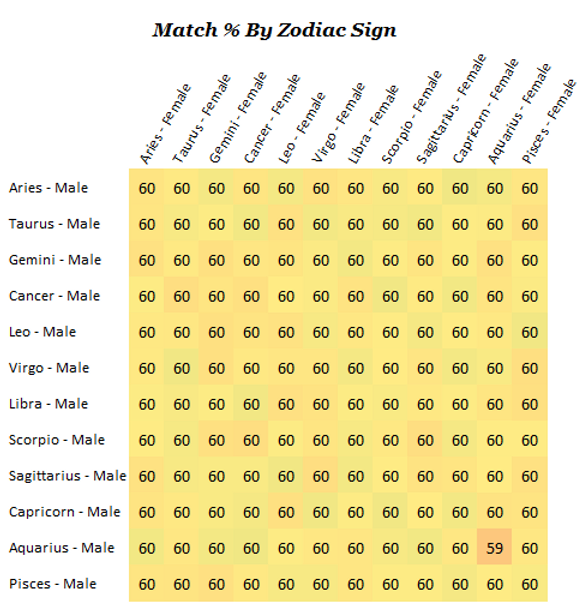
We Empirically Tested Astrology, And Here's What We Found Many people think that astrology is total bullshit. And yet many others swear by astrology, using it to understand themselves and the world and even buy related products. A YouGov poll found that 32% of Americans at
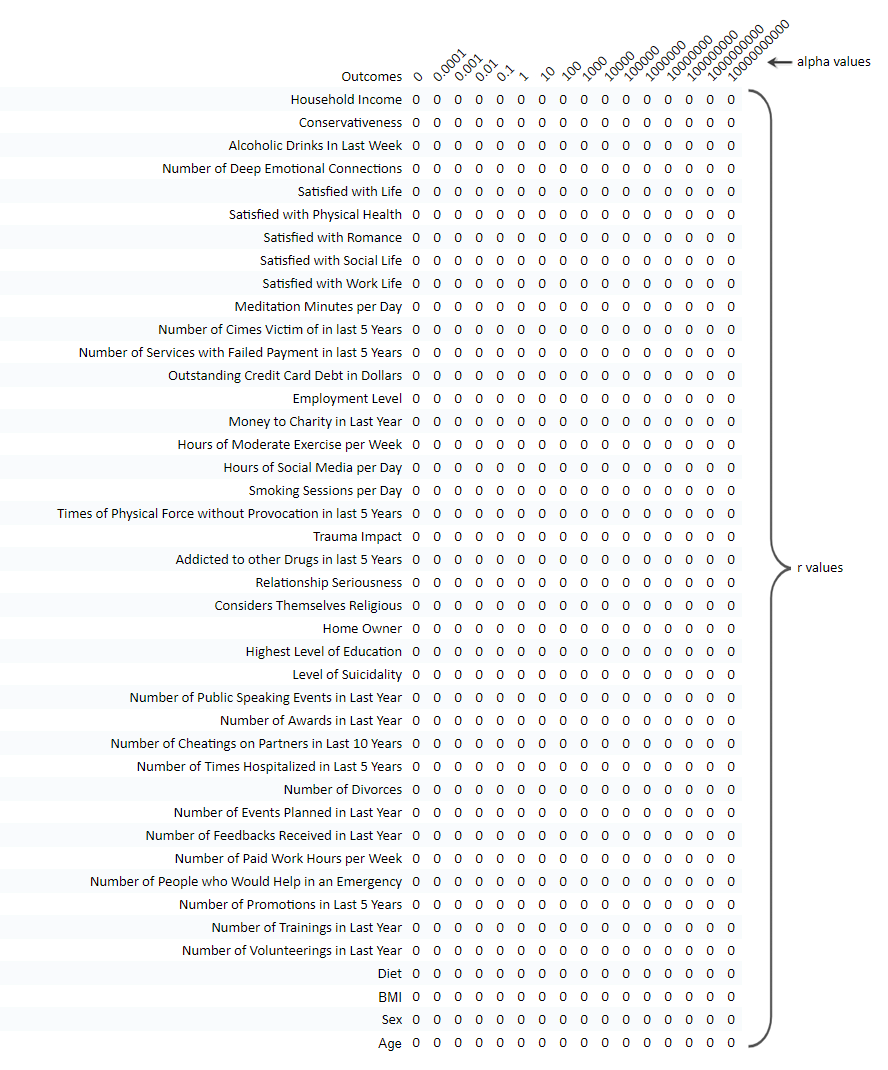

Can machine learning uncover the multivariate neural signature of major depressive disorder in individual patients? This large-scale study including 1,801 patients and controls finds no robust multivariate depression markers. ja.ma/3S0QgFY

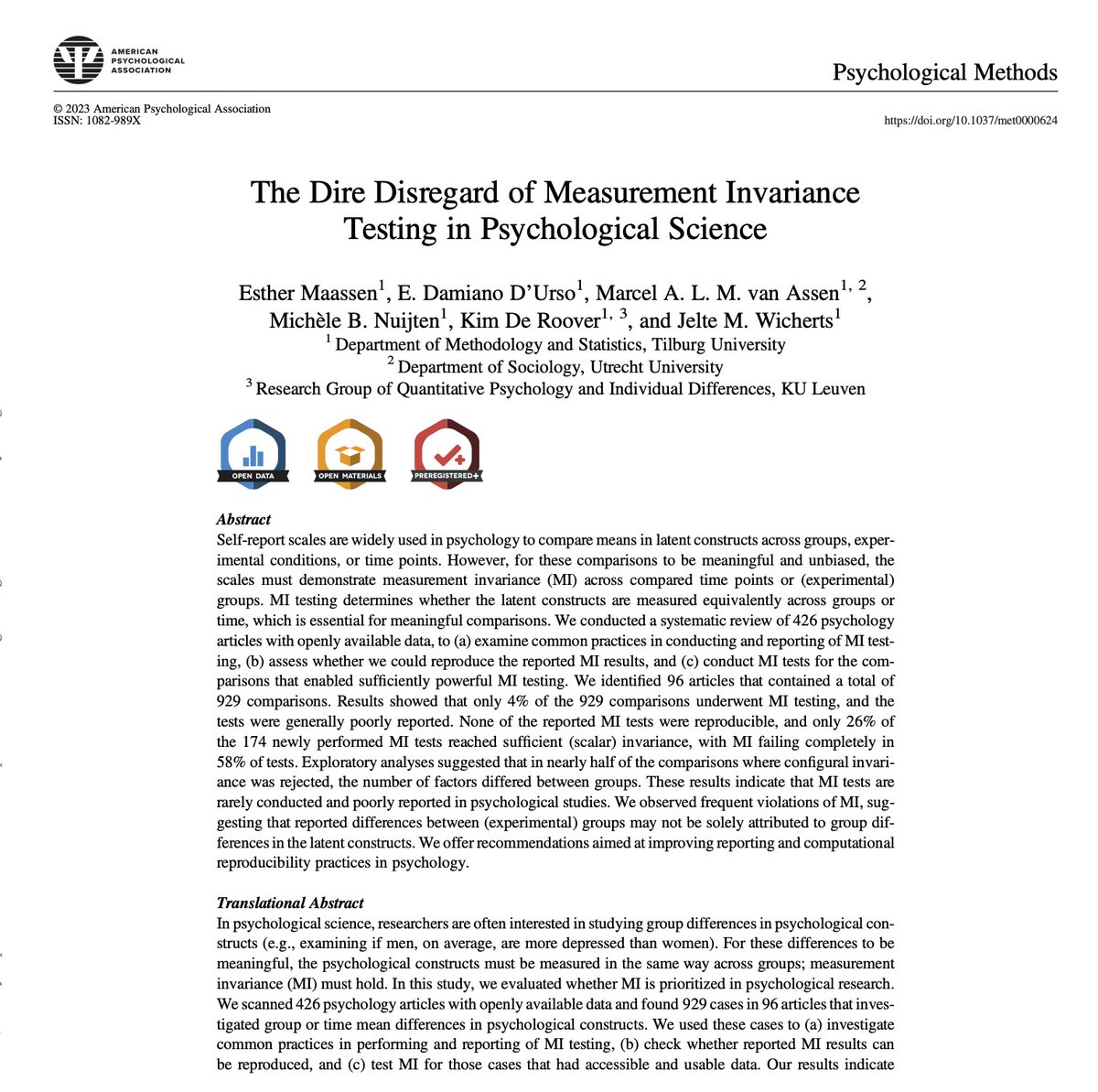
Nearly three-quarters of tested psychological scales failed the test of measurement invariance needed for meaningful group comparisons psycnet.apa.org/record/2024-39…

1/22 Our new paper led by @ashleylwatts (w @ashlgreene & @wesbonifay) is now published; I view it as the first critical evaluation of the statistical and theoretical p-factor & resulting literature. Here a brief overview of the core arguments in the paper.


1/3 Most studies of the relationship between big 5 personality traits and political ideology examine the effects of broad or domain-level traits (e.g. 'Conscientiousness', 'Agreeableness'). However, the results of such studies can be misleading insofar as groups may have


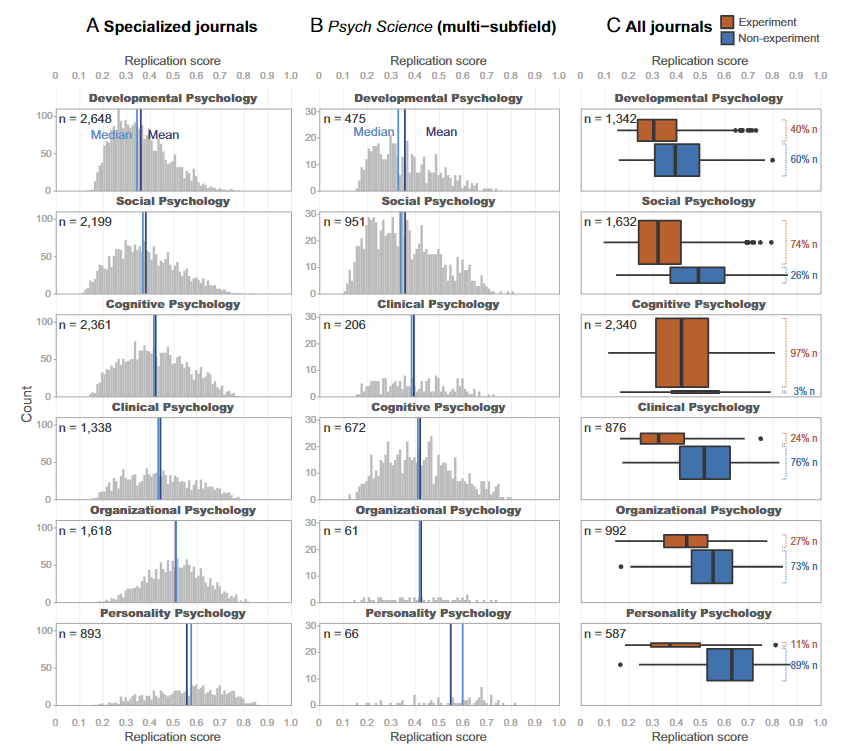
Rates of replicability across subdisciplines in psychology. Personality wins! 🧵pnas.org/doi/abs/10.107…

Building the Structure of Personality from the Bottom-Up using Hierarchical Exploratory Graph Analysis osf.io/zx7tc/

Best paper title 2023 so far: "Welcome to the Jangle: Comparing the Empirical Profiles of the 'Dark' Factor and Antagonism" journals.sagepub.com/doi/10.1177/10…
journals.sagepub.com
Welcome to the Jangle: Comparing the Empirical Profiles of the “Dark” Factor and Antagonism -...
This study examines the congruency between the recently introduced Dark Factor of Personality (D) and Antagonism (A; low Agreeableness) from the Five-Factor Mod...

New Study🔔 Within-person and between-person structures of the Big Five personality trait measures. A recently published study has found that the within-person structure may be comprised of 2 factors. Read more here doi.org/10.1177/089020…

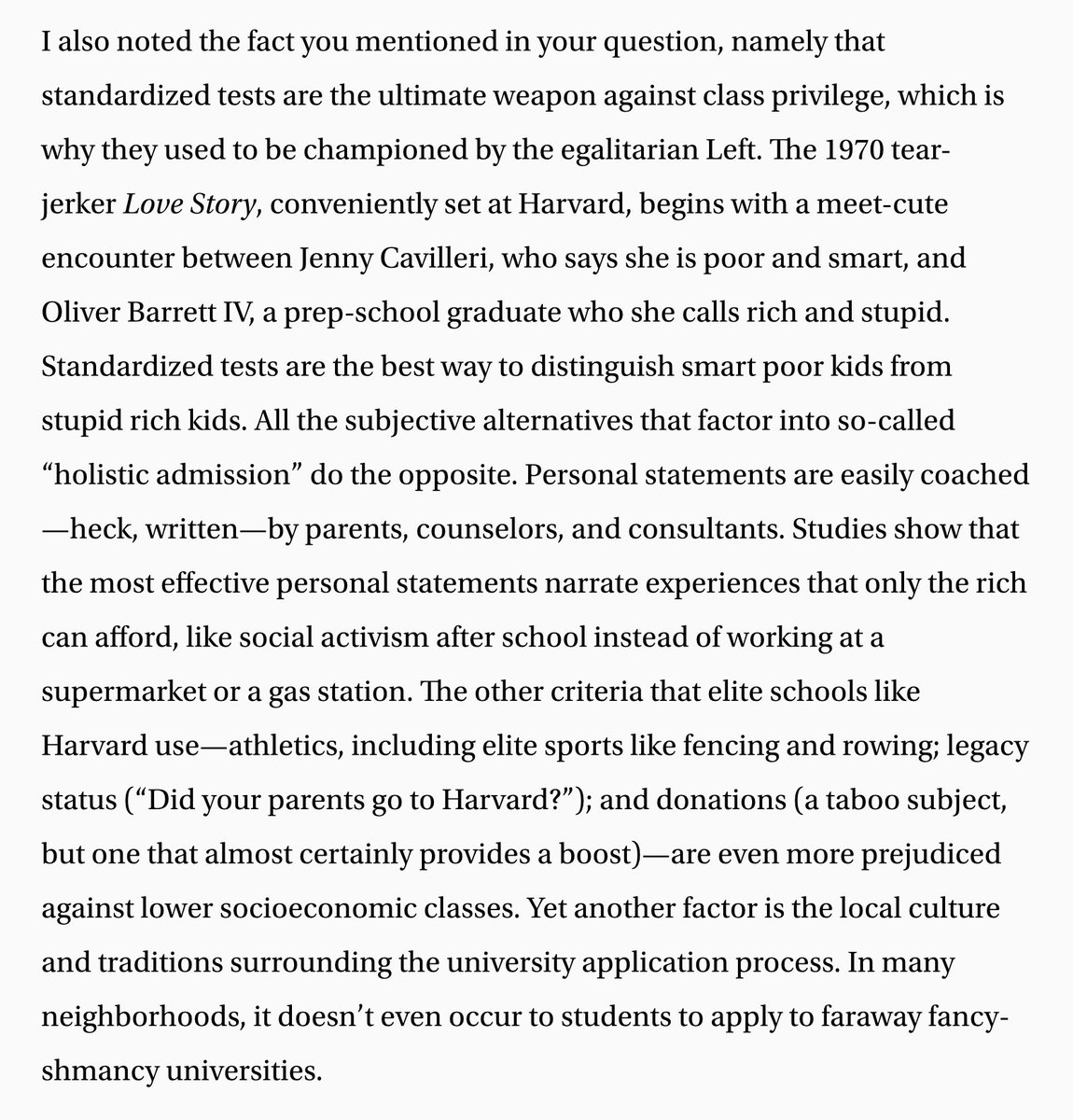
“Standardized tests are the best way to distinguish smart poor kids from stupid rich kids.” quillette.com/2023/12/01/the…

How do your favorite disorders fare in a data-driven reorganization of the DSM-5? Find out in this new preprint where we followed the patterns in 14,762 individuals’ symptoms with the goal of overcoming limitations in both the DSM and @HiTOP_system x.com/PsyArXiv_bot_v…

Reconstructing Psychopathology: A data-driven reorganization of the symptoms in DSM-5 osf.io/7um9a/
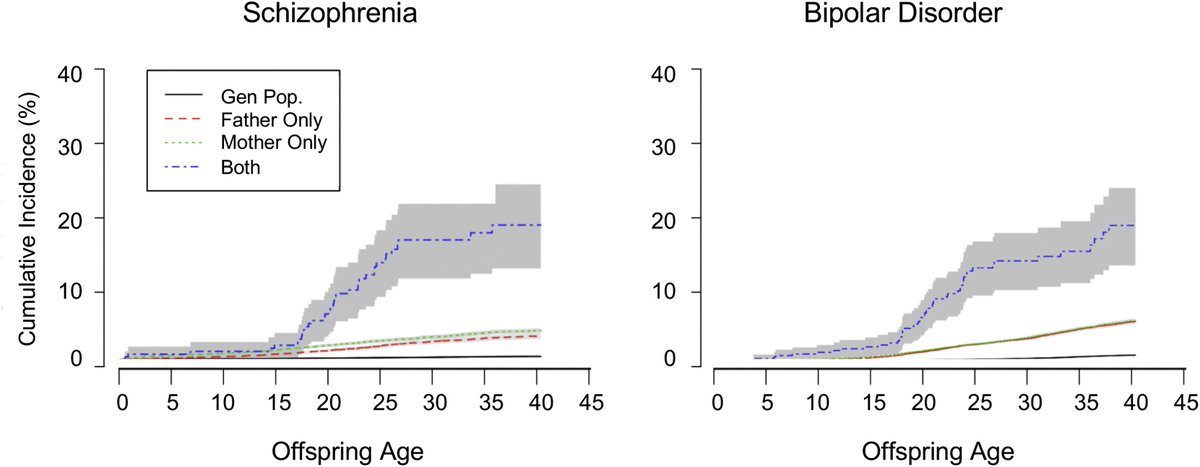
Spousal correlations for mental disorders are largely positive, meaning mentally ill people get with other mentally ill people more than expected by chance. This is important because people with two (vs 1/0) mentally ill parents are much more likely to develop mental disorders.

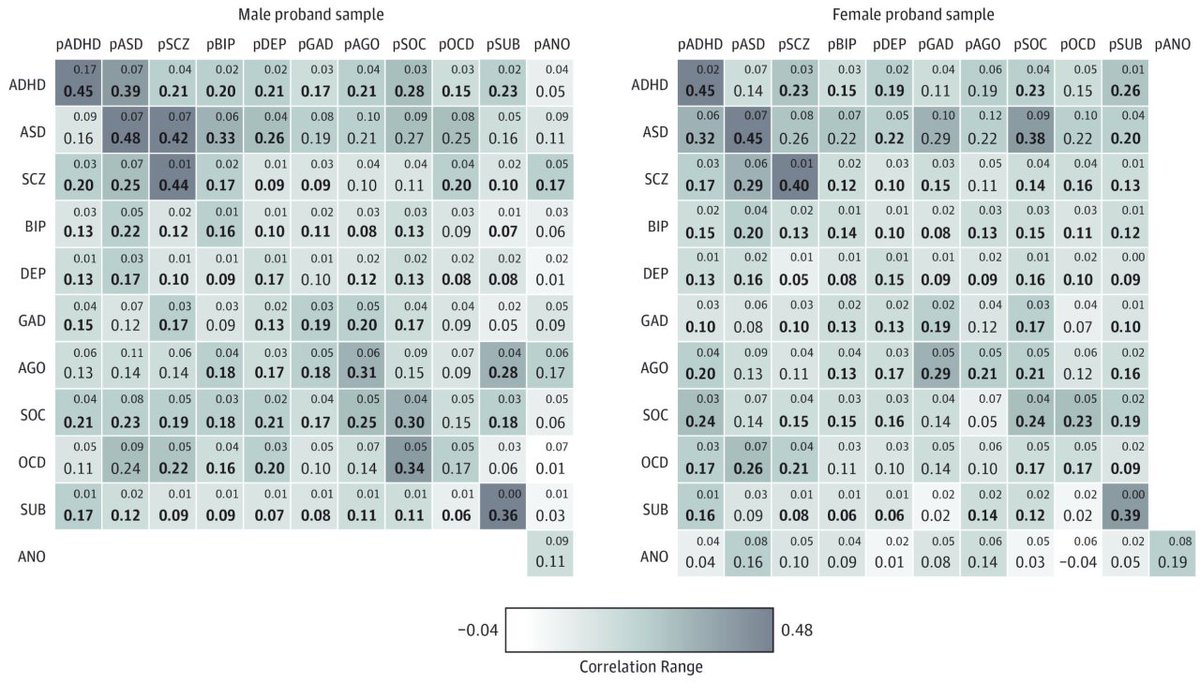
Psychiatric conditions and between-mate correlations. Autism, schizophrenia, and ADHD had the highest rates of assortative mating. Of course the skewed sex ratio makes this an unrealistic prospect for most autistic men though. sciencedirect.com/science/articl…

validated doesn't mean valid validated doesn't mean good validated doesn't mean useful validated doesn't mean approved validated doesn't mean sufficient validated doesn't mean accurate validated doesn't mean best available validated means we did a test
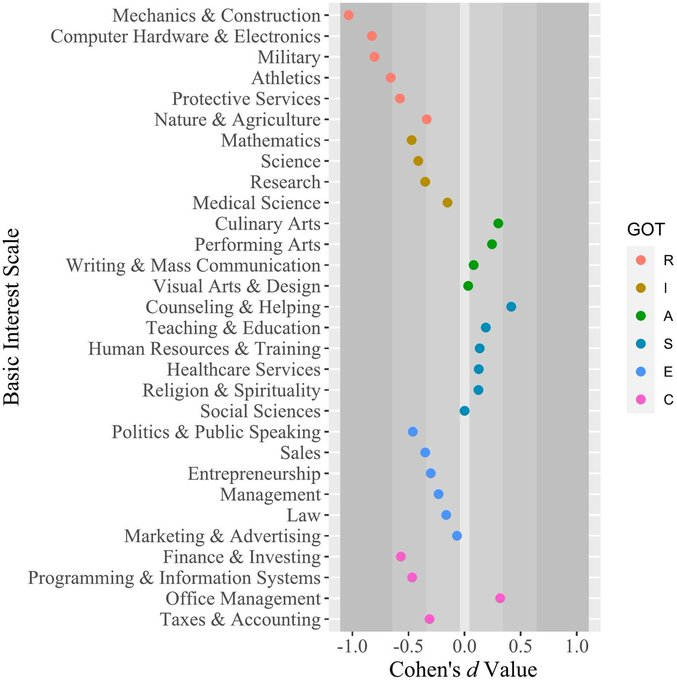
Sex differences in basic vocational interests <0: Men more interested on average >0: Women more interested on average U.S. data; N = 1,283,110




































































United States Trends
- 1. Prince Andrew N/A
- 2. King Charles N/A
- 3. Hammond N/A
- 4. Indiana Bears N/A
- 5. Good Thursday N/A
- 6. Board of Peace N/A
- 7. #thursdayvibes N/A
- 8. Chicago Bears N/A
- 9. Cigar N/A
- 10. MAHA N/A
- 11. Arlington Heights N/A
- 12. Kevin Warren N/A
- 13. #CHCh N/A
- 14. Buc-ees N/A
- 15. Happy Friday Eve N/A
- 16. #thursdaymotivation N/A
- 17. Glyphosate N/A
- 18. Randy Andy N/A
- 19. Virginia Giuffre N/A
- 20. Welcome Tommy N/A



Something went wrong.
Something went wrong.