
#30dayssqlchallenge risultati di ricerca

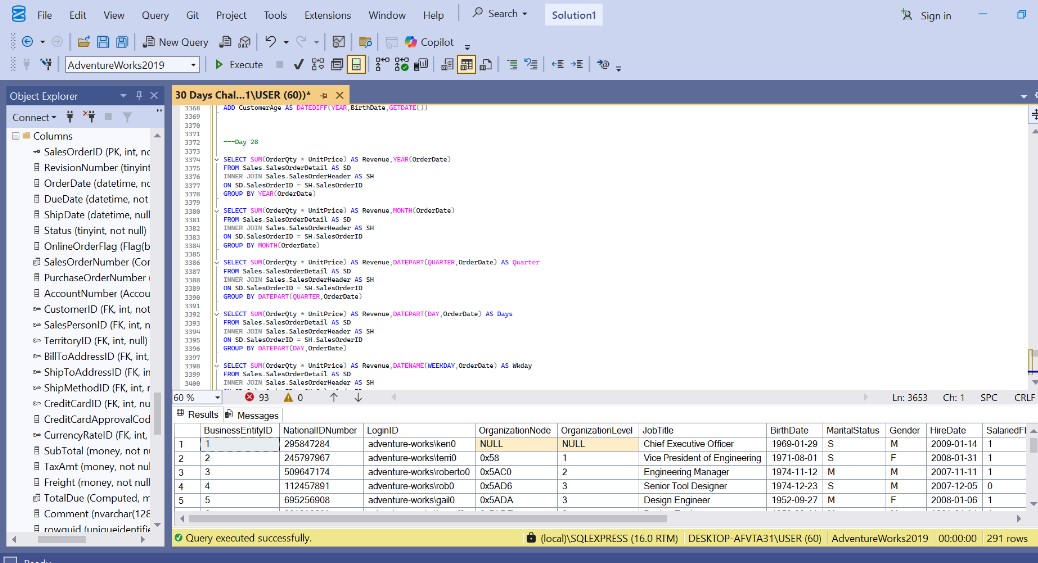
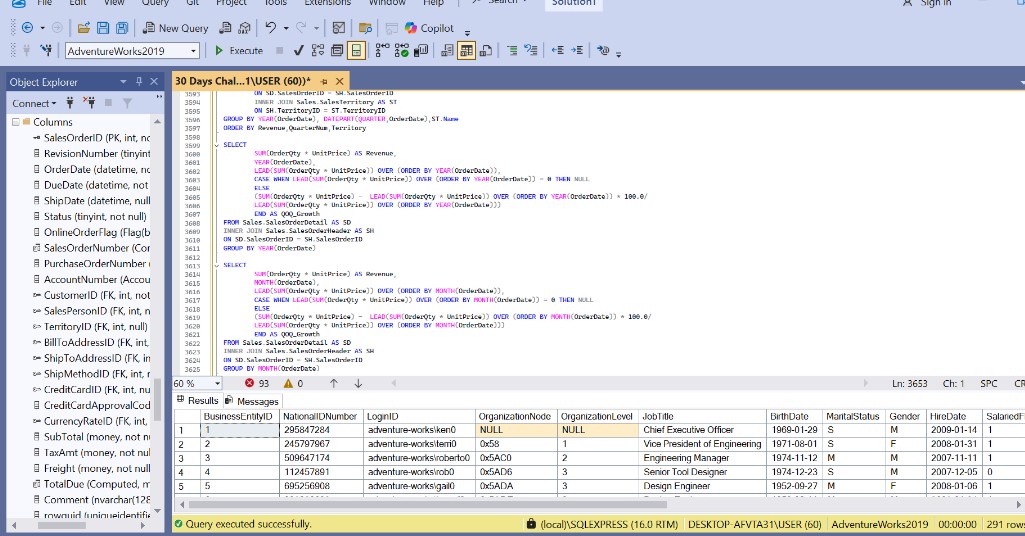
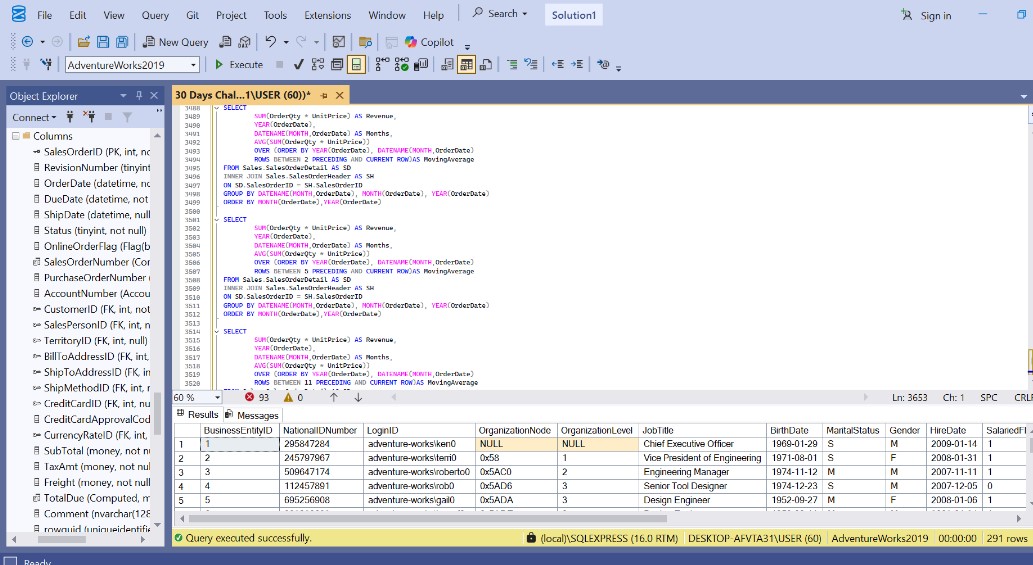
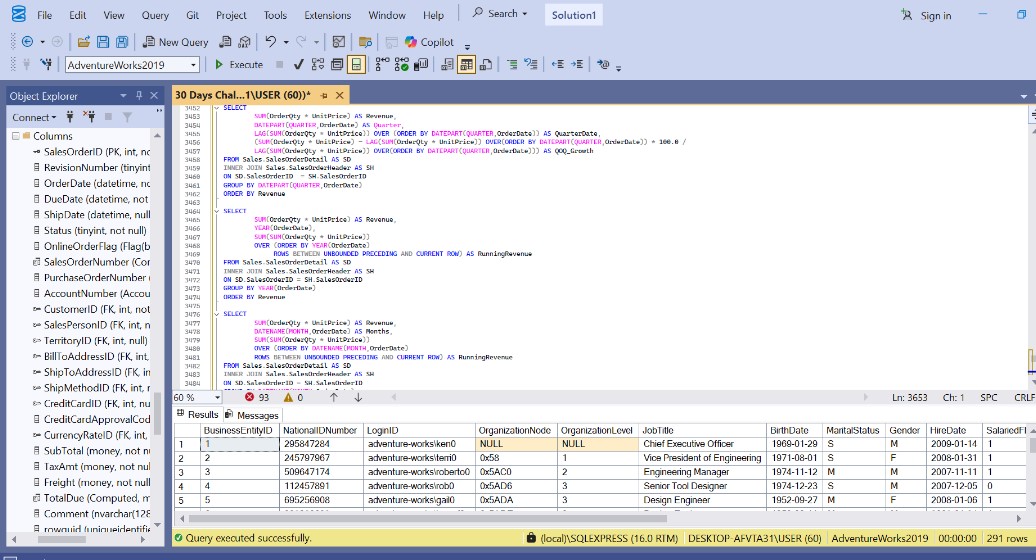
🚀 Day 28 of my #30DaysSQLChallenge – Analytics SQL: Time Series Analysis Time series analysis isn’t just for data science tools like Python or R — you can do a lot directly in SQL! I’ve practiced different SQL techniques that help uncover trends and insights over time.



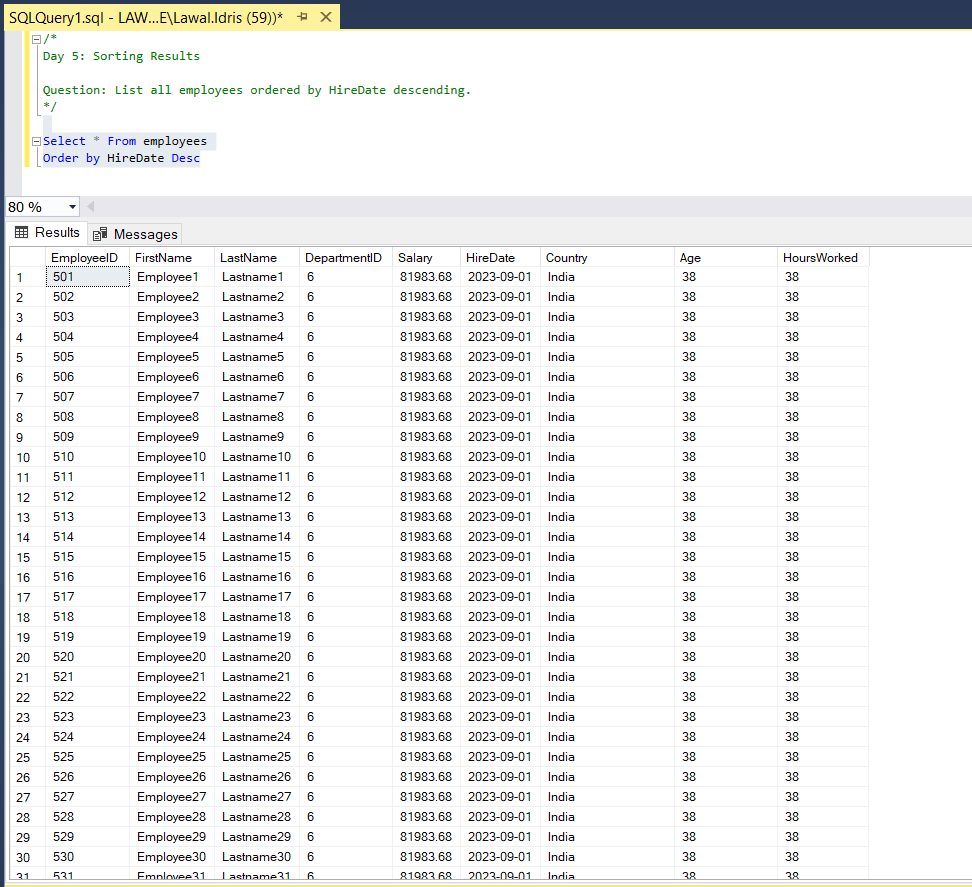
Foundations of SQL Day 5: Sorting Results Question: List all employees ordered by HireDate descending. @analystsleague @RxData_ @iam_daniiel #30daysSQLChallenge
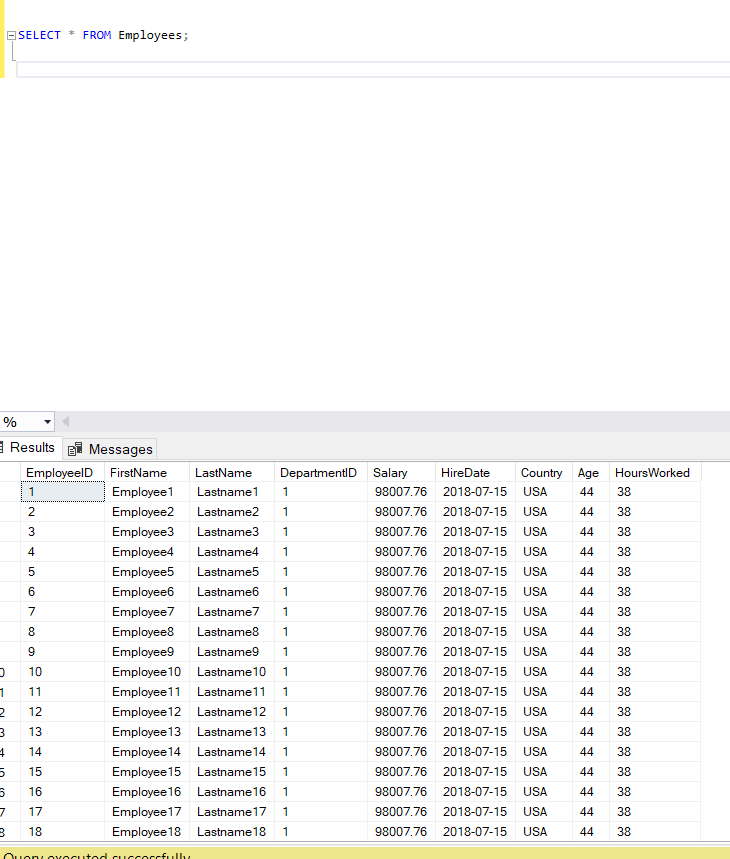
Foundations of SQL Day 1: Basic SELECT Statements Question: Retrieve all columns and rows from the Employees table. @analystsleague @RxData_ @iam_daniiel #30daysSQLChallenge
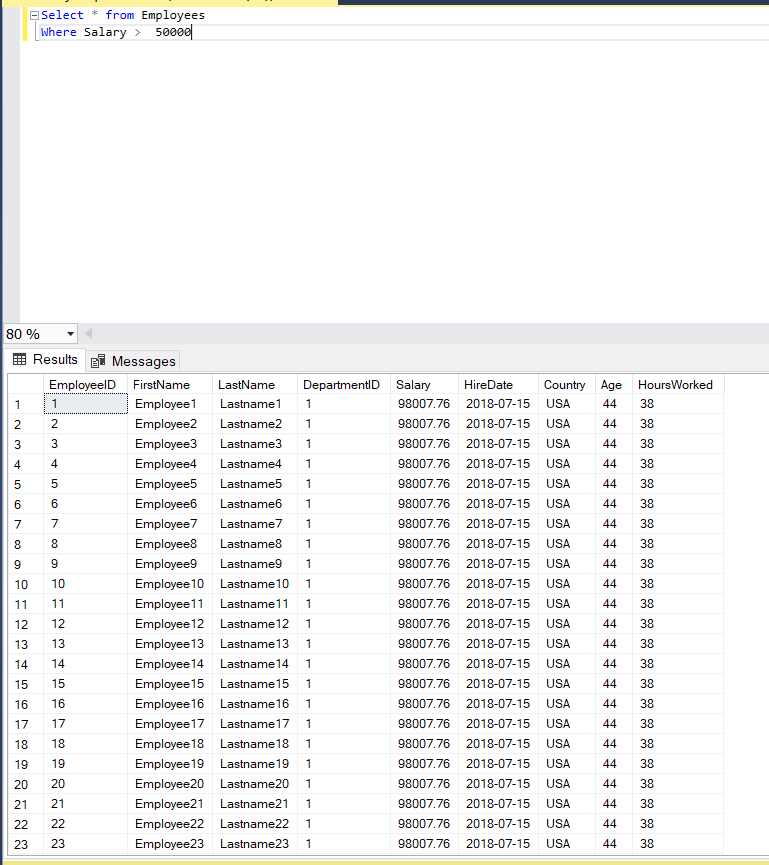
Foundations of SQL Day 4: Using Comparison Operators Question: Retrieve employees with a salary greater than 50,000. @analystsleague @RxData_ @iam_daniiel #30daysSQLChallenge


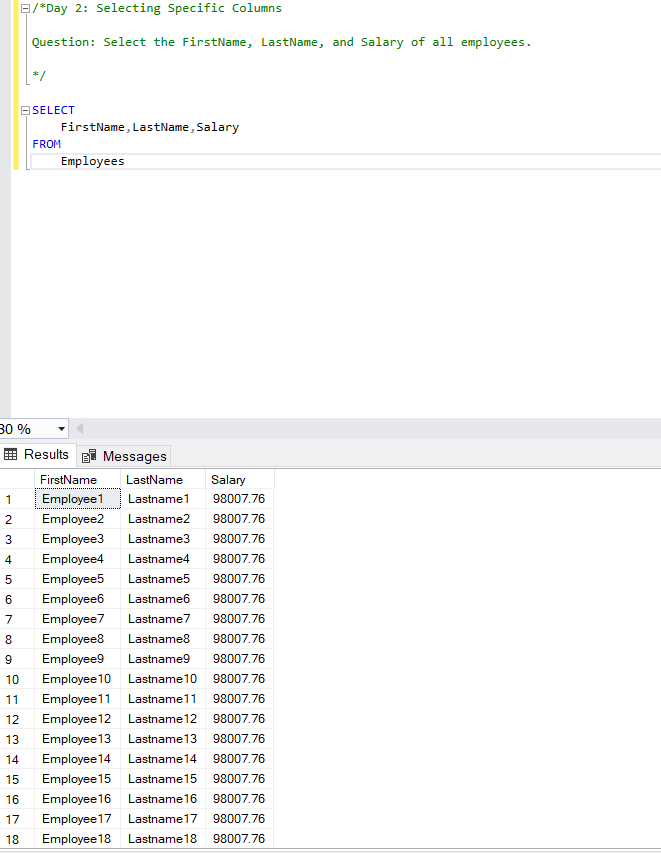
Foundations of SQL Day 2: Selecting Specific Columns Question: Select the FirstName, LastName, and Salary of all employees. @analystsleague @RxData_ @iam_daniiel #30daysSQLChallenge
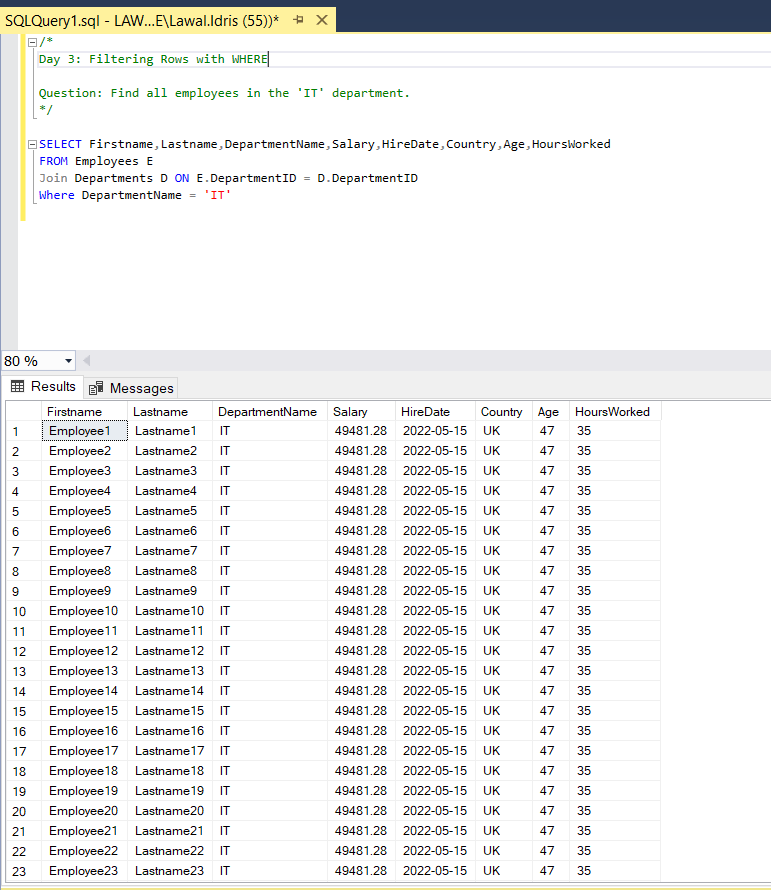
Foundations of SQL Day 3: Filtering Rows with WHERE Question: Find all employees in the 'IT' department. @analystsleague @RxData_ @iam_daniiel #30daysSQLChallenge
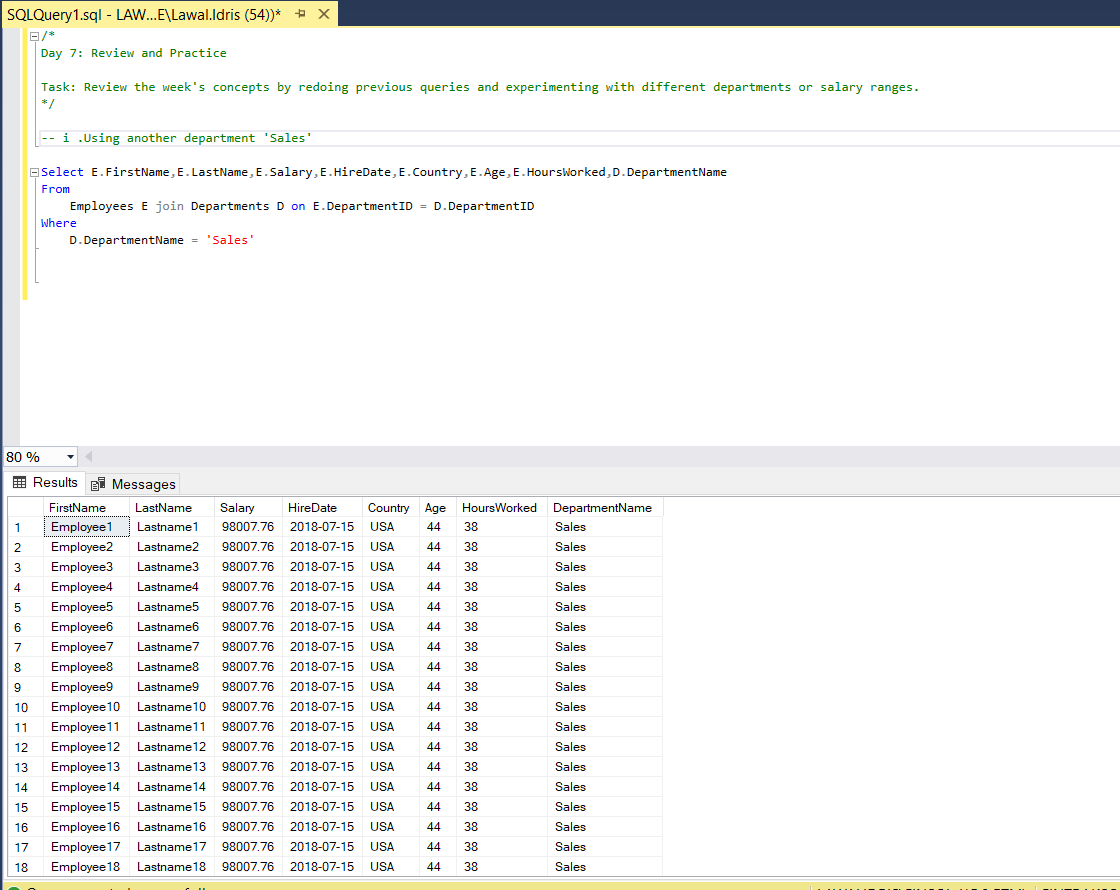
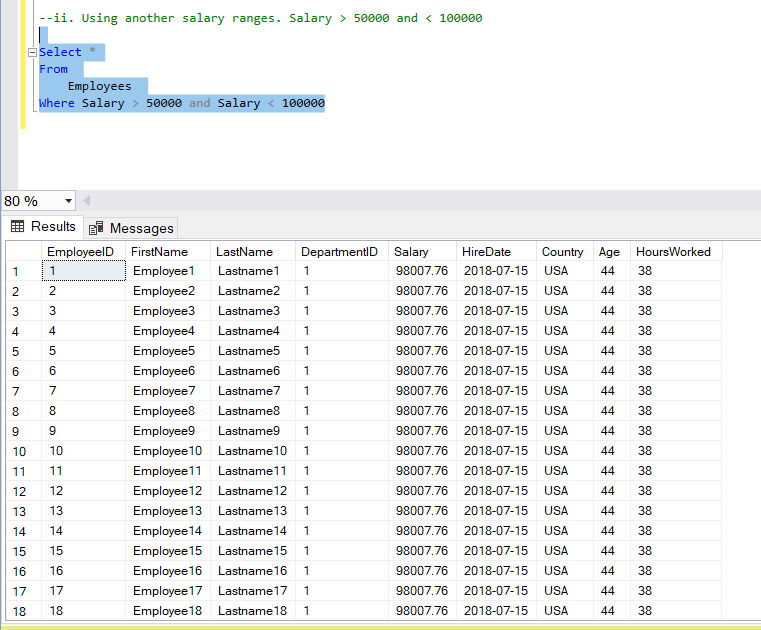
Foundations of SQL Day 7: Review and Practice Task: Review the week's concepts by redoing previous queries and experimenting with different departments or salary ranges. @analystsleague @RxData_ @iam_daniiel #30daysSQLChallenge
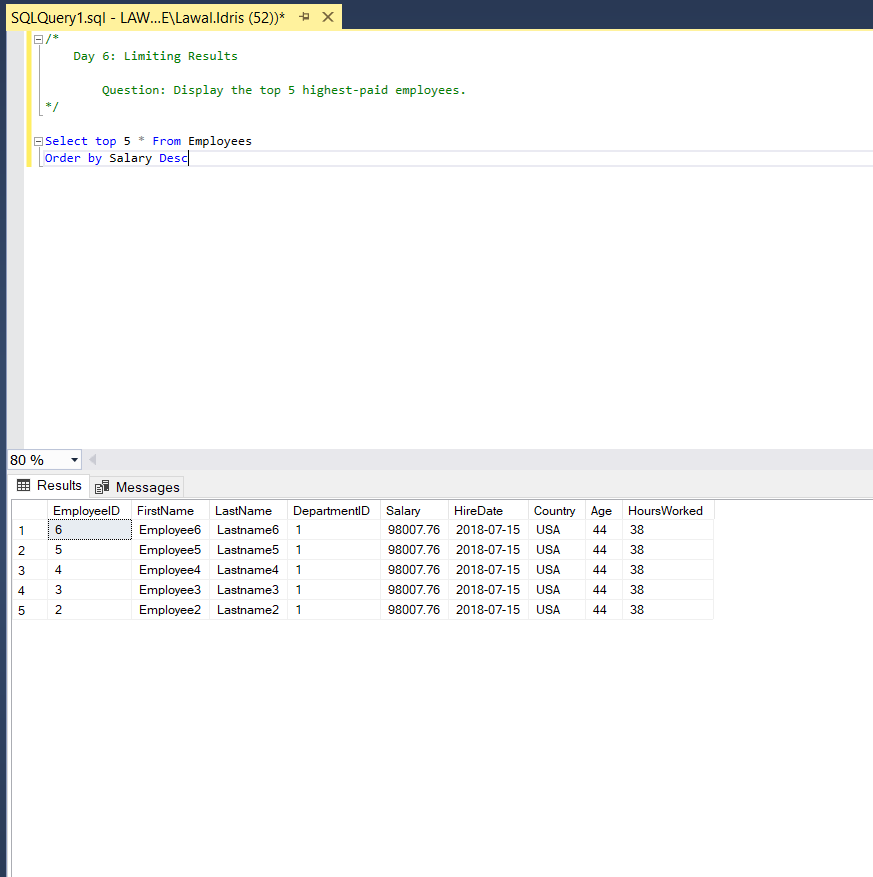
Foundations of SQL Day 6: Limiting Results Question: Display the top 5 highest-paid employees. @analystsleague @RxData_ @iam_daniiel #30daysSQLChallenge


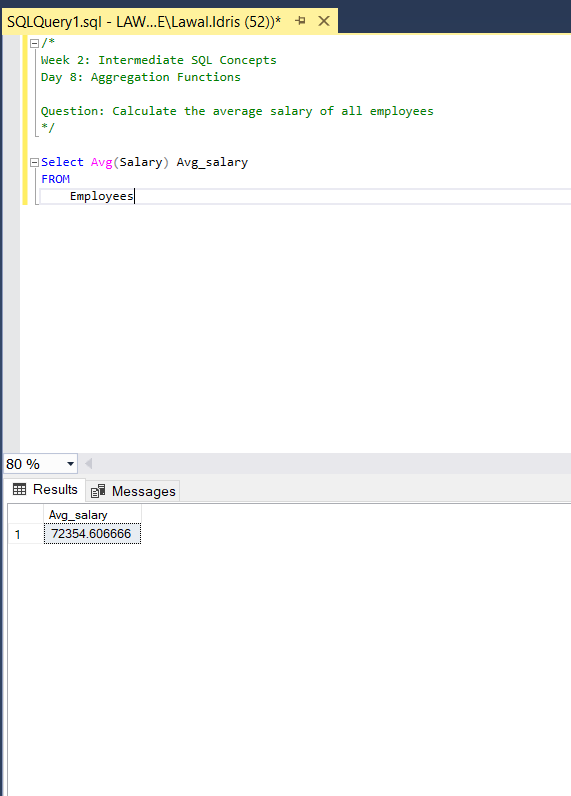
Foundations of SQL Week 2: Intermediate SQL Concepts Day 8: Aggregation Functions Question: Calculate the average salary of all employees @analystsleague @RxData_ @iam_daniiel #30daysSQLChallenge
Day 23 of my #30DaysSQLChallenge – Transactions & Constraints Today’s topic is too broad to cover in just one sitting. So I’ll be dividing it into two parts for better clarity: Part 1 (Today): Understanding what Transactions and Constraints are.
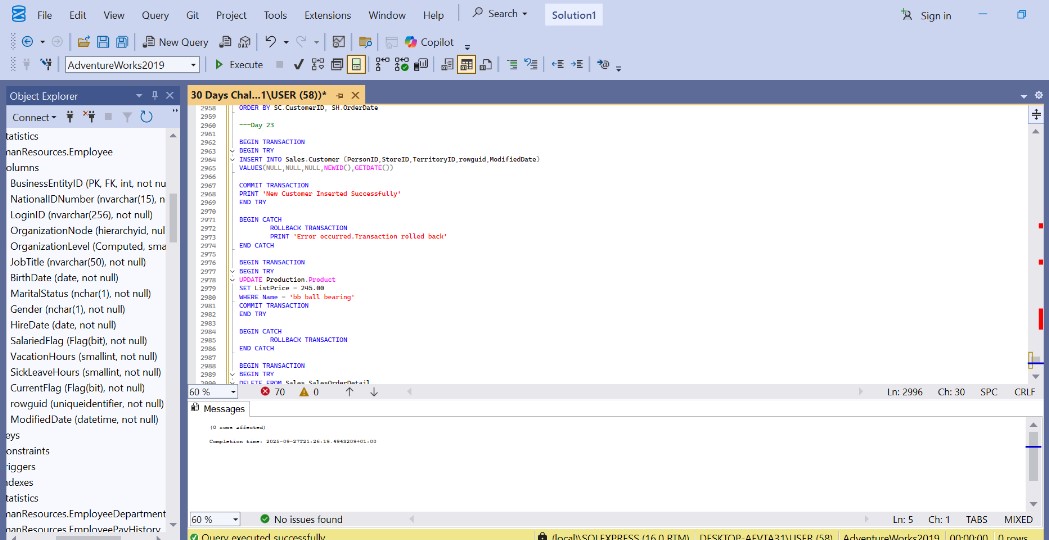
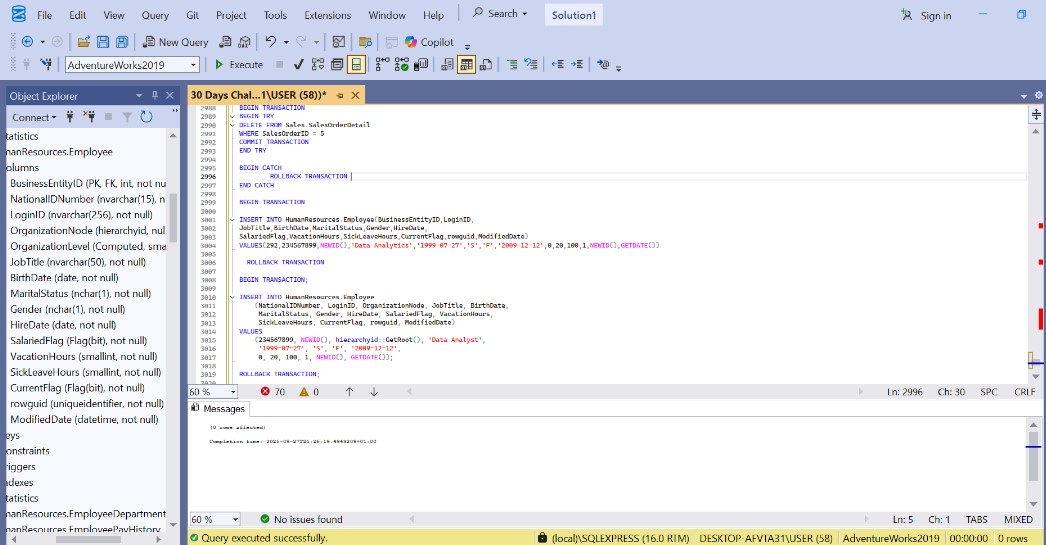



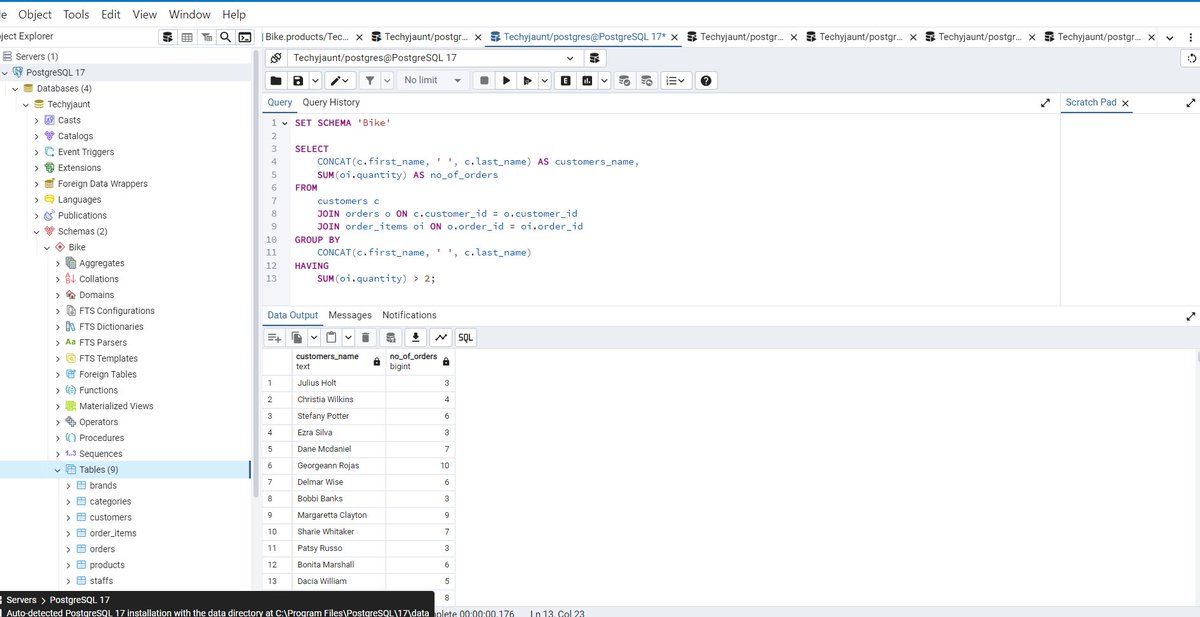
🚀 Day 22 of my #30DaysSQLChallenge Today, I focused on Joins and Views in SQL. While joins are powerful for combining data across multiple tables, I found views especially interesting: 🔹 A view is like a virtual table that stores a query for easy reuse.

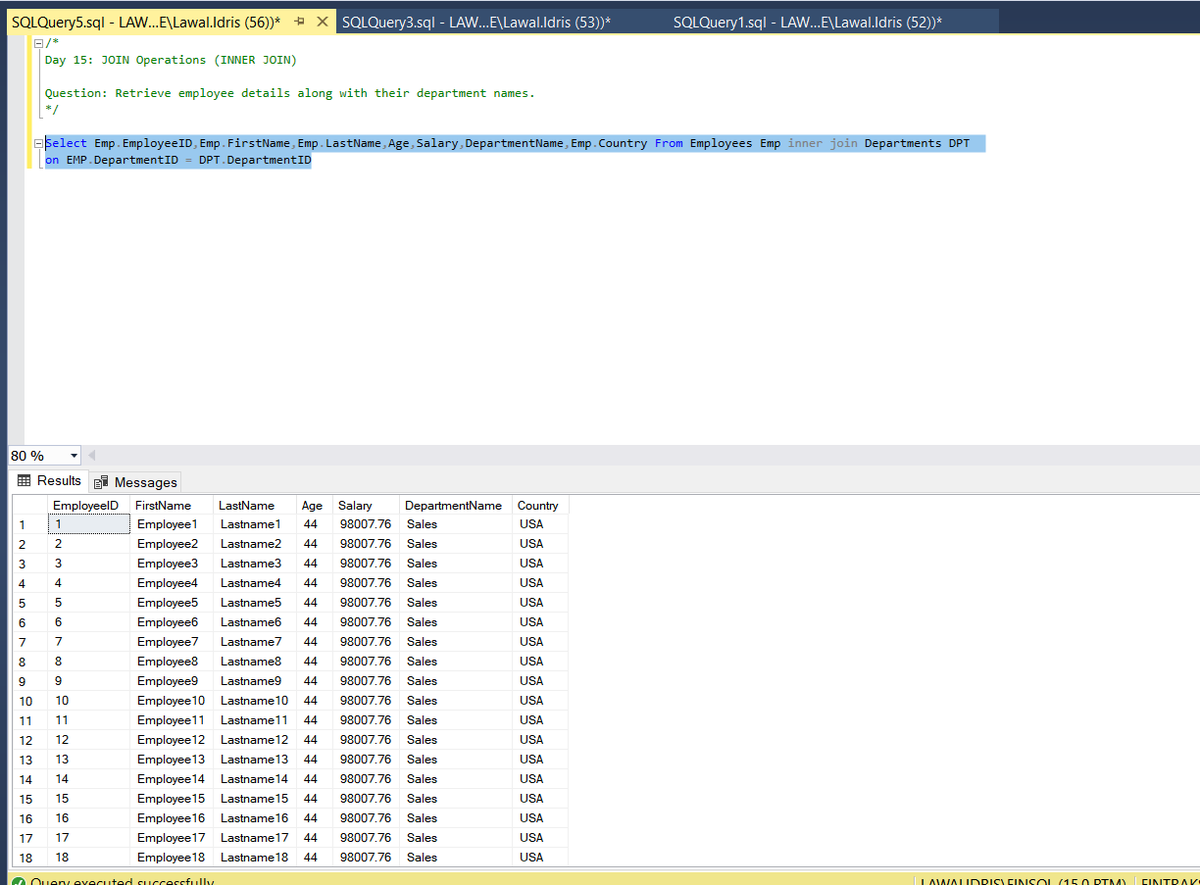
Foundations of SQL Day 15: JOIN Operations (INNER JOIN) Question: Retrieve employee details along with their department names. @analystsleague @RxData_ @iam_daniiel #30daysSQLChallenge


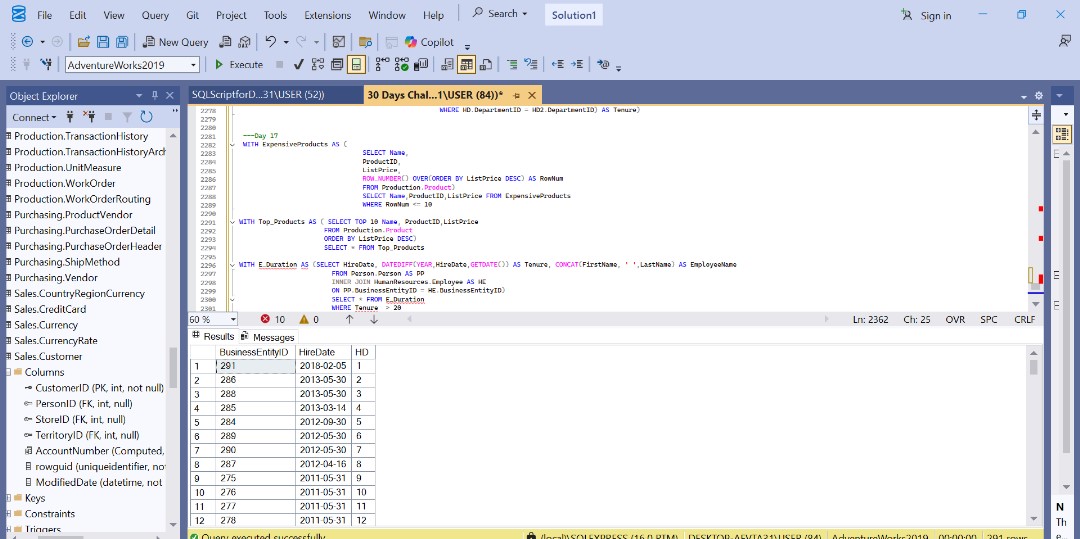
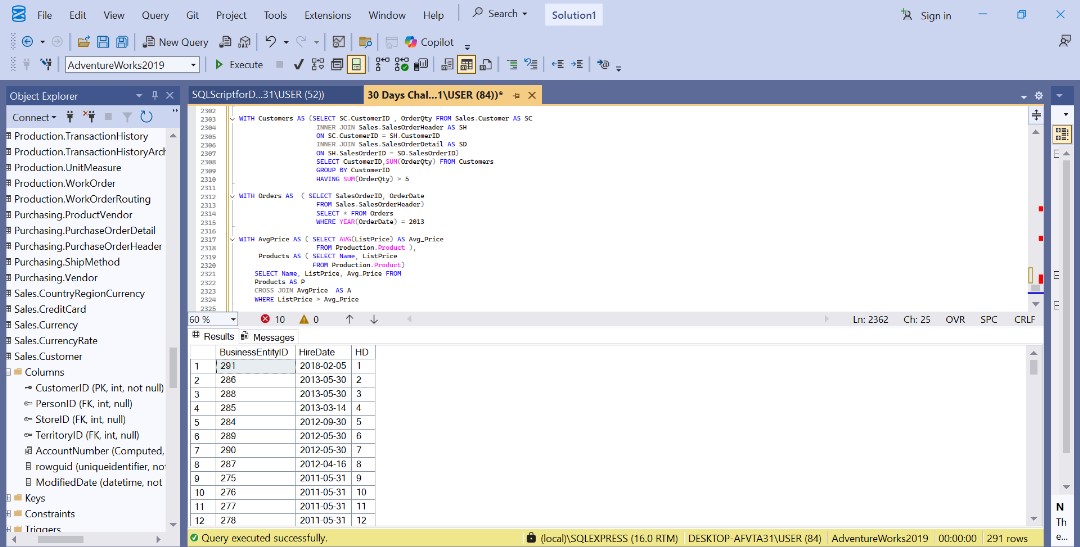
🚀 Day 17 of my #30DaysSQLChallenge 🚀 Today’s focus: Common Table Expressions (CTEs) A CTE is a temporary named result set that exists only within the query that follows it. Working with CTEs today helped me break complex queries into smaller steps instead


Something went wrong.
Something went wrong.
United States Trends
- 1. Good Sunday 59K posts
- 2. Pearl Harbor 8,529 posts
- 3. #sundayvibes 4,123 posts
- 4. #AbuDabiGP 2,696 posts
- 5. SB19 ACONic PERFORMANCE 195K posts
- 6. Muhammad Qasim 10K posts
- 7. #SundayMotivation 1,340 posts
- 8. Indiana 110K posts
- 9. Walt 9,147 posts
- 10. Benin 52.9K posts
- 11. #UFC323 132K posts
- 12. Merab 49.3K posts
- 13. Ohio State 66.5K posts
- 14. Duke 62.8K posts
- 15. Vtuber 91.5K posts
- 16. Mendoza 44.4K posts
- 17. May the God 22.2K posts
- 18. Petr Yan 30K posts
- 19. Roach 29.8K posts
- 20. Pitbull 19.2K posts