

Addiction Theory Network
@AddictTheoryNet
We're interested in developing theories of addiction beyond disease models. Website: http://addictiontheorynetwork.org Join via http://groups.google.com/g/AddictionThe…
You might like


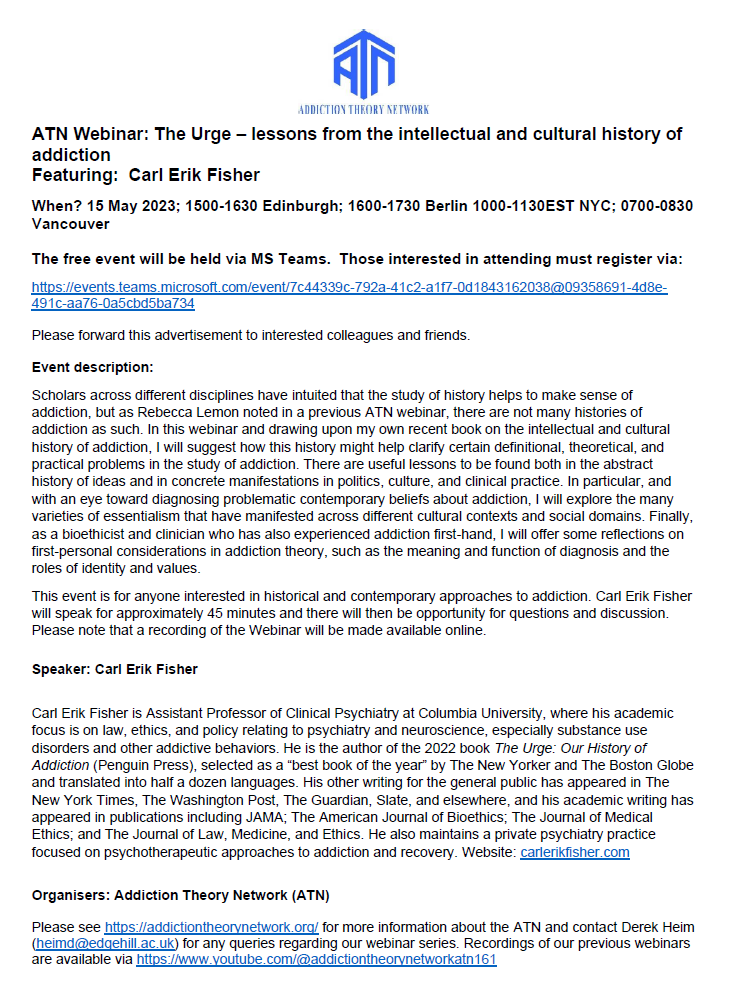
Registration for our next free webinar (15 May 2023) featuring @DrCarlErik (“The Urge – lessons from the intellectual and cultural history of addiction”) is now open: events.teams.microsoft.com/event/7c44339c…

2-for-1 on genetic/neuro essentialist accounts of addiction! Biomedical reductionism is alive and well, and still promising future treatments breakthroughs around the corner.. theconversation.com/alcohol-and-dr…
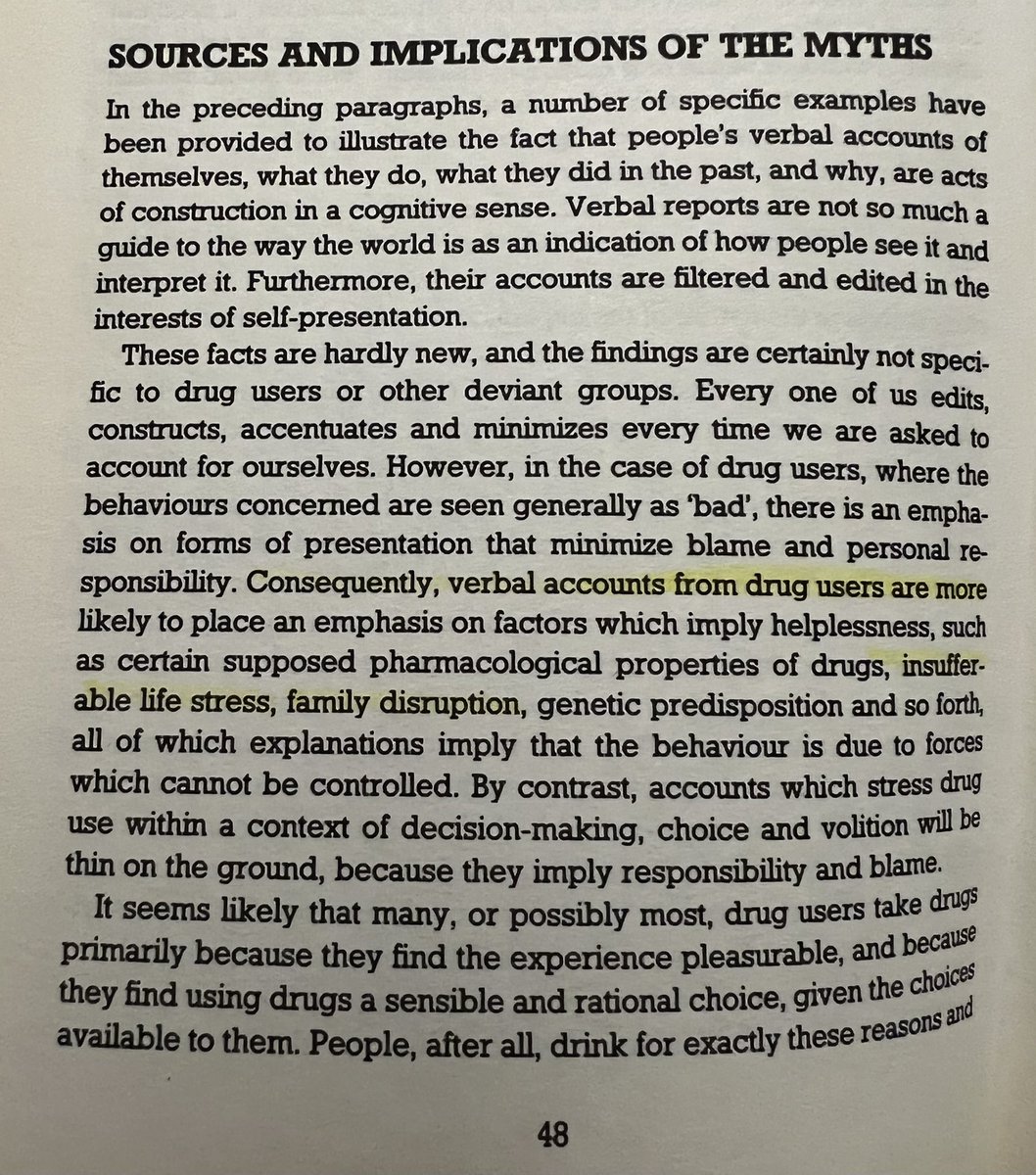
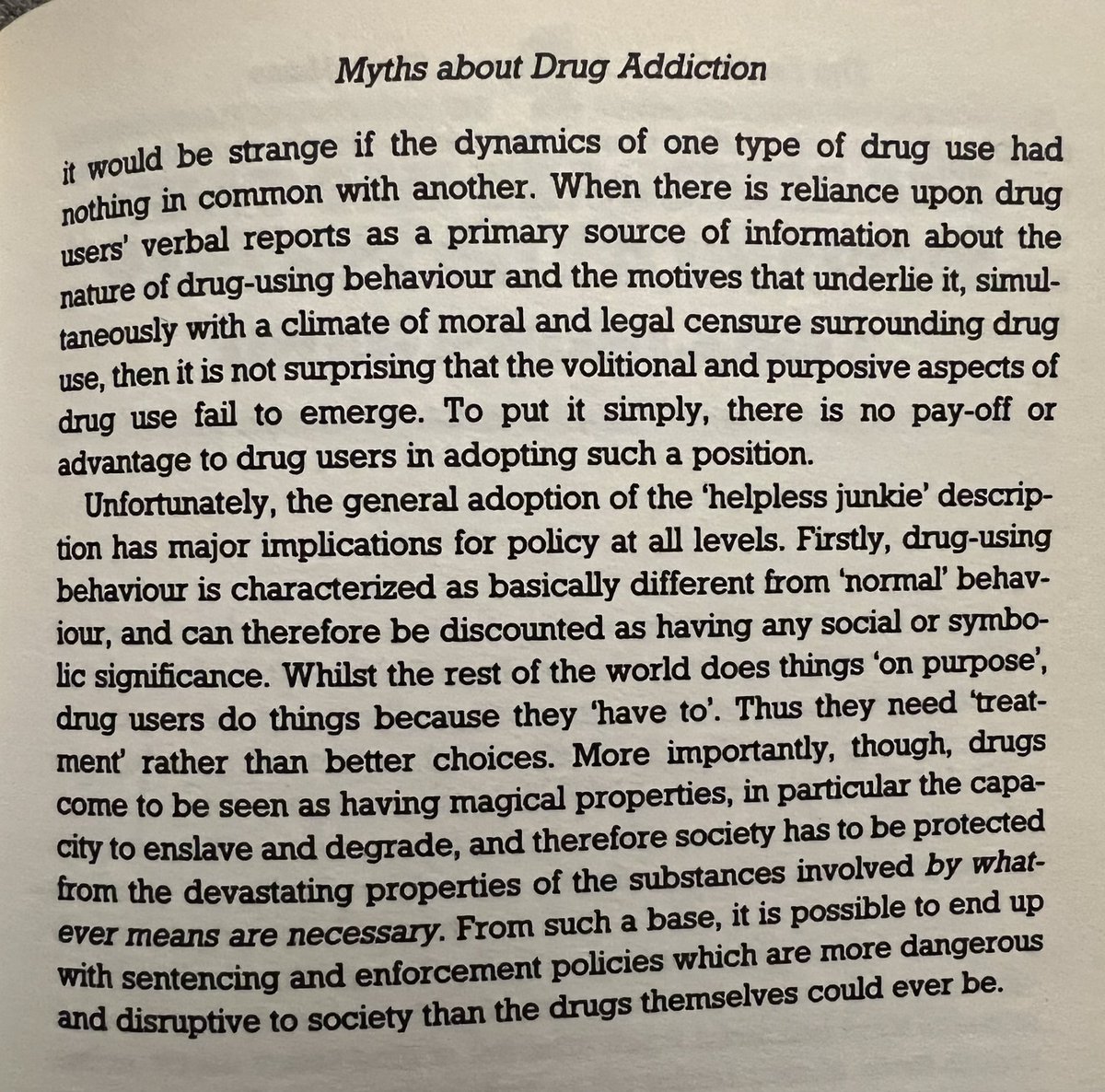
An excerpt from another brilliant mind, John Booth Davies. This is from his book The Myth of Addiction. I know it’s available for free online somewhere.

Starting in just over 30 minutes!
Registration for our next free webinar (15 May 2023) featuring @DrCarlErik (“The Urge – lessons from the intellectual and cultural history of addiction”) is now open: events.teams.microsoft.com/event/7c44339c…
Still time to register!
Registration for our next free webinar (15 May 2023) featuring @DrCarlErik (“The Urge – lessons from the intellectual and cultural history of addiction”) is now open: events.teams.microsoft.com/event/7c44339c…
"The persistence of alcohol stigma highlights the limitations of an illness model ... for stigma reduction; in fact, many groups inadvertently reinforce stigma by emphasising the artificial line between ‘normal’ drinkers and the pathologised ‘alcoholic other’.."
🗣️New publication🗣️ 'Why stigma matters in addressing alcohol harm' With @geschom for @APSAD_DAR It's quite concise & #openaccess but summary 🧵👇 onlinelibrary.wiley.com/doi/full/10.11… #stigma #AUD #recovery
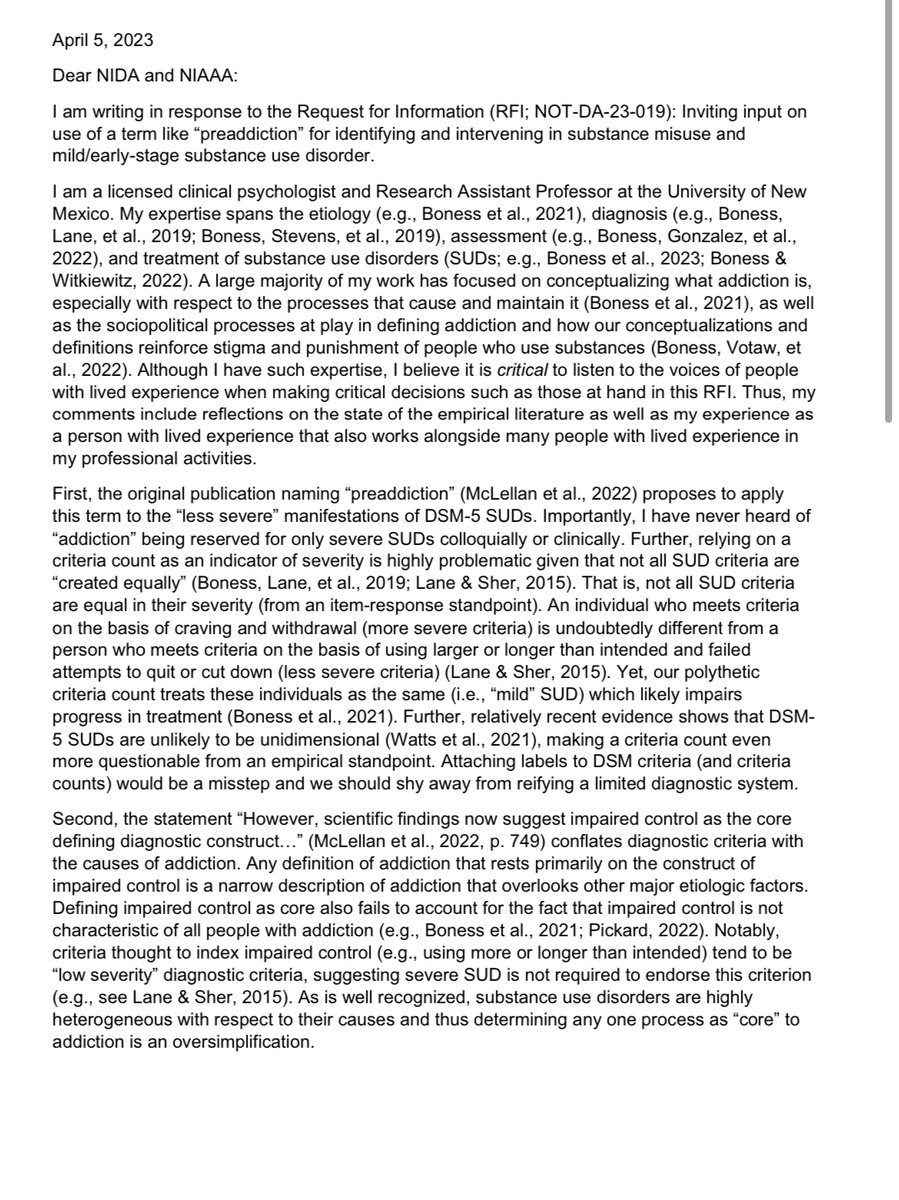
Here's my submitted comment if it is helpful to anyone: osf.io/chg32 There's so much more that could have been said but only so much time in a day 🙃 Please consider submitting a formal comment if you haven't already! Comments are due April 27th.

Author @MPLerario implies that if changes appear on brain imaging that means the condition is brain disease rather than psych disorder. No. All mental activity correlates with brain activity, so most psych disorders have abnormal imaging. That doesn't make them brain disorders...
Consider commenting!

#NIDA and @NIAAAnews are inviting input on use of a term like "preaddiction" from people with lived experiences of substance use, medical and scientific research communities, and other interested parties by April 27: loom.ly/j1UTnxs
Recordings of our webinars are available via youtube.com/@addictiontheo…. Those by Rebecca Lemon and Hanna Pickard have just been uploaded should you be interested.
Our webinar featuring Rebecca Lemon is happening today!
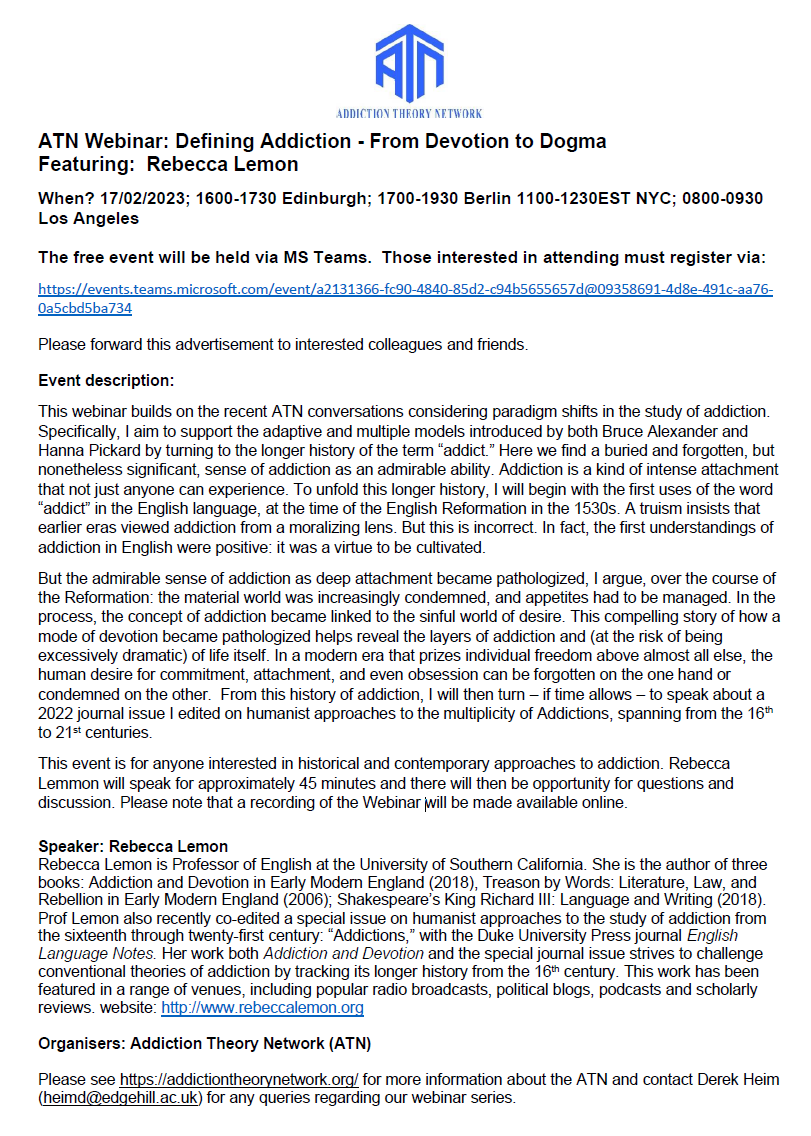
Registration for our next free webinar (17/02/23) featuring Rebecca Lemon (“Defining Addiction - From Devotion to Dogma”) is now open: events.teams.microsoft.com/event/a2131366…
I regularly read how alcohol problems are "around 50%" heritable with no qualifier about what it means. It does *not* mean genes account for half the development of AUD. Recent 'polygenic risk scores (PGRS)' suggest *far* lower levels of variance accounted for by genes.. 1/4

Quick common misinterpretation - heritability is not an index of the genetic basis of a trait or a measure of the relative contribution of nature : nurture. It's the proportion of phenotypic variance for some trait that is explained by genetic variance. 9/
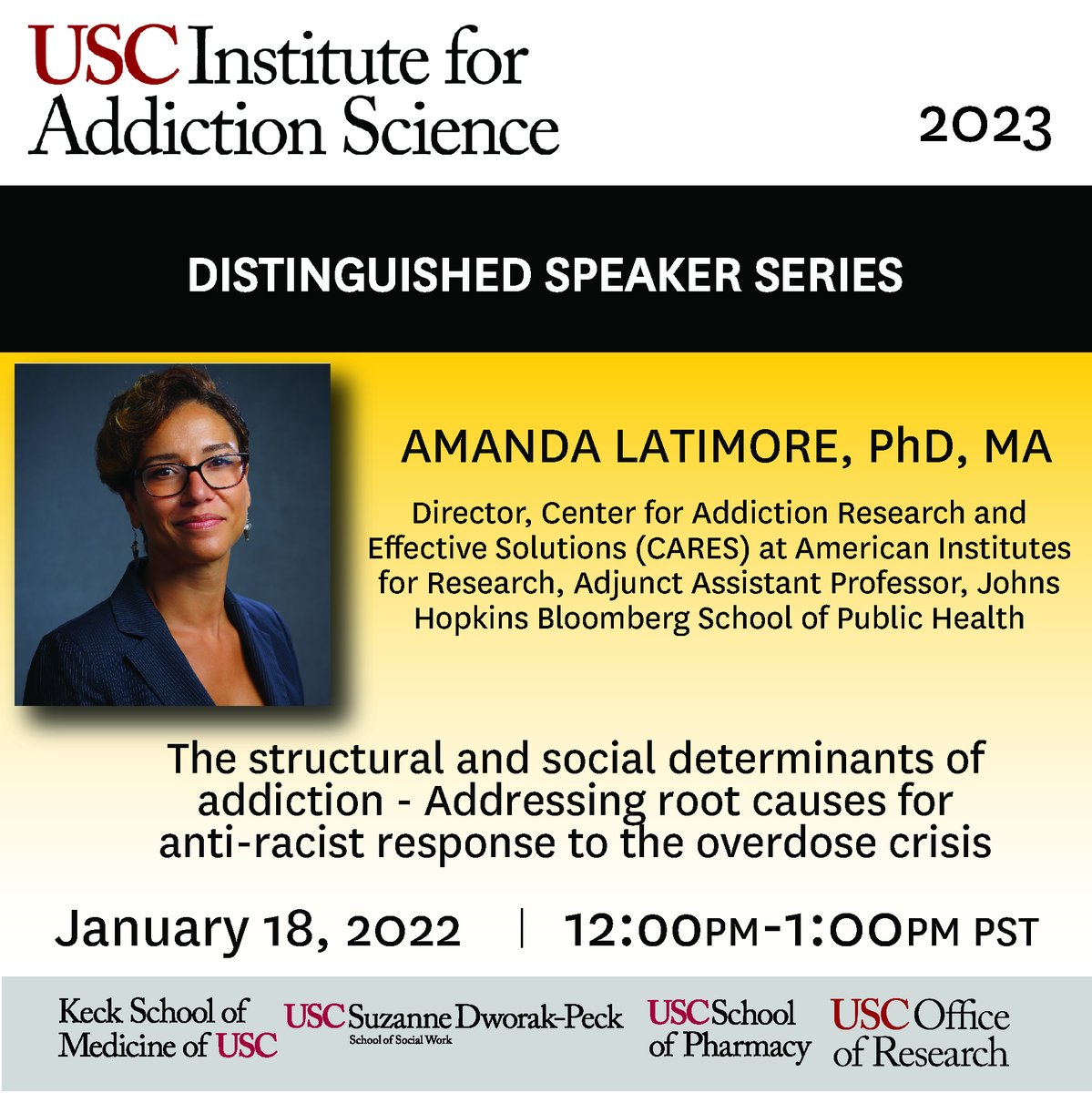
Happy New Year! IAS is excited to kick off the 2023 Distinguished Speaker Series with @LatimoreAmanda from the American Institutes for Research and Johns Hopkins Bloomberg School of Public Health. January 18th @ 12:00-1:00pm PST Register here: us02web.zoom.us/webinar/regist…
'Different framings were often seen as incompatible, especially when one belonged to the ‘biological’ cluster and the other did not... psychological framings led participants to assume the behaviour was malleable, and biological framings led them to assume it was not'

Biology, society, or choice: How do non-experts interpret scientific explanations of behaviour? psyarxiv.com/2z5h9
Starting soon!
Registration for our next free webinar featuring Hanna Pickard (“The puzzle of addiction”) is now open: teams.microsoft.com/registration/k…
Still time to register for Monday's webinar!
Registration for our next free webinar featuring Hanna Pickard (“The puzzle of addiction”) is now open: teams.microsoft.com/registration/k…
Could be of interest to @Drugs_NW
Registration for our next free webinar featuring Hanna Pickard (“The puzzle of addiction”) is now open: teams.microsoft.com/registration/k…






























































United States Trends
- 1. #SmackDown 32,8 B posts
- 2. Renee 1,34 Mn posts
- 3. #BLACKWHALE 101 B posts
- 4. Drew McIntyre 6.120 posts
- 5. Happy Trump 10,8 B posts
- 6. Drive Baby Drive 28,4 B posts
- 7. Ja Morant 11,7 B posts
- 8. Nico Harrison N/A
- 9. #DigitalBlackoutIran 395 B posts
- 10. Max Kepler 1.432 posts
- 11. Anthony Davis 4.990 posts
- 12. PEDs 1.081 posts
- 13. Becca 18 B posts
- 14. Alpha News 19,6 B posts
- 15. Morocco 54,4 B posts
- 16. Wrexham 6.408 posts
- 17. T-Rex 2.432 posts
- 18. Cameroon 27,6 B posts
- 19. DRIVE DRIVE 380 B posts
- 20. Jacob Fatu 1.396 posts




Something went wrong.
Something went wrong.