

Brett David Roads
@BDRoads
he/him, Terran, Postdoctoral Research Associate
You might like


New paper w @ProfData, "Learning as the Unsupervised Alignment of Conceptual Systems" is now publicly available as a view-only version via the following SharedIt link: rdcu.be/b0w0k.

I tried to explain it in 2014. Despite its many and massive failures since then, it is now more powerful than ever before. theguardian.com/books/2016/apr…

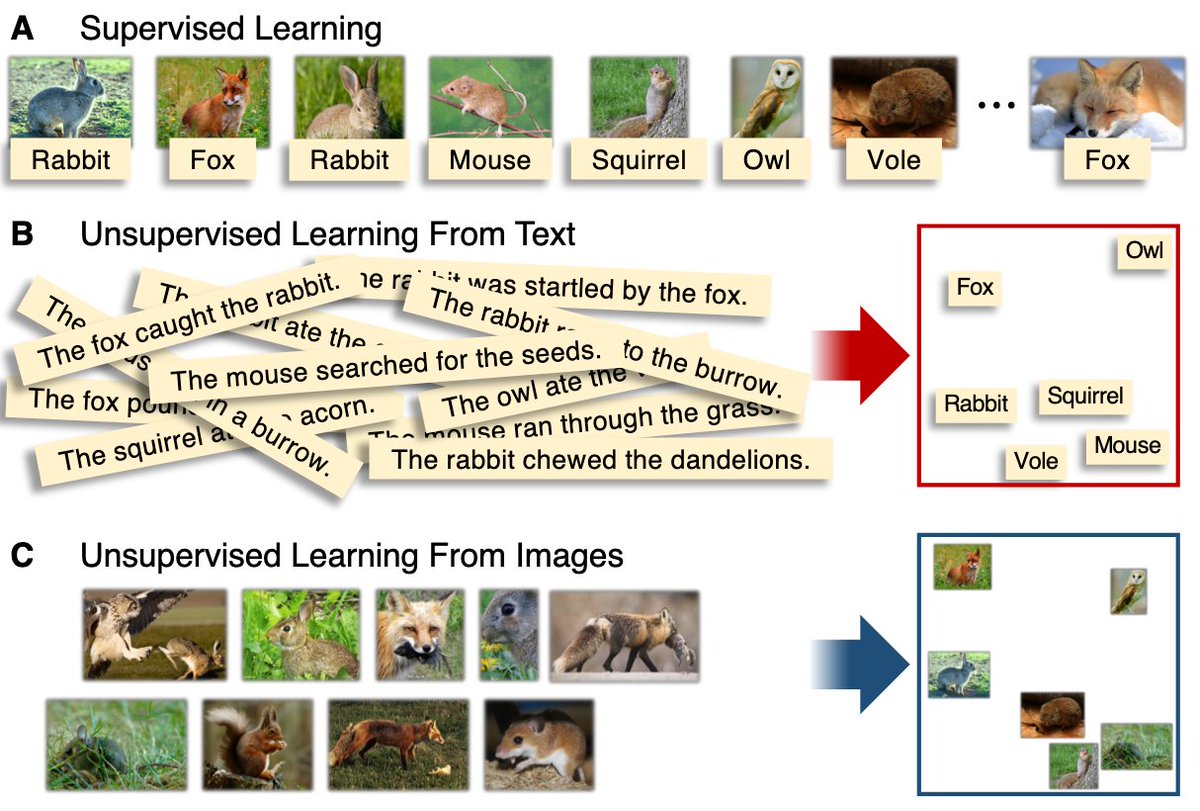
We (@kaarinaho @BDRoads) offer a new viewpoint on learning. Rather than master (x, y) pairs (e.g., stimulus, category), we propose entire systems are mapped back-and-forth. E.g., from X (e.g., images) to Y (e.g., words) and from Y to X. People do this! 1/3 sciencedirect.com/science/articl…

Very excited that our paper 'System alignment supports cross-domain learning and zero-shot generalisation' is out now in Cognition!(authors.elsevier.com/sd/article/S00…) @BDRoads @ProfData
New paper with @bdroads, @ken_lxl & @profdata. How does top-down attention help in vision? Contrasting with standard accounts that point to stimulus variables like clutter, we find that system variables capturing model-data-task interaction are key. [1/7] arxiv.org/abs/2106.11339
![fbickfordsmith's tweet image. New paper with @bdroads, @ken_lxl & @profdata. How does top-down attention help in vision? Contrasting with standard accounts that point to stimulus variables like clutter, we find that system variables capturing model-data-task interaction are key. [1/7]
arxiv.org/abs/2106.11339](https://pbs.twimg.com/media/E4lnExgXIBU9Xjf.png)
The "The Costs and Benefits of Goal-Directed Attention in Deep Convolutional Neural Networks" is now out in Computational Brain and Behavior. The quote tweet below briefly walks through the preprint. The published version includes an added bonus, link.springer.com/article/10.100… (1/2)
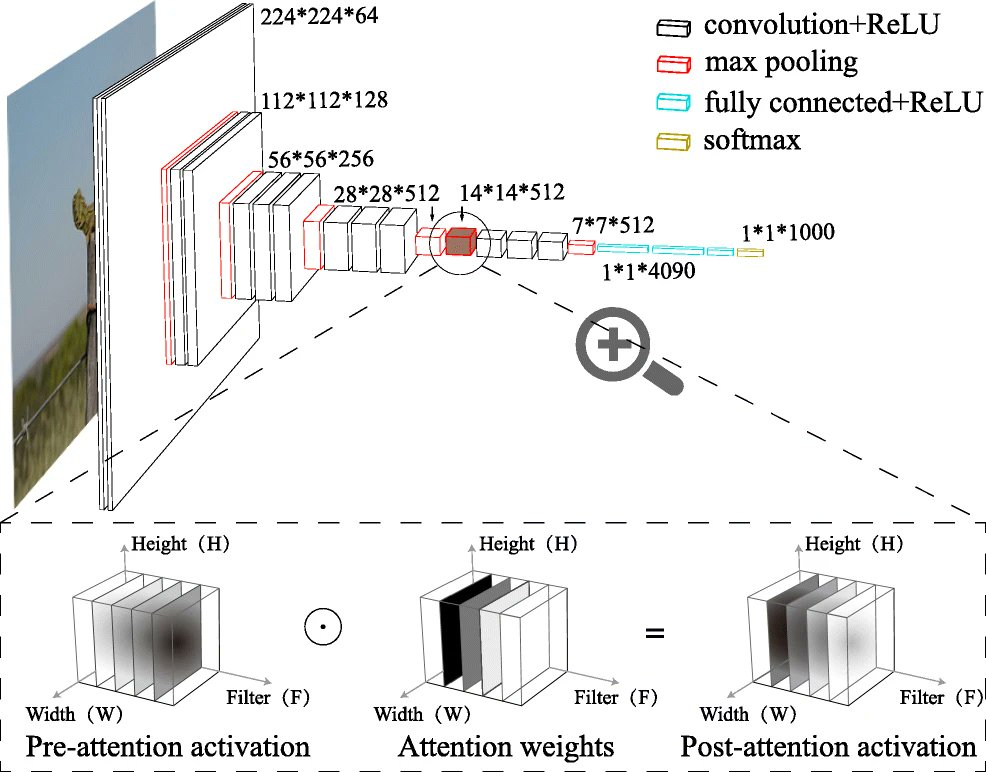
People use top-down attention, such as when searching for one's keys. One idea is that prefrontal cortex helps reconfigure our visual system to be more sensitive to features relevant to our goals. This has costs and benefits. 2/n
New preprint, "A Too-Good-to-be-True Prior to Reduce Shortcut Reliance". If it's too good to be true, it probably is and that holds for deep learning as well. To generalize broadly, models need to learn invariants but instead are fooled by shortcuts. arxiv.org/abs/2102.06406 (1/4)

Our (@BDRoads) TiCS spotlight "Similarity as a Window on the Dimensions of Object Representation" discusses exciting work led by @martin_hebart on inferring semantic representations from human similarity ratings. (1/2) cell.com/trends/cogniti…
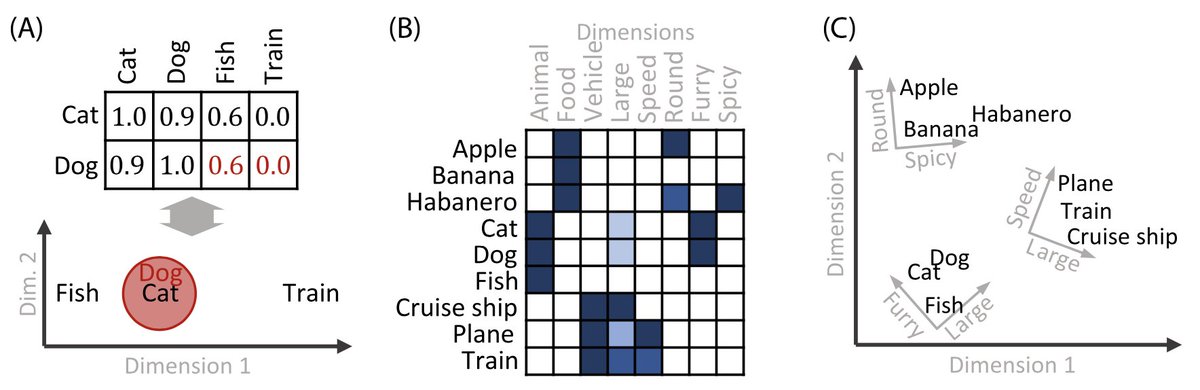
Introducing the embedding space you didn't know you needed: Human similarity judgments for the entire ImageNet (50k images) validation set. Perfect for evaluating representations, including unsupervised models. It's already bearing fruit, w @BDRoads arxiv.org/abs/2011.11015 (1/3)
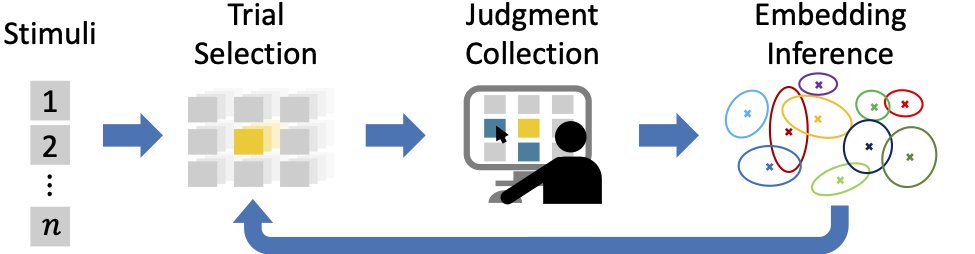

Our paper "Measures of Neural similarity" with @ProfData, Christiane Ahlheim, @mehrotrabhinav, and Aristeidis Panos is in the special issue on Integrating Neural and Behavioral Measures of Cognition in @CompBrainBeh (related @neuromatch talk below) doi.org/10.1007/s42113…

New blog, "A neuroscience-inspired approach to transfer learning" w @ken_lxl @BDRoads. We add goal-directed attention to the middle of a deep convolutional network and find it better adapts to new tasks than retraining the top layer as is standard in ML. bradlove.org/blog/attention


Our take on the new paper by @BDRoads & @ProfData - covers why we think alignment of different conceptual systems is important. Written with dev psych @Jessica_S_H. Journal link here and free text link in next tweet... nature.com/articles/s4225…
New paper w @BDRoads, "Learning as the Unsupervised Alignment of Conceptual Systems". Supervised learning tasks can be solved by purely unsupervised means by exploiting correspondences across systems (e.g., text, images, etc.). 1/5 nature.com/articles/s4225…














































United States Trends
- 1. Sixers N/A
- 2. Aaliyah Chavez N/A
- 3. Draymond N/A
- 4. #911onABC N/A
- 5. Fanone N/A
- 6. Embiid N/A
- 7. harry styles N/A
- 8. City of Norman N/A
- 9. #RHOBH N/A
- 10. Jack Smith N/A
- 11. Sengun N/A
- 12. Jarry N/A
- 13. 76ers N/A
- 14. #YIAYhouse N/A
- 15. Paul George N/A
- 16. Peyton Watson N/A
- 17. #HellsKitchen N/A
- 18. #BTS_WORLDTOUR N/A
- 19. Jabari N/A
- 20. Okot N/A
You might like
-
 Bradley Love
@ProfData -
 CogCompNeuro
@CogCompNeuro -
 Nathaniel Daw
@nathanieldaw -
 Rob Mok
@Rob_Mok -
 Tal Golan
@TalGolanNeuro -
 Giosuè Baggio
@giosuebaggio -
 Freddie Bickford Smith
@fbickfordsmith -
 Ben Lansdell
@benlansdell -
 Chengxu Zhuang
@ChengxuZhuang -
 pinotsislab
@dimitrispp -
 Sushrut Thorat
@martisamuser -
 Motahareh Pourrahimi
@MotaharehPR -
 k. seeliger
@seelikat
Something went wrong.
Something went wrong.