

LanguagesOfCharters
@LangChart
The Languages of Early Medieval Charters project. Anglo-Saxon England and Eastern Francia, c.700–c.1100 @upvehu. Tweets by @katemond, @hwaetspur & @e_c_roberts
You might like


And to round off the day, Charles Insley on the language of boundary clauses in Cornish charters. Basically cool squared. #s812 #IMC2016
Now @albsfenton on the linguistic features and formulae of Anglo-Saxon writs. Sorely neglected. #s812 #IMC2016
What is a 'private' charter? Just a charter that's not royal? But what's a ROYAL charter? @hwaetspur #s812 #IMC2016 #TeamTinti
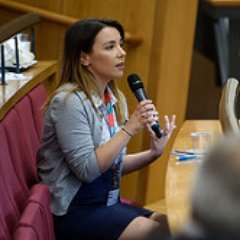
Right now, @hwaetspur rocking it with a microphone like Jagger. Sorry, talking about private charters. #s812 #IMC2016
We've just been dubbed Team Tinti by Levi Roach. #TeamTinti #IMC2016 #s812
What difficulties did scribes have transcribing vernacular names into Latin texts, & what trouble do we have because of that? #s712 #IMC2016
Ed rightly questioning the blurry line between place-name & descriptive noun phrase. Truly, the great question of the age #IMC2016 #s712
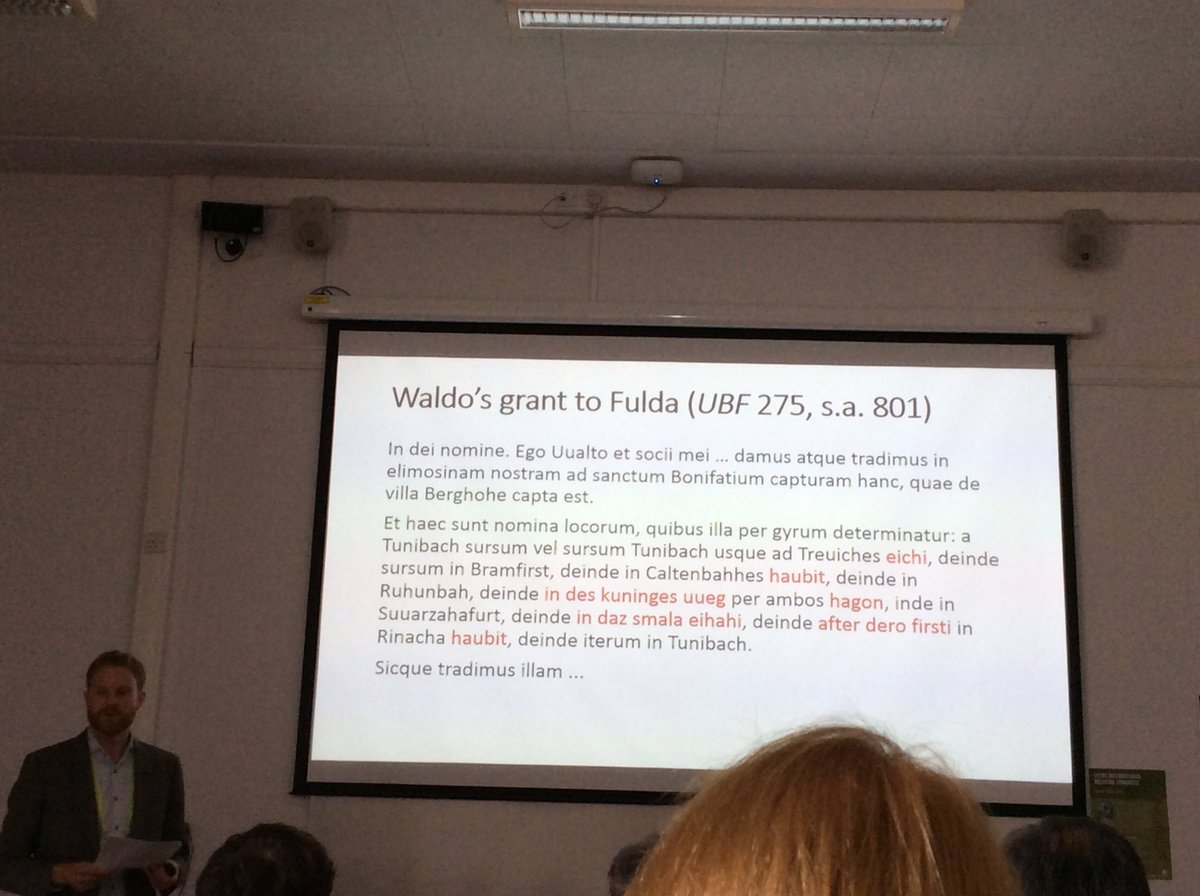
The Hammelburg boundary description, with plentiful vernacular boundary descriptions #s712 #IMC2016 @e_c_roberts
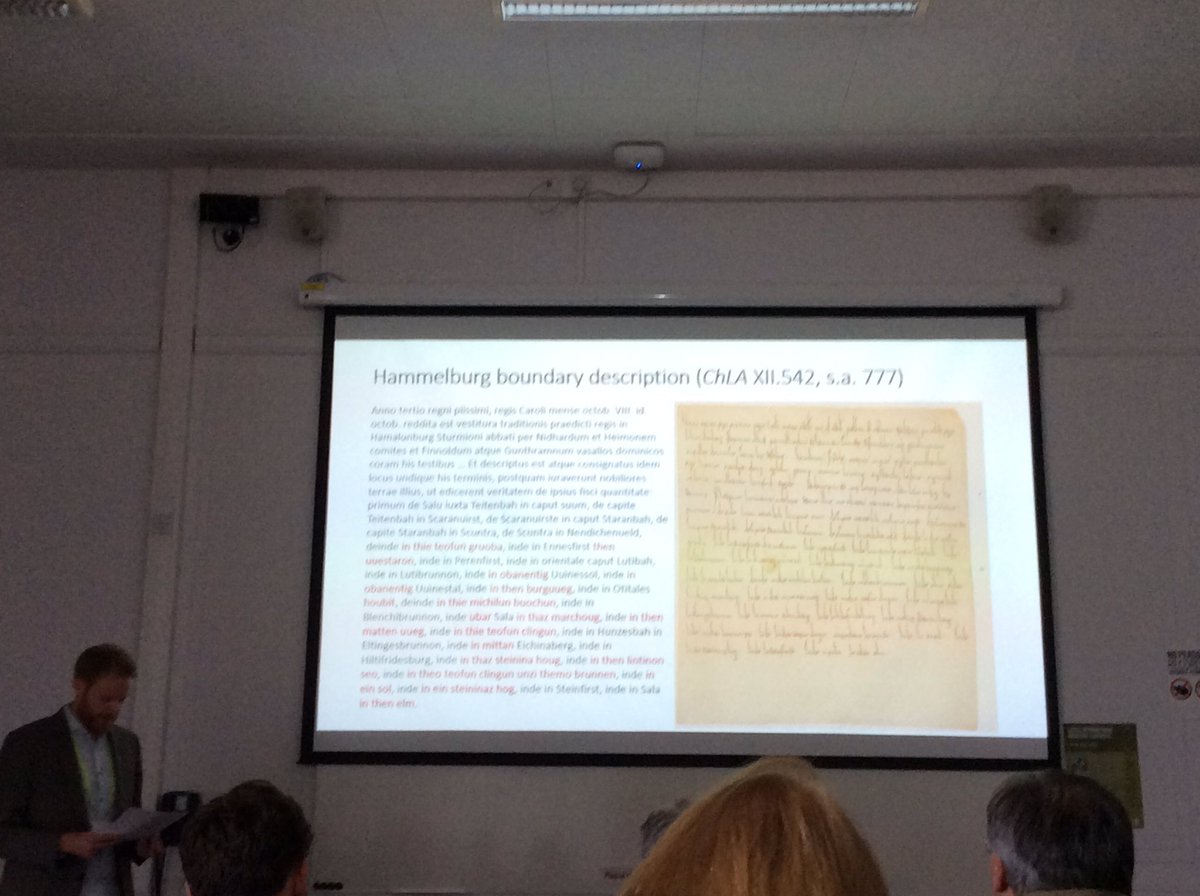
Old High German never gained the traction of Old English. It was mostly used as a tool for learning or accessing Latin #s712 #imc2016
Latin ensured uniformity, control and prestige across a broad empire. But underneath this Latin are traces of the vernacular #s712 #IMC2016
Up now in #712 is @e_c_roberts on the use of the vernacular in the Fulda and Freising charters, c.770-c.900 #IMC2016
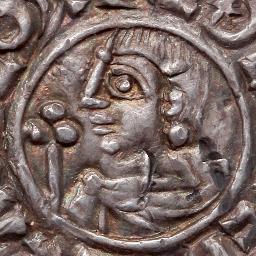
'Offa' upside down among Arabic on the same coin. Maker was unfamiliar w/ Arabic @Rory_Naismith #IMC2016 #s612
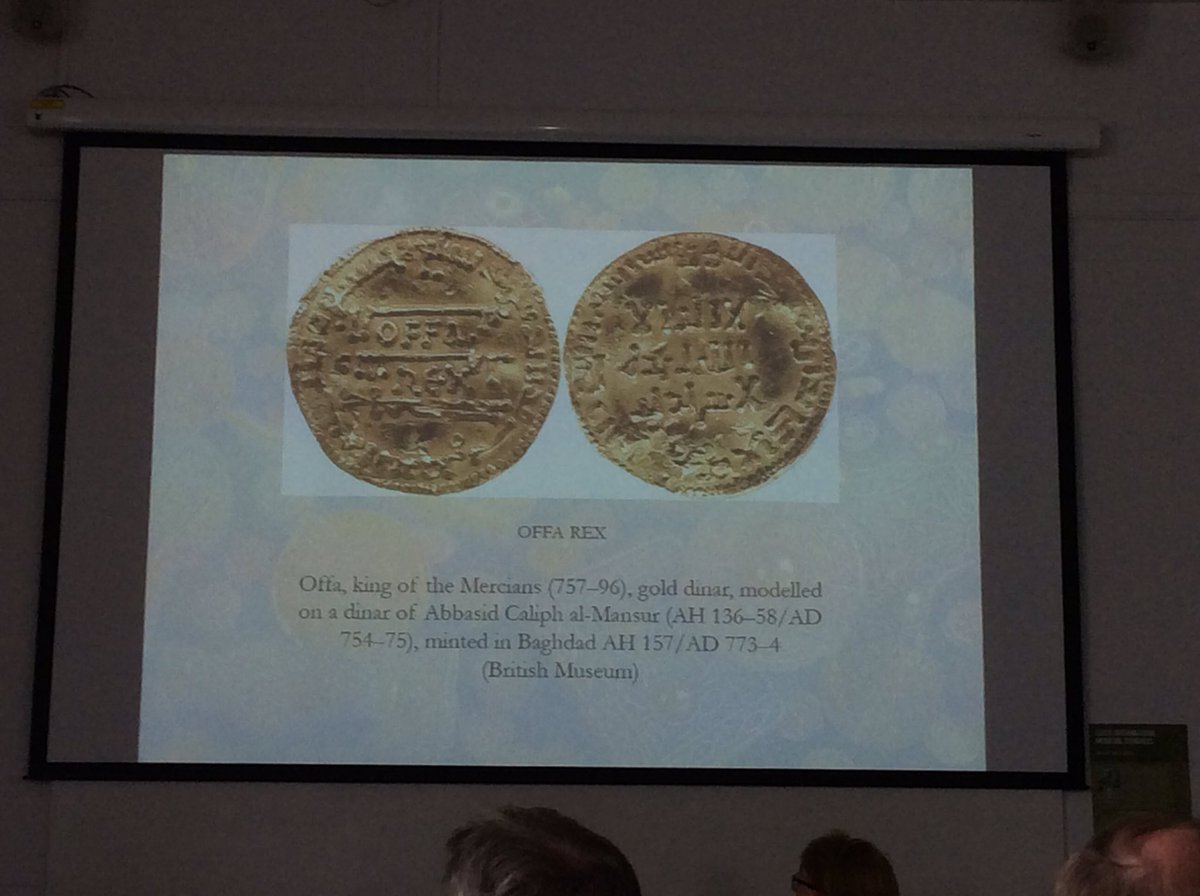
Chi-rho and alpha/omega are used so often they blur the lines between language and iconography @Rory_Naismith #s612 #IMC2016
The presence of something that LOOKED like letters might enough for an illiterate user @Rory_Naismith #s612 #IMC2016
Next up: @Rory_Naismith on the languages of money in early medieval England and its neighbours #s612 #imc2016
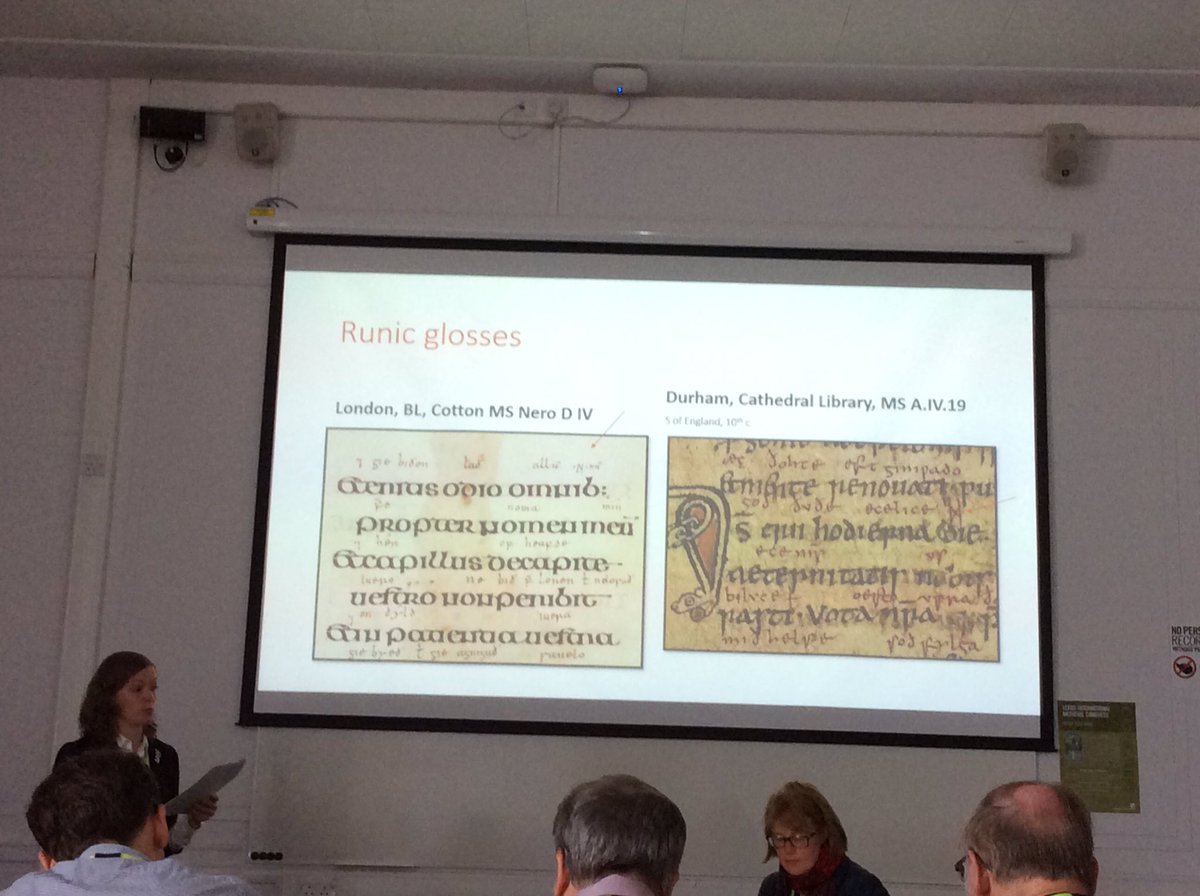
Random runes, doodled in margins of mss, tell us scribes had working knowledge of them. But why not doodle in Roman alphabet? #IMC2016 #s612






































United States Trends
- 1. FINALLY DID IT N/A
- 2. Sinners N/A
- 3. Oscar N/A
- 4. Jack Smith N/A
- 5. Best Picture N/A
- 6. The REKT N/A
- 7. Kate Hudson N/A
- 8. Delroy Lindo N/A
- 9. No Other Choice N/A
- 10. The SPX6900 N/A
- 11. #fancymedia N/A
- 12. Chase Infiniti N/A
- 13. Jared Leto N/A
- 14. He-Man N/A
- 15. Nekima Levy Armstrong N/A
- 16. #MountainOfBusch N/A
- 17. Wicked N/A
- 18. MetLife N/A
- 19. Jim Jordan N/A
- 20. Academy N/A

Something went wrong.
Something went wrong.