

Ask Science
@askscienceqdt
Helping you make sense of the science in your daily life.
You might like


Everyday Einstein is now Ask Science! Our name may have changed, but we're still helping you make sense of the science in your everyday life and giving you the skills to solve the next science question that comes your way. Enjoy listening!
Do we each have just one true soulmate, that person who is the ideal fit for all of our interests, values, and personality quirks? And if you’re with someone whom you consider special, how do you know you’ve really found The One? #ValentinesDay quickanddirtytips.com/education/scie…


Was Oumuamua, the bizarre cigar-shaped object that zoomed through our solar system in 2017, a piece of alien technology? The Harvard astrophysicist Avi Loeb believes it was. nyti.ms/39k3VTh

This image is ~6 million light years across & it shows the aftermath of a giant collision involving 4 separate galaxy clusters about 3.5 billion light years from Earth. Known as Abell 2744, it's also called "Pandora's Cluster" because of all the different structures found within.


Evidence suggests that humans' sleep was once disjointed, but researchers can't quite figure out why. pst.cr/nAxvu
With the Inauguration coming up tomorrow, let's revisit the 2017 Inauguration to determine how we accurately estimate crowd size. ow.ly/mHjm50Dcrbs
Think you're ready to head off into the final frontier? ow.ly/wj0e50D8pZQ
scientificamerican.com
Do You Have What It Takes to Be an Astronaut?
Did you ever gaze longingly at the stars and swear you'd be an astronaut when you grew up? Here's what it takes to qualify for the NASA astronaut program
To set the Guinness World Record for breath-holding, a professional freediver went without breath for a whopping 24 minutes and 3 seconds. Think you could beat it? ow.ly/jyTC50D7pvj

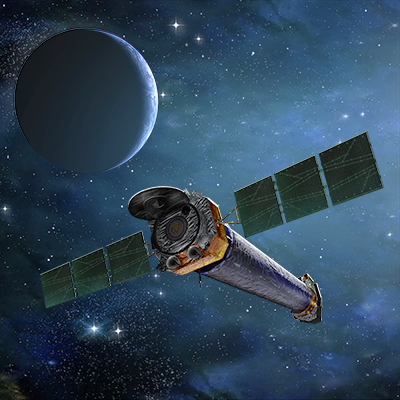
As the @Space_Station orbits Earth, its solar arrays soak up the Sun's energy to provide electrical power to the platform. After 20 years, it's time for an upgrade. Learn more about the 6 solar arrays to be delivered to the orbiting lab starting this year: go.nasa.gov/35sU0Iv

Earth's tilted axis means that the number of daylight hours changes throughout the year, and how it changes depends on the latitude at which you live. How many minutes of daylight do you experience each day? ow.ly/1Qk650D3iSC

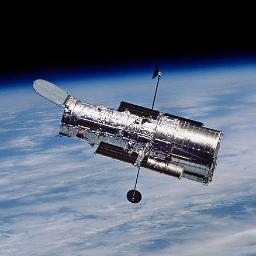
Turn it up! 🎶 Through sonification, we can “listen” to the data in this image of the Bullet Cluster, which combines Hubble observations with those from @chandraxray and ground-based telescopes. Learn more: go.nasa.gov/3nfBFop
Our short-term memory tops out around the age of 25 and levels off for about a decade before it starts to slowly decline, but our ability to assess other people’s emotions doesn’t reach its peak until we are in our 40s or 50s. ow.ly/r6rQ50D1o0s
Informally known as "the Bird," this system of interacting galaxies contains two spiral galaxies and a third irregular galaxy. Located about 650 million light years from Earth, the Bird's wings span more than 100,000 light years — roughly the size of our Milky Way. #BirdDay 🐦


The coronavirus pandemic has had us glued to our screens, but there are some easy ways to reach a better balance, says @beccacaddy bit.ly/38e9UZn

If you're looking to develop some new habits in 2021, this is how long science says it takes to really get new practices to stick. (Hint: It's not 21 days.) ow.ly/LEXc50CRiRw
In the northern hemisphere, winter is upon us and for many, that means snow, and lots of it. Where does it snow and how? Is it really true that no two snowflakes are ever alike? Keep reading for the scoop on all things snow. ow.ly/QFW650CG3Za
Most of us have experienced deja vu—that sensation when new events feel eerily familiar. Could this "glitch in the Matrix" be a brain short-circuit? ow.ly/9PaF50CRiOr
Let's put different disease-causing objects under a microscope and get a primer on the difference between them. ow.ly/f6gl50CRiMK
Can eating chocolate make you smarter? Here's what science says about the link between cognition and the sweet stuff. ow.ly/Tztt50CRiJA
Memory is a tricky, interesting thing. Are there actions you can take to improve yours? ow.ly/HxPu50CRihz



































































United States Trends
- 1. DeepNodeAI 64,7 B posts
- 2. Steelers 155 B posts
- 3. Tomlin 38,9 B posts
- 4. Aaron Rodgers 44,8 B posts
- 5. CJ Stroud 22,1 B posts
- 6. Arthur Smith 6.325 posts
- 7. #tellmelies 1.268 posts
- 8. Christian Kirk 4.433 posts
- 9. #HereWeGo 21,5 B posts
- 10. Camp Haven 6.357 posts
- 11. #HOUvsPIT 4.005 posts
- 12. #HTownMade 5.468 posts
- 13. Jonnu Smith 3.195 posts
- 14. Anderson 33,3 B posts
- 15. TJ Watt 3.395 posts
- 16. Nico Collins 3.297 posts
- 17. Marvin Lewis 1.242 posts
- 18. #ConnorStorrieOnSethMeyers 3.348 posts
- 19. Sheldon Rankins 2.109 posts
- 20. Seaton 2.535 posts





Something went wrong.
Something went wrong.