
behaviorgaps
@behaviorgaps
BehavioralGaps helps individuals and organizations bridge the gap between irrational behavior and rational decision-making.
You might like


We've just launched the Behavioral Gaps channel on YouTube! With insights from behavioral economics, you'll learn how to bridge the gaps between our irrational behavior and rationality. Watch the first video at youtu.be/7LU-I207v6g #HumanBehavior #economics #behaviour
Just because you believe it's true, doesn't make it true. Confirmation bias causes us to overlook important evidence that contradicts our preconceived notions. Stay open-minded and consider all the facts before drawing conclusions #behavior youtu.be/tiHlBtHo1ZU
Confirmation bias can be a dangerous pitfall in decision-making, leading us to seek out and interpret information that confirms our existing beliefs. To make better decisions, we must seek out and consider alternative viewpoints. #ConfirmationBias #DecisionMaking #Behavior
Our video at youtu.be/TUGF4YshRko reveals how traditional economic models assume perfect rationality, but behavioral economics shows us that we're not always so logical. #behavior #economics #rationality #models #perfect #logic #human
Anchoring bias leads to reliance on first information when making decisions, even if that information may not be relevant or accurate. Watch the video at youtu.be/QDMKRcxtheE #behavior #economics #decisionmaking #information
Behavioral economics is not without its limitations, as it relies heavily on observational data and can struggle to predict individual behavior. But, accounting for cognitive biases and irrational decision-making provides a more realistic and nuanced view of behavior. #behavior
Suboptimal outcomes are often the result of cognitive biases and limitations. Understanding these tendencies allows us to make better decisions and avoid the pitfalls of bounded rationality. #behavioraleconomics #boundedrationality #suboptimaloutcomes
We are not always perfectly rational when making decisions. Bounded rationality helps us to understand the cognitive limitations and biases that influence our choices and result in suboptimal outcomes. #decisionmaking #boundedrationality #behavioraleconomics
Traditional economic models assume rational decision-making, but bounded rationality shows we're not always logical. Understanding our cognitive biases and constraints is key to making better decisions. #boundedrationality #behavioraleconomics #decisionmaking #behavior
Want to avoid mental shortcuts? Slow down and think twice! By taking a moment to reflect and analyze our decisions, we can overcome cognitive biases and make more rational choices. #AvoidMentalShortcuts #ThinkTwice #CognitiveBiases #RationalDecisionMaking
Ever wondered why you use mental shortcuts to make decisions? Mental shortcuts are heuristics in #BehavioralEconomics that help us process information quickly but can sometimes lead to biases and errors. #Psychology #BehavioralInsights #Economics #BiasAwareness
The tendency to stick with pre-existing choices rather than making new decisions is referred to as default mode. This is a central concept in behavioral economics, illuminating how our brains often rely on automatic responses rather than deliberate thought. #economics
"The lesson of my field, behavioral economics, is that we need to understand the ways in which we differ from the rational human assumed in standard economic theory." ~ Richard Thaler #economics #behavioraleconomics
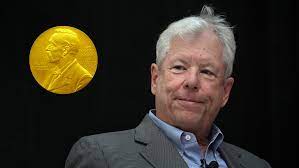
Rationality is not always our default mode of thought. Irrational thinking is the term used to describe cognitive biases and mental shortcuts that influence our decision-making. #irrationalthinking #behavioraleconomics
Cognitive biases can lead to irrational thinking, decisions, and misjudgments. It causes people to make irrational prejudices, decisions, misjudge risks and threats, and focus excessively on one type of information while disregarding other types of information. #CognitiveBiases
Cognitive biases are systematic errors in our thinking that often lead to irrational decision-making. Understanding these biases is critical in behavioral economics for improving our decision-making processes and achieving a better life. #BehavioralEconomics #CognitiveBiases
Behavioral and traditional economics differ in recognizing that humans are not always rational decision-makers. We can better understand our choices and make more informed decisions if we understand our cognitive biases and heuristics. #Rationality #BehavioralEconomics
Behavioral economics challenges rational decision-making assumptions, exploring concepts such as cognitive biases, heuristics, and social influences. We can make better decisions in our daily lives if we understand these fundamental concepts. #BehavioralEconomics #DecisionMaking
Behavioral economics is a discipline that examines how social, cognitive, and emotional factors influence our economic decisions. By understanding these nuances, we can make better choices and navigate the world around us with greater insight. #behavioraleconomics #economics

















































United States Trends
- 1. Good Friday N/A
- 2. FRLG N/A
- 3. Susan Rice N/A
- 4. #FridayVibes N/A
- 5. #FanCashDropPromotion N/A
- 6. McConnell N/A
- 7. #ALaSayoNoLaQuiereNadie N/A
- 8. Happy Friyay N/A
- 9. Nintendo N/A
- 10. RED Friday N/A
- 11. #FridayMotivation N/A
- 12. Pegula N/A
- 13. #FursuitFriday N/A
- 14. Pokemon Home N/A
- 15. Core PCE N/A
- 16. NieR N/A
- 17. Q4 GDP N/A
- 18. FireRed N/A
- 19. Aliens N/A
- 20. Baby Keem N/A






Something went wrong.
Something went wrong.