

clovis
@clovistb
Chasing Kubernetes wisdom • DevOps Engineer • laC addict • Building platforms
You might like


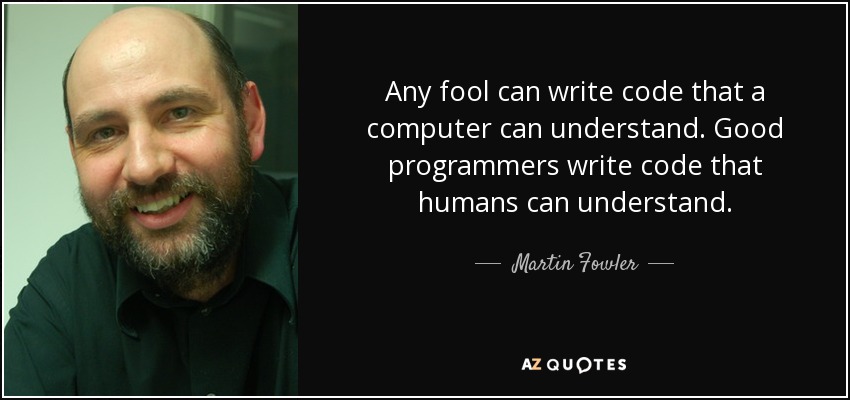
Martin Fowler said in 2008: “Any fool can write code that a computer can understand. Good programmers write code that humans can understand.” Back then, there were no LLMs. No AI. Yet we still had unreadable and nonsense code. Today, we have the same problem with AI. So…
Docker uses Go Kubernetes uses Go Terraform uses Go Prometheus uses Go Vault uses Go Consul uses Go etcd uses Go Helm uses Go So… what are you stopping learning Go?

Google uses Java Meta uses Java Microsoft uses Java Amazon uses Java Apple uses Java Netflix uses Java Adobe uses Java NVIDIA uses Java Intel uses Java Uber uses Java Dropbox uses Java Cloudflare uses Java Spotify uses Java What’s stopping you from learning Java??
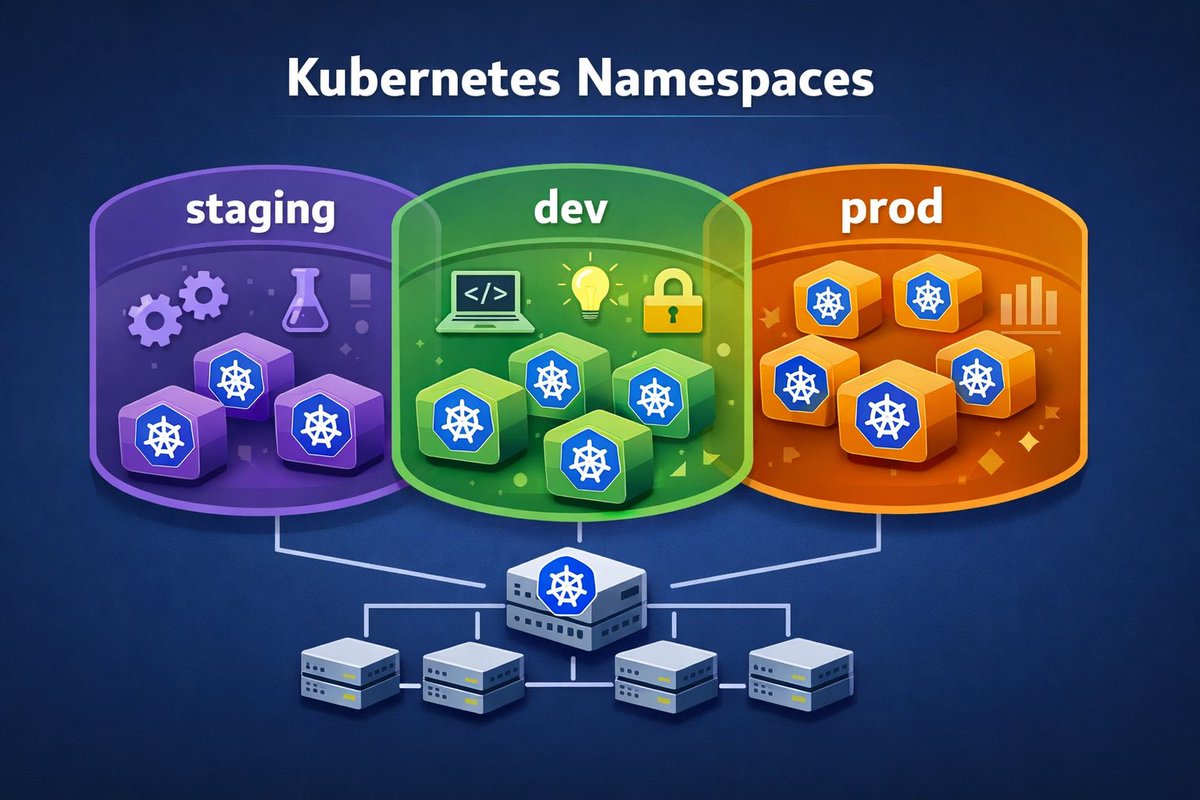
One of the most underrated topics in Kubernetes is the namespace. Most tutorials deploy everything in default namespace. That’s is Kubernetes without security. Namespace design is the foundation of pod security. After creating a cluster, the next step is not deploying apps.…

Ahh yes but when you are brought on DOS and use both you wonder why this isn't working. dir -> ls move -> mv fc -> diff find-> grep del -> rm copy -> cp Then you realize what OS you're on.🤦🏾♂️🫣
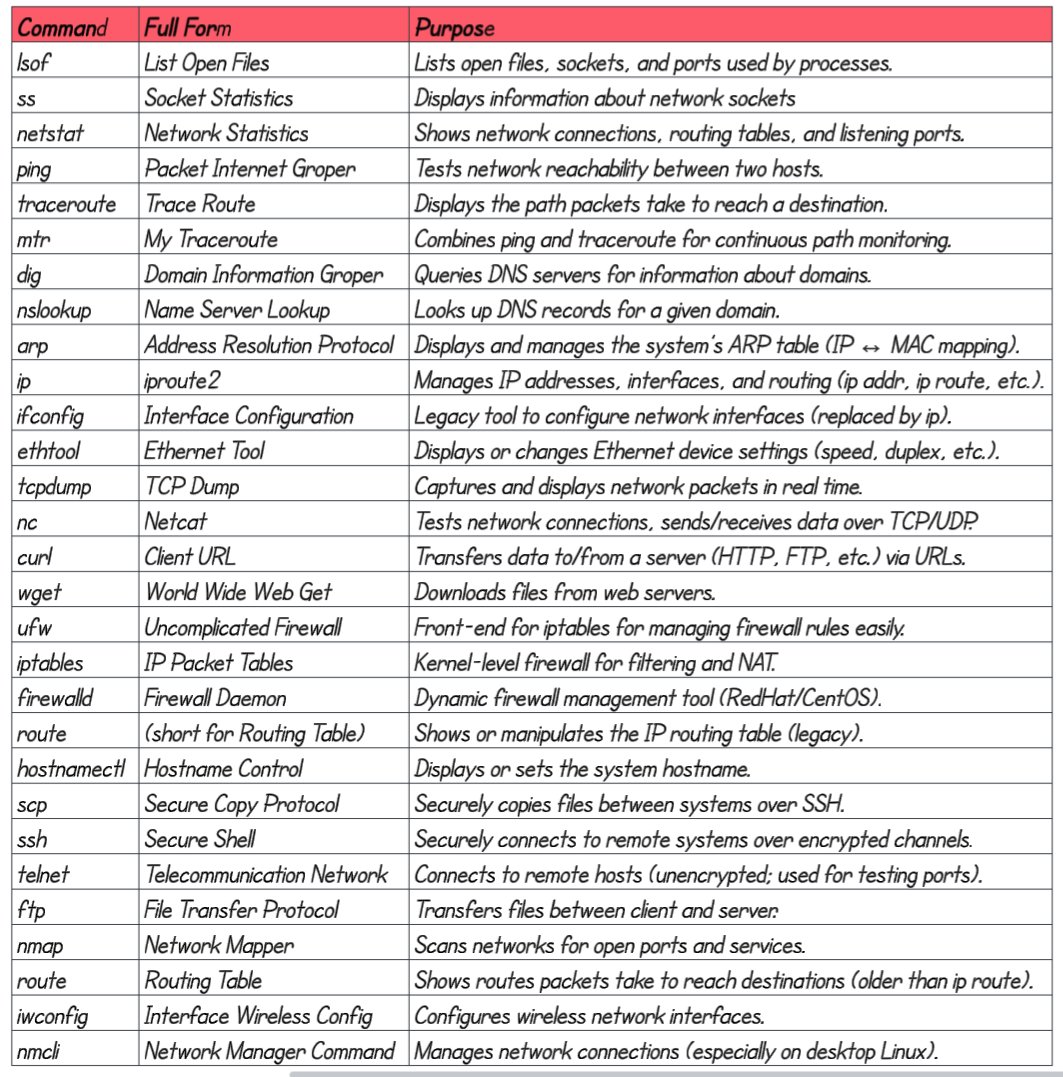
We use Linux network commands every day… But few know what their abbreviations mean. Knowing the abbreviation tells you what the command does and that’s how you start mastering Linux. For example: - lsof → List Open Files - ss → Socket Statistics - ping →…
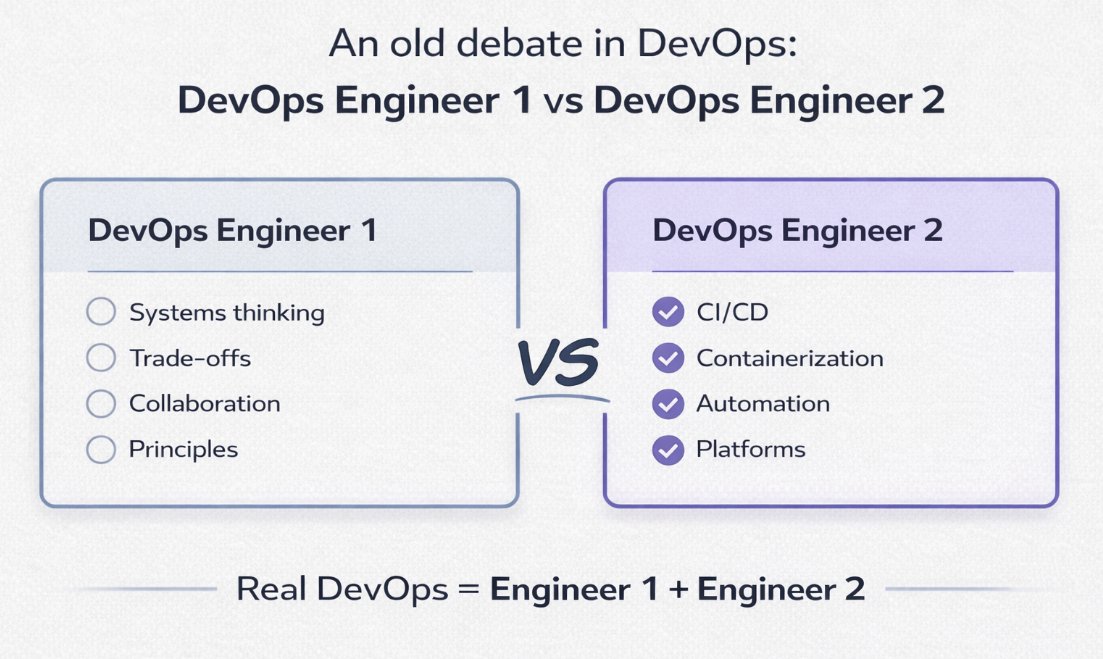
There is an old debate about the DevOps career path. 1⃣Some believe a good DevOps engineer is not defined by tools. The focus should be on fundamentals: - systems thinking, - reliability, scalability, - trade-offs, - collaboration. 2⃣Others believe a good DevOps…
🚫 Starting Kubernetes with managed services hurt your fundamentals. If you start your Kubernetes journey with EKS / AKS / GKE, you’ll run workloads but struggle to explain the cluster architecture. 🧠 The right learning path 👇 1️⃣ Docker Desktop or kind → Learn…
This is a real configuration drift you’ll face in production. Terraform defines the infrastructure. AWS resources handle scaling. Can you fix it?

You are managing an Auto Scaling Group (ASG) with Terraform. Terraform sets `desired_capacity = 2`. During the day, the ASG scales up to 10 due to load. The next time you run `terraform apply` for a totally different change (e.g., security group), Terraform tries to force the…
Is it possible to learn Cloud using only free tiers? - Creating a VPC is free → IGW, NAT Gateway, Elastic IP are not. - EC2 free tier exists → EBS volumes still cost money. - Kubernetes hostPath is free → real StorageClasses in the cloud are not. - Cloud DB free tiers…
UNDERSTANDING KUBERNETES VERSIONS Kubernetes uses semantic versioning: vX.Y.Z Example: v1.35.0 *⃣X (Major version) - Major versions mean breaking changes. - Kubernetes is still on v1. A move to v2 has never happened. *⃣Y (Minor version) - Released every 3 or 4 months.…
🙂 What Kubernetes is waiting for to remove this resource. What’s the benefit of keeping it, since Deployments already do the job?

For me the most misunderstood thing about a ReplicaSet? It is not an updater. Ifyou change the container image in a standalone ReplicaSet, existing pods will keep running the old version. It only maintains a count, not a version state. #Kubernetes
Are you planning to go far in Kubernetes? ❌Stop learning it on “easy mode”. ✅Build a real kubeadm cluster (control plane + worker) 👉Deploy an app, expose it with Ingress and load balancer. 👉Persist data with a real StorageClass + PVC 👉Encrypt Secrets (not base64) If…













































United States Trends
- 1. Porzingis N/A
- 2. Kuminga N/A
- 3. Warriors N/A
- 4. Gonzaga N/A
- 5. Hield N/A
- 6. Skubal N/A
- 7. Podz N/A
- 8. Dalen Terry N/A
- 9. #AEWDynamite N/A
- 10. Yabu N/A
- 11. POTS N/A
- 12. GM CT N/A
- 13. #DubNation N/A
- 14. Flagstaff N/A
- 15. Dunleavy N/A
- 16. Ty Jerome N/A
- 17. Draymond N/A
- 18. Trey Murphy N/A
- 19. Golden State N/A
- 20. Andrade N/A
You might like
-
 Bushiri Mwamba Jean Marie
@jmbushiri -
 Marcus Mokake
@marcus_mokake -
 ARMIN ARLET’s wifey 🤭❤️
@alternative_cb -
 dei_f_ied.
@clarusdeus -
 Prince
@Dreammare99 -
 L'argile
@terargile -
 BOLOMICK .A .LE MAIRE DE BOKITO🇨🇲🇨🇩 2032❤️
@SBolomick -
 Wave Papi 🌊
@juniorkamdem1 -
 Damien Bakouan
@damien_bakouan -
 CEDRIC MAKOLO KANANA
@CedricKanana -
 Chriszanga
@Chriszanga1 -
 Nelson mandela France
@mandelanelsontr -
 Fabrice Lukamba🇨🇩
@Fabricelukamba -
 Me. Samuel KAMASITHA MUHINDO
@SamsKamasitha
Something went wrong.
Something went wrong.