

You might like


"Cancer cells don’t quickly adapt or rewire this copper dependency, which creates a therapeutic window. By introducing a copper chelator, we can dampen the MAPK signaling that tumors rely on for growth." —@bradylabupenn, @jbiolchem associate editor ow.ly/hVCN50VQpfS


A study published today in @AppEnvMicro shows that calcium plays a significant role in enhancing the resistance of potato plants to bacterial wilt: asm.social/1Qg
Our new preprint is here! A great collaboration work with Paul Cobine @munchie37 ! @marcel_m86, Gabi Mediavilla y Xinju !!

Copper trafficking in Trypanosoma cruzi: the transcriptional response of candidates to balance toxicity and recruitment biorxiv.org/cgi/content/sh… #bioRxiv
OUT NOW!!! My latest paper with the Kornfeld lab, Lysosome-related organelles contain an expansion compartment that mediates delivery of zinc transporters to promote homeostasis. A 🧵 pnas.org/doi/10.1073/pn…

COQ4 is required for the oxidative decarboxylation of the C1 carbon of coenzyme Q in eukaryotic cells cell.com/molecular-cell…
cell.com
COQ4 is required for the oxidative decarboxylation of the C1 carbon of coenzyme Q in eukaryotic...
Coenzyme Q, a redox lipid crucial for cellular bioenergetics and homeostasis, is synthesized by a multi-step pathway. Here, Pelosi et al. unveil the missing enzyme of the eukaryotic pathway by...
Dual regulation of SLC25A39 by AFG3L2 and iron controls mitochondrial glutathione homeostasis: Molecular Cell cell.com/molecular-cell…

The ARC is pleased to appoint Professor Alastair McEwan as Executive Director for Biological Sciences and Biotechnology. Professor McEwan brings a wealth of knowledge and real-world experience to promote Australian research excellence. Read more: ow.ly/vhin50Q5i9A


Please RT and tell your biochemistry/molecular biology/chemical biology/neurobiology/neurochemistry postdocs to apply! We will also welcome applications from established investigators who are looking for a new opportunity. ⤵️⤵️⤵️

We are hiring! Come join our award-winning, collegial department located in the heart of SC. We are seeking applicants for tenure-track positions in both biochemistry and polymer chemistry. @Chemjobber #facultychemjobs uscjobs.sc.edu/postings/153953
... and here the paper, a milestone for the field! Manipulating mitochondrial electron flow enhances tumor immunogenicity | Science science.org/doi/10.1126/sc…
Department of Biological Sciences at @AuburnU is hiring an Assistant Professor specializing in Physiology. Link for more information and to apply: auemployment.com/postings/40833

"Lactate modulates iron metabolism by binding soluble adenylyl cyclase" cell.com/cell-metabolis…

Check out our @nchembio News & Views w/@christhechang highlighting a recent @Nature study describing how copper ions drive inflammation via a mitochondrial signaling pathway that regulates epigenetic states of immune cells. nature.com/articles/s4158…
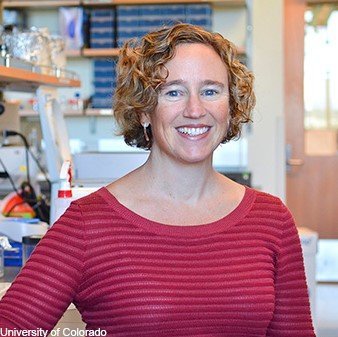
The title says it all: Human cells experience a pulse of zinc in early G1 (doi.org/10.1016/j.celr…). Using fluorescent reporters, long term imaging, and computational image analysis, @AnanyaRakshit4 and @samholtzen quantify free zinc in naturally cycling cells.

Pathogenic forms of the ANT1 protein lead to harmful consequences in yeast and mice by clogging the channels that allow mitochondria to import proteins. elifesciences.org/digests/84330/…


A new Science study in Trinidadian guppies shows that females that mate with males with uncommon traits have “sexy” sons who go on to sire higher numbers of offspring per month than their counterparts. Learn more: scim.ag/2pX


New lab preprint. Congratulations Cris for your first first-author submitted manuscript. Nodule-specific Cu+-chaperone NCC1 is required for symbiotic nitrogen fixation in Medicago truncatula root nodules biorxiv.org/content/10.110…
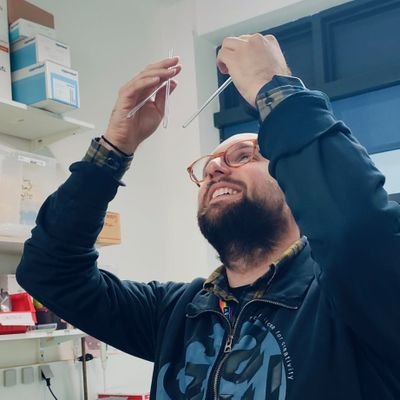
Thanks to a collaboration between @BiochemMetal @unistra and the group of Prof. Silvia Morante @unitorvergata, we characterized a key redox intermediate of the Copper-Amyloidβ complex by XAS at @esrfsynchrotron. Now Open Access in @angew_chem onlinelibrary.wiley.com/doi/abs/10.100…

Congratulations Vishal! It was a pleasure working with your group. FDX1-dependent and independent mechanisms of elesclomol-mediated intracellular copper delivery | Proceedings of the National Academy of Sciences pnas.org/doi/10.1073/pn…
Glad to announce that our preprint work about the type IV pilus of Xylella fastidiosa is now available as a peer-reviewed manuscript at PLoS Pathogens! journals.plos.org/plospathogens/… @LeonardoDeLaF12 @nehapotnis @munchie37
I'm excited to share that the last results of my Ph.D. is now available as a preprint in bioRxiv. Come see what 38 single deletions of the type IV pilus machinery of Xylella fastidiosa have taught us! 🧵 1/8 @LeonardoDeLaF12 @nehapotnis @munchie37 biorxiv.org/content/10.110…
Planning for the July 2023 @GordonConf GRS on Cell Biology of Metals is well underway! @AReddiLab will be the keynote speaker with @bradylabupenn, @Kelly_N_Chacon & others on the career panel. It's going to be an awesome conference, you don't want to miss it.













































United States Trends
- 1. #SmackDown 27,7 B posts
- 2. Renee 1,33 Mn posts
- 3. #BLACKWHALE 101 B posts
- 4. Drive Baby Drive 27,2 B posts
- 5. Ja Morant 11,5 B posts
- 6. Max Kepler 1.336 posts
- 7. Happy Trump 10,4 B posts
- 8. #DigitalBlackoutIran 387 B posts
- 9. PEDs 1.055 posts
- 10. Nico Harrison N/A
- 11. Alpha News 19,4 B posts
- 12. Anthony Davis 4.649 posts
- 13. Becca 17,2 B posts
- 14. Morocco 52 B posts
- 15. T-Rex 2.400 posts
- 16. Cameroon 26,7 B posts
- 17. Drew 91,4 B posts
- 18. Wrexham 6.226 posts
- 19. DRIVE DRIVE 376 B posts
- 20. Bodycam 37,6 B posts


Something went wrong.
Something went wrong.