

Ryan Miller
@ryanmillerdev
Sapere aude. Software engineer at Ediphi.
You might like



Ten months ago, we launched the Vesuvius Challenge to solve the ancient problem of the Herculaneum Papyri, a library of scrolls that were flash-fried by the eruption of Mount Vesuvius in 79 AD. Today we are overjoyed to announce that our crazy project has succeeded. After 2000

I’ve heard it said that software engineering is inherently more complex than other engineering disciplines. Perhaps a better way to state this is that software can accrue complexity faster than any other medium. Easier to build a logical Rube Goldberg machine than a physical one.
What’s a term that describes the incredible ability some people have to comprehensively map a product/feature/topic in their head? It’s not raw knowledge, it’s the ability to speed run the conceptual graph, plot intersections, and detect places where ambiguity might remain.
When reviewing a pull request, do you solely review the code or do you try to exercise the new functionality as well? I’m surprised how rarely I see the latter. Especially when building something like a UI, can be hard to understand code without seeing it in action.
I’d love to know if this predication was right, esp. given Sp02 feature will accompany the Series 6.
I wonder if the new Breathe app for watchOS 3 is Apple's way of training the watch's pulse oximeter for Sp02 readings.
For anyone living in the Sumner / Bonney Lake area, made this list of profiles with info about Sumner Grade Fire.
A hard reality I've had to come to terms with recently is that, compared to @DuckDuckGo, Google search is magnitudes better at finding the perfect Stack Overflow answer for a given question. But still love @DuckDuckGo for just about every other purpose.
Looking back at the beginning of my developer career, I often conflated "writing software" with "solving the problem". The former is simply a means to the latter. It makes my day when I or a member of my team finds a simpler way to do something that doesn't involve code at all!


A rule that’s served me well: write the bare minimum amount of software to solve a problem completely. Anything past that is a liability.
If you (or someone you know) could benefit from some pro bono web development help, I'm making myself available: calendly.com/andryanmiller/…. I can't sew masks, but I can fix websites, and want to help as I'm able!
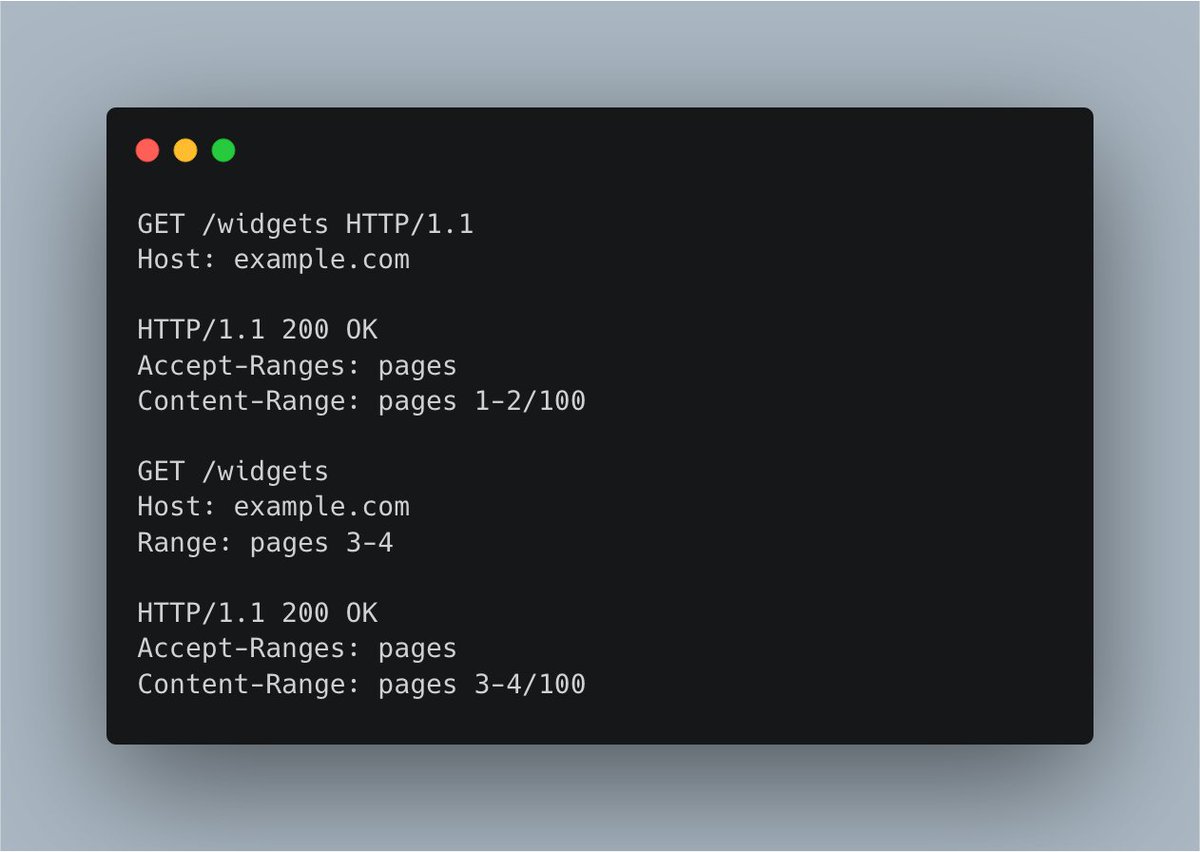
Used to think HTTP range requests were limited to bytes, which is a sensible use case but nothing I'd encountered in the wild. Turns out you're free to use any range unit you wish (see RFC 7233#2.2). Here's a basic pagination example:
How staggering it is that the web evolved from this rather casual proposal to what is arguably a human right in only thirty years: w3.org/History/1989/p…
Idea: capability tiers for browsers. Grade 1=HTML,CSS, Grade 2=JS, Grade 3=Web APIs, Grade 4=⁉️. If we assume every new browser entrant needs to hit the highest tier, as we currently do (and why Chromium is entrenched), we're going to keep playing into Google's hand.
Useless HTTP trivia: trailing slashes are appended to every request to a root domain. See tools.ietf.org/html/rfc2616#s…. We're accustomed to using URLs like example.org, but they're technically malformed. Browsers help us out behind the scenes.
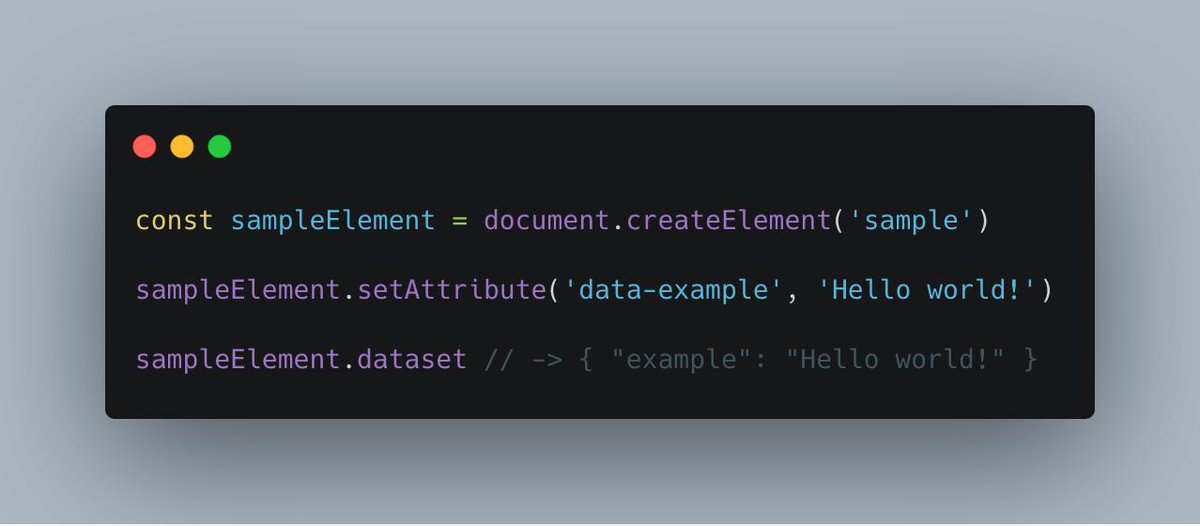
I always thought data-* attributes were a loose convention on the web, perhaps aiming to increase readability. Not so! It's actually baked into the HTML5 spec: html.spec.whatwg.org/dev/dom.html#e…. In fact, elements possess the dataset property, which can be used like so:
Incredibly excited to be a part of @algorithmia's next chapter. techcrunch.com/2019/05/14/alg…
techcrunch.com
Algorithmia raises $25M Series B for its AI automation platform | TechCrunch
Algorithmia, a Seattle-based startup that offers a cloud-agnostic AI automation platform for enterprises, today announced a $25 million Series B funding
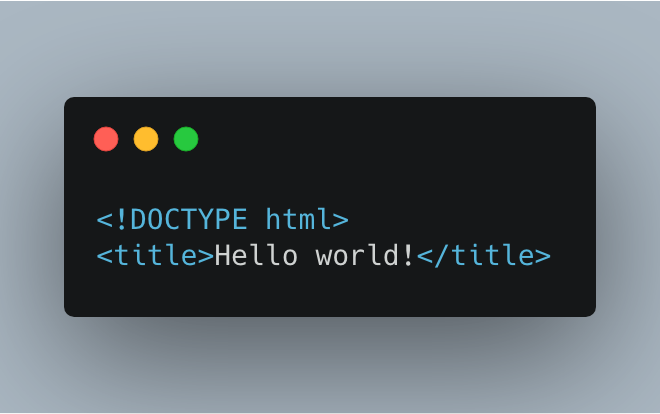
What's the smallest (valid) HTML document one could write? Throw out <html>, <body>, and <head>: only Doctype and <title> are necessary (per validator.w3.org and google.github.io/styleguide/htm…). File that in questions I thought I knew the answer to...

Hidden gem: a 49 page history of HTTP cookies on @arxiv: arxiv.org/abs/cs/0105018. Intricately retells how @montulli and David Kristol brought the spec to life and how 🍪’s eventually became the privacy flashpoint we now know today.





















































































United States Trends
- 1. Eric Dane N/A
- 2. McSteamy N/A
- 3. Jamal Murray N/A
- 4. Baby Keem N/A
- 5. #TheTraitorsUS N/A
- 6. Pistons N/A
- 7. Knicks N/A
- 8. Cade N/A
- 9. Aliens N/A
- 10. #thepitt N/A
- 11. robby N/A
- 12. Mathurin N/A
- 13. Tara N/A
- 14. Grey's Anatomy N/A
- 15. House Money N/A
- 16. Celtics N/A
- 17. UFOs N/A
- 18. Nuggets N/A
- 19. Maura N/A
- 20. Good Flirts N/A
You might like
-
 Neal Ford
@neal4d -
 Will Sentance
@willsentance -
 Victoria Drake
@victoriadotdev -
 Marc Seitz — oss/acc
@mfts0 -
 henry
henry
@left_pad -
 Aja ❤️💜💙
@the_thagomizer -
 Gwen (Chen) Shapira
@gwenshap -
 mevdroid.eth | 🦇🔊
@mathdroid -
 Gamefairy
@gamefairy_io -
 Jay Phelps
@jayphelps -
 Justin Duke
@jmduke -
 fo0
fo0
@fo0_ -
 JaromirHorejsi
@JaromirHorejsi -
 Perfect Game
@perfectgame_pro -
 Tiago Henriques
@Balgan
Something went wrong.
Something went wrong.