
#golanglearning 搜尋結果

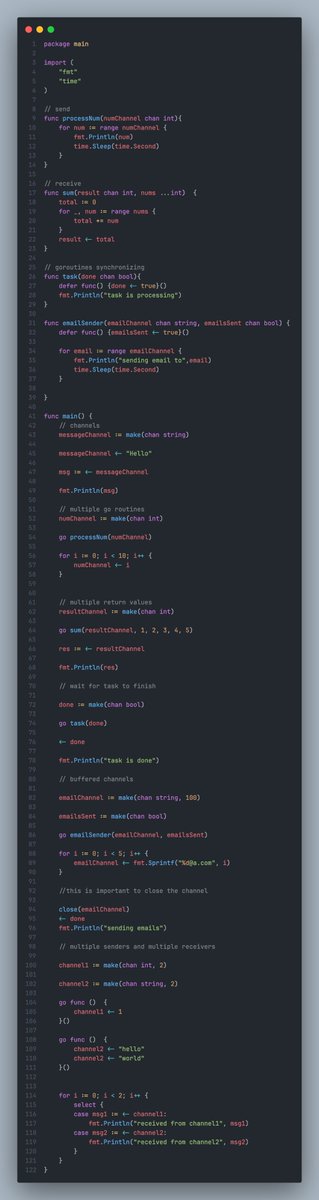
🔗 Step 26: Communicating with channels in #Golang! Channels allow goroutines to communicate Efficient and safe data sharing! 🚀 #GolangLearning #100DaysOfCode #DevJourney #Channels #Concurrency

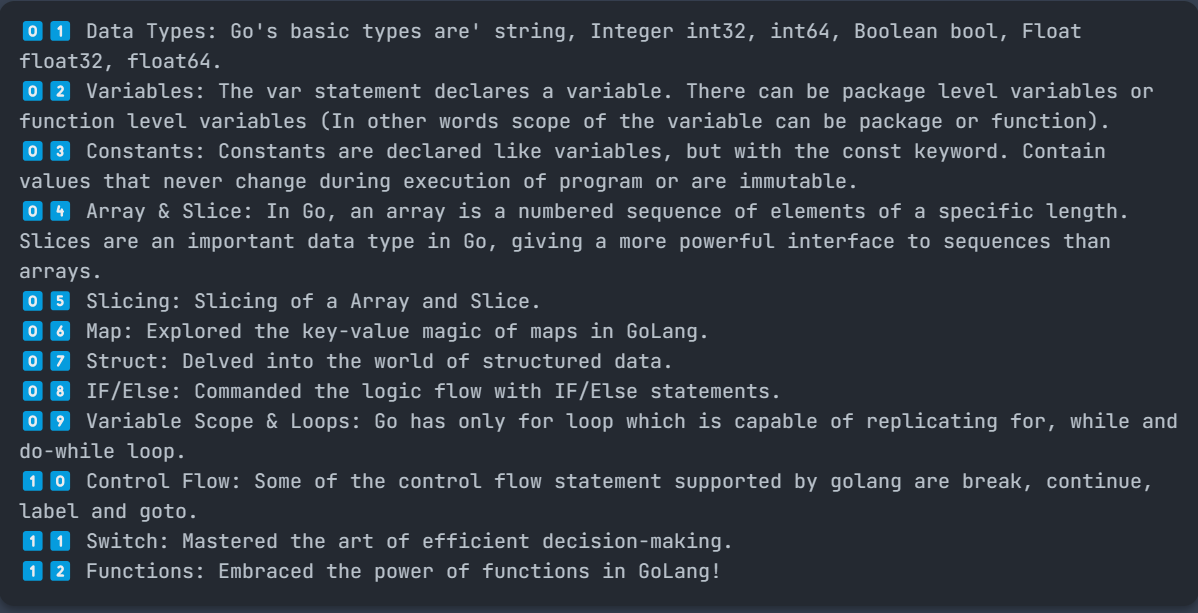
🚀 My #GoLangLearning summary of last week 🔗 Check out my journey diving into #Golang: github.com/dhairya-rathod… #Go #GoLang #CodingJourney #TechLearning
🔀 Step 16: Exploring variadic functions in #Golang! Variadic functions take multiple arguments Perfect for flexible input! 🚀 #GoLang #GolangLearning #100DaysOfCode #DevJourney #VariadicFunctions

🛠️ Step 21: Understanding interfaces in #Golang! Interfaces define behaviour: Flexible and powerful for polymorphism! 🚀 #GoLang #GolangLearning #100DaysOfCode #DevJourney #Interfaces

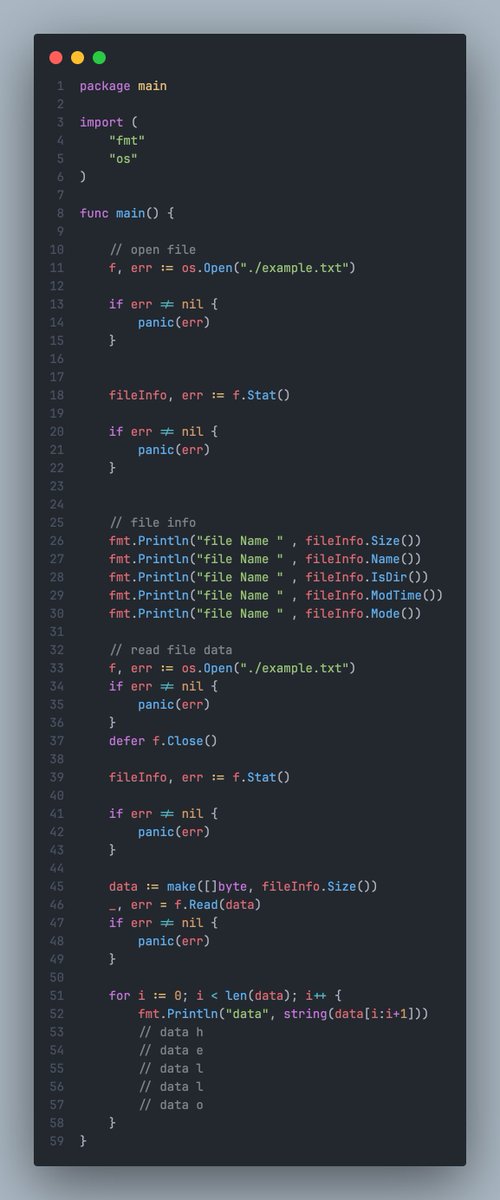
📁 Step 28: Working with files in #Golang! Read and write files easily Handle file I/O efficiently! 🚀 #GoLang #GolangLearning #100DaysOfCode #DevJourney #FileHandling

🔄 Step 10: Using `switch` statements in #Golang! Efficient control flow with `switch`: Clean and concise! 🚀 #GoLang #GolangLearning #100DaysOfCode #DevJourney #SwitchStatement

🔒 Step 17: Learning closures in #Golang! Closures capture variables from their surrounding scope: Functions within functions—powerful! 🚀 #GoLang #GolangLearning #100DaysOfCode #DevJourney #Closures

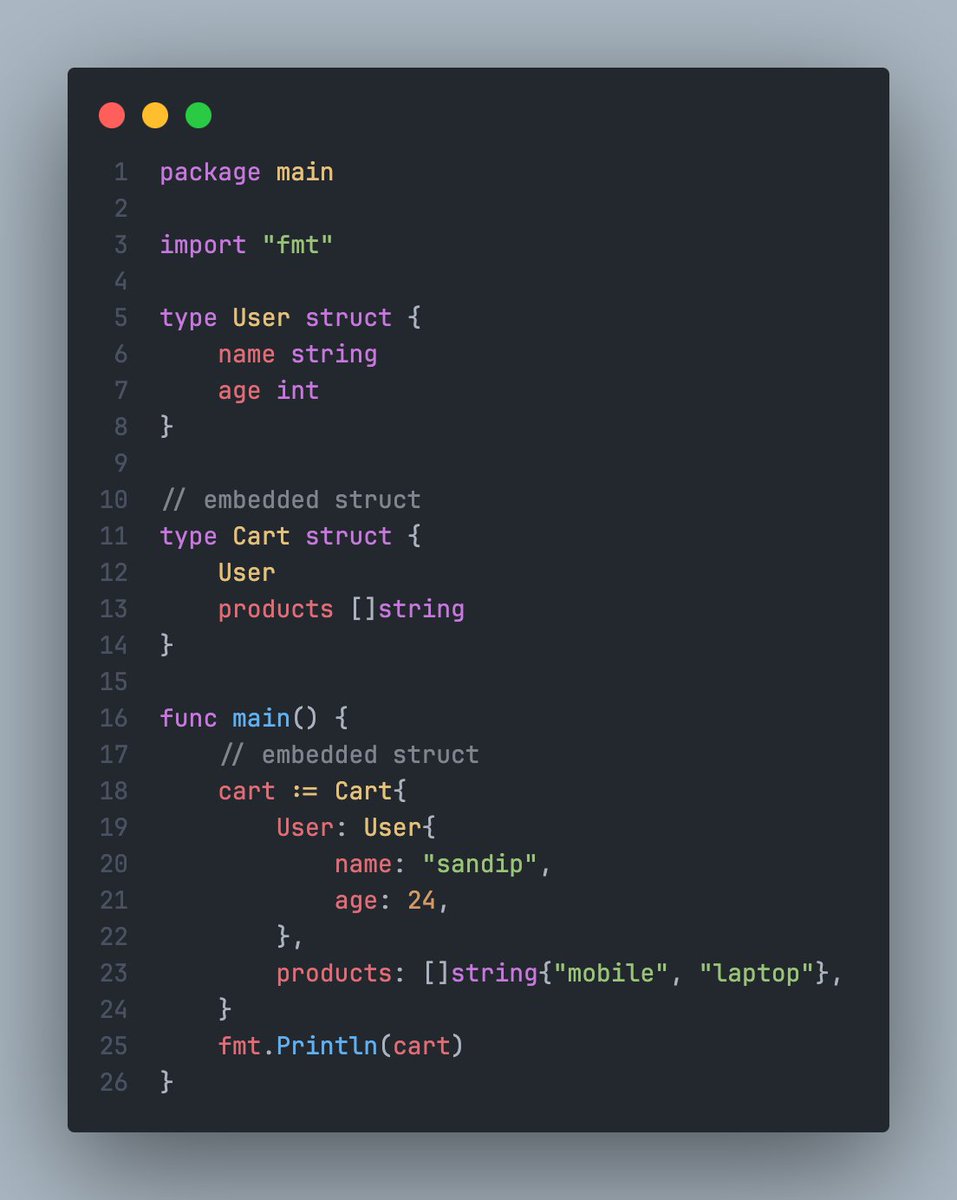
🔗 Step 20: Learning struct embedding in #Golang! Embed structs to reuse fields: A neat way to compose structs! 🚀 #GoLang #GolangLearning #100DaysOfCode #DevJourney #StructEmbedding
📍 Step 18: Understanding pointers in #Golang! Pointers hold the memory address of a value: var x int = 42 var ptr *int = &x fmt.Println(*ptr) // Outputs: 42 Great for efficient memory management and passing by reference! 🚀 #GolangLearning #100DaysOfCode #DevJourney #Pointers

🔒 Step 27: Synchronizing with `Mutex` in #Golang! Use `Mutex` to prevent race conditions Ensure safe access to shared resources! 🚀 #GoLang #GolangLearning #100DaysOfCode #DevJourney #Mutex #Concurrency

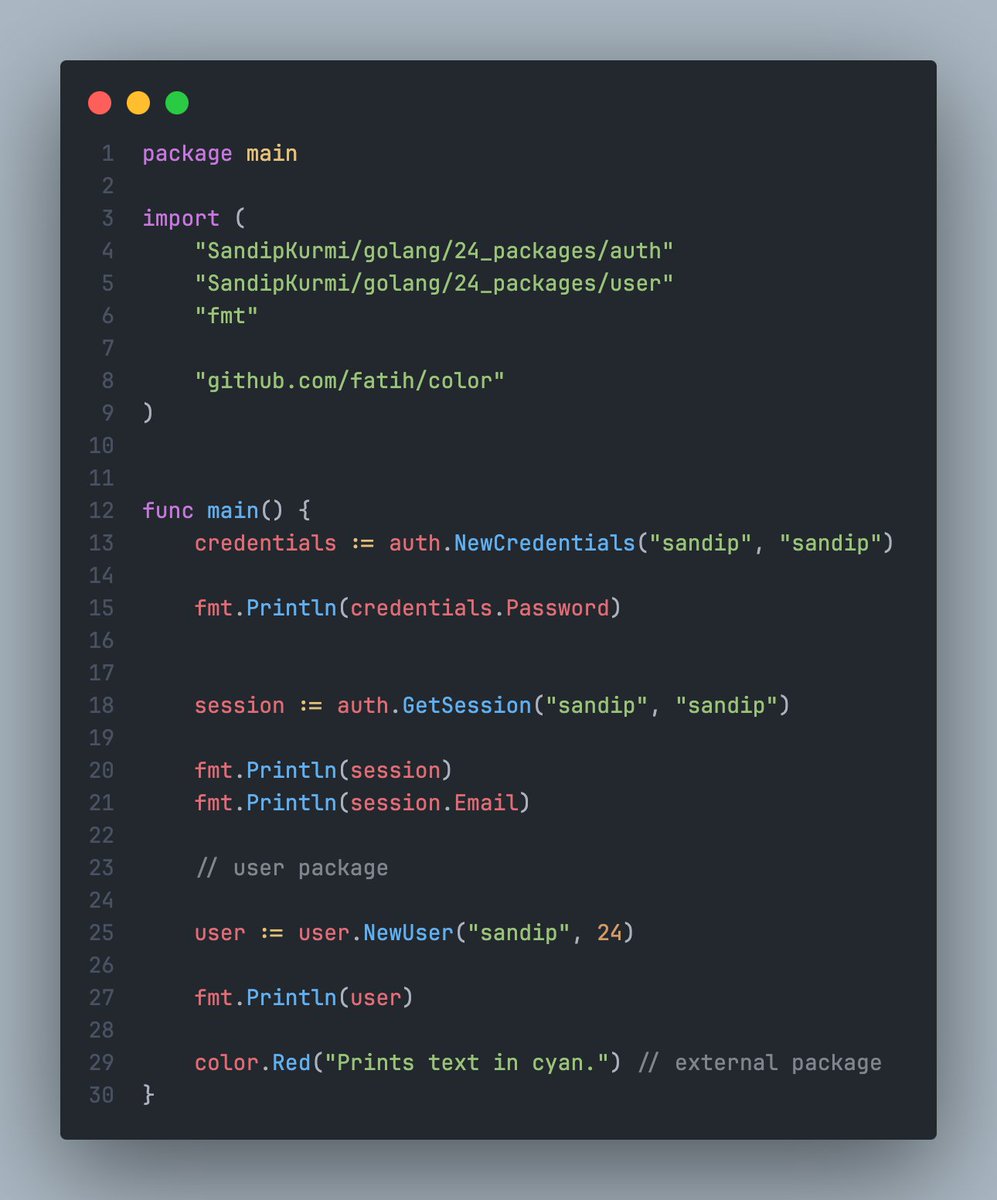
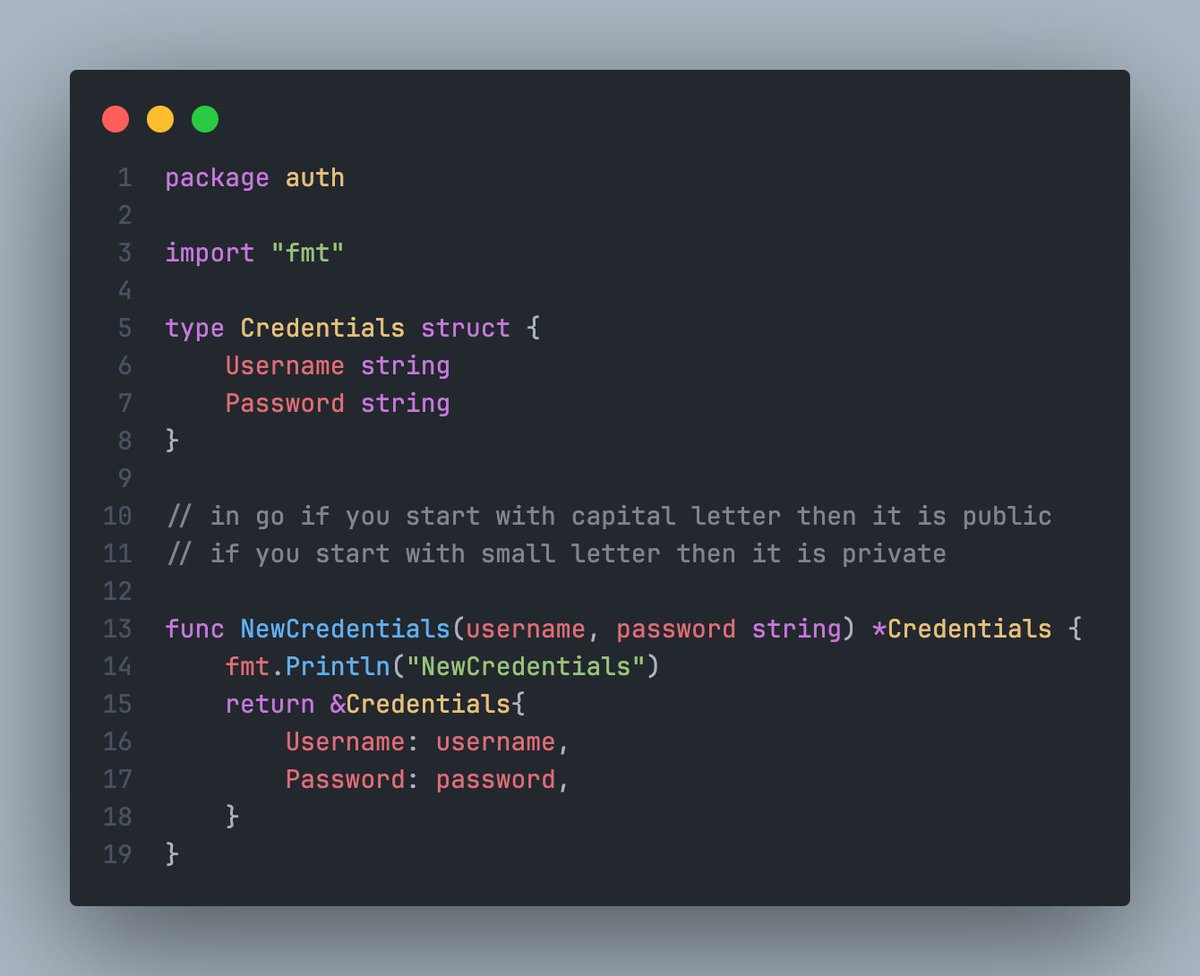
📦 Step 29: Organizing code with packages in #Golang! Create reusable code by using packages Keep your code clean and modular! 🚀 #GoLang #GolangLearning #100DaysOfCode #DevJourney #Packages

🔧 Step 23: Exploring generics in #Golang! Generics allow for type-safe, reusable code Generics make functions and types more flexible! 🚀 #GoLang #GolangLearning #100DaysOfCode #DevJourney #Generics

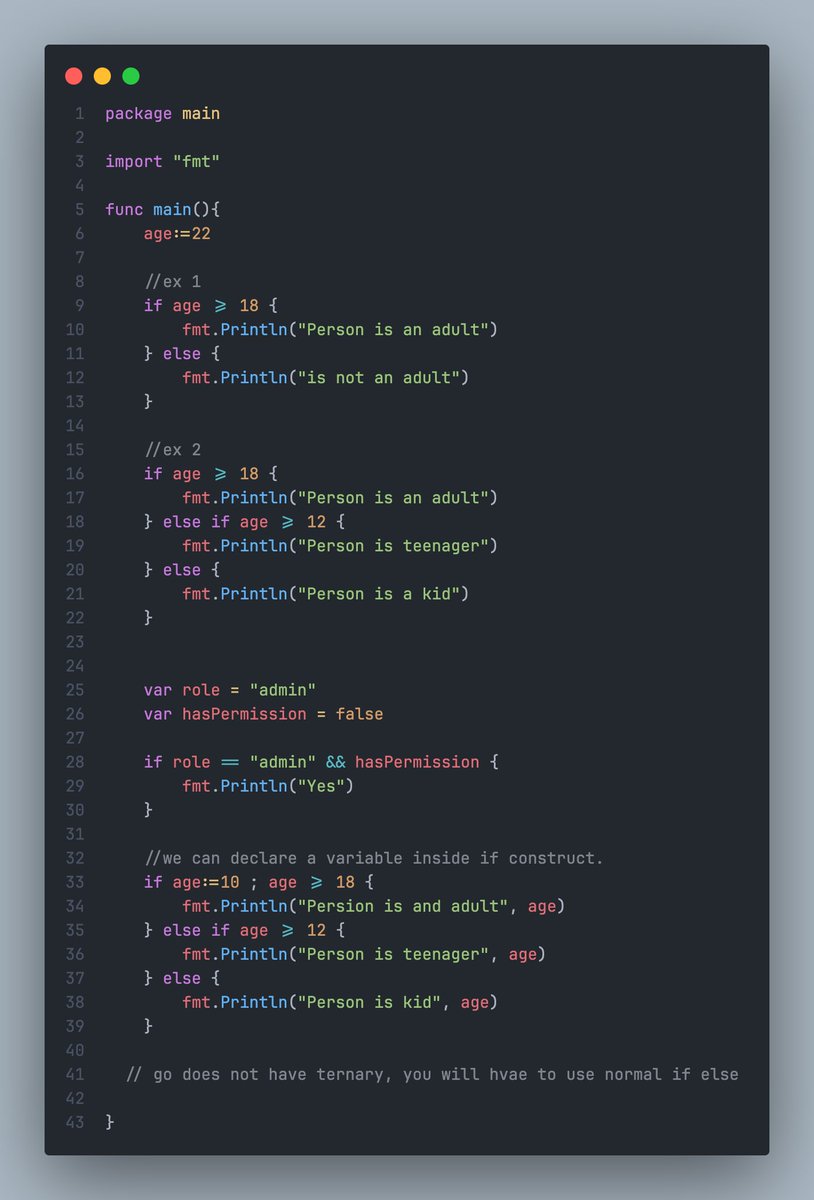
🔀 Step 9: Learning `if-else` in #Golang! Control flow with `if-else`: if x > 10 { fmt.Println("x is greater than 10") } else { fmt.Println("x is 10 or less") } Straightforward and clean! 🚀 #GoLang #GolangLearning #100DaysOfCode #DevJourney #IfElse
📊 Step 11: Exploring arrays in #Golang! Arrays hold a fixed size of elements: var arr [5]int arr[0] = 10 fmt.Println(arr) Efficient and great for handling static data! 🚀 #GoLang #GolangLearning #100DaysOfCode #DevJourney #Arrays
![sandipkurmi0's tweet image. 📊 Step 11: Exploring arrays in #Golang!
Arrays hold a fixed size of elements:
var arr [5]int
arr[0] = 10
fmt.Println(arr)
Efficient and great for handling static data! 🚀 #GoLang #GolangLearning #100DaysOfCode #DevJourney #Arrays](https://pbs.twimg.com/media/GYj32jiXMAAOAt4.jpg)
🗺️ Step 13: Understanding maps in #Golang! Maps store key-value pairs: m := map[string]int{"apples": 5, "bananas": 3} fmt.Println(m["apples"]) Super useful for fast lookups! 🚀 #GoLang #GolangLearning #100DaysOfCode #DevJourney #Maps
![sandipkurmi0's tweet image. 🗺️ Step 13: Understanding maps in #Golang!
Maps store key-value pairs:
m := map[string]int{"apples": 5, "bananas": 3}
fmt.Println(m["apples"])
Super useful for fast lookups! 🚀 #GoLang #GolangLearning #100DaysOfCode #DevJourney #Maps](https://pbs.twimg.com/media/GYkG3Z7WkAAzMpS.jpg)
🔄 Step 14: Using `range` in #Golang! The `range` keyword iterates over arrays, slices, and maps: nums := []int{1, 2, 3} for i, num := range nums { fmt.Println(i, num) } Great for concise loops! 🚀 #GoLang #GolangLearning #100DaysOfCode #DevJourney #Range
![sandipkurmi0's tweet image. 🔄 Step 14: Using `range` in #Golang!
The `range` keyword iterates over arrays, slices, and maps:
nums := []int{1, 2, 3}
for i, num := range nums {
fmt.Println(i, num)
}
Great for concise loops! 🚀 #GoLang #GolangLearning #100DaysOfCode #DevJourney #Range](https://pbs.twimg.com/media/GYkNO3KXsAEIHMa.jpg)
🔧 Step 15: Writing functions in #Golang! Functions keep your code modular and reusable: func add(a int, b int) int { return a + b } fmt.Println(add(5, 3)) Organized code, made simple! 🚀 #GoLang #GolangLearning #100DaysOfCode #DevJourney #Functions

⏳ Step 25: Synchronizing Goroutines with `WaitGroup` in #Golang! `WaitGroup` ensures all goroutines finish before proceeding Perfect for managing concurrent tasks! 🚀 #GoLang #GolangLearning #100DaysOfCode #DevJourney #WaitGroup #Goroutines

🔪 Step 12: Diving into slices in #Golang! Slices are dynamic, and more flexible than arrays: s := []int{1, 2, 3} s = append(s, 4) fmt.Println(s) Perfect for handling variable-length data! 🚀 #GoLang #GolangLearning #100DaysOfCode #DevJourney #Slices
![sandipkurmi0's tweet image. 🔪 Step 12: Diving into slices in #Golang!
Slices are dynamic, and more flexible than arrays:
s := []int{1, 2, 3}
s = append(s, 4)
fmt.Println(s)
Perfect for handling variable-length data! 🚀 #GoLang #GolangLearning #100DaysOfCode #DevJourney #Slices](https://pbs.twimg.com/media/GYkB6MxXcAAmLAL.jpg)
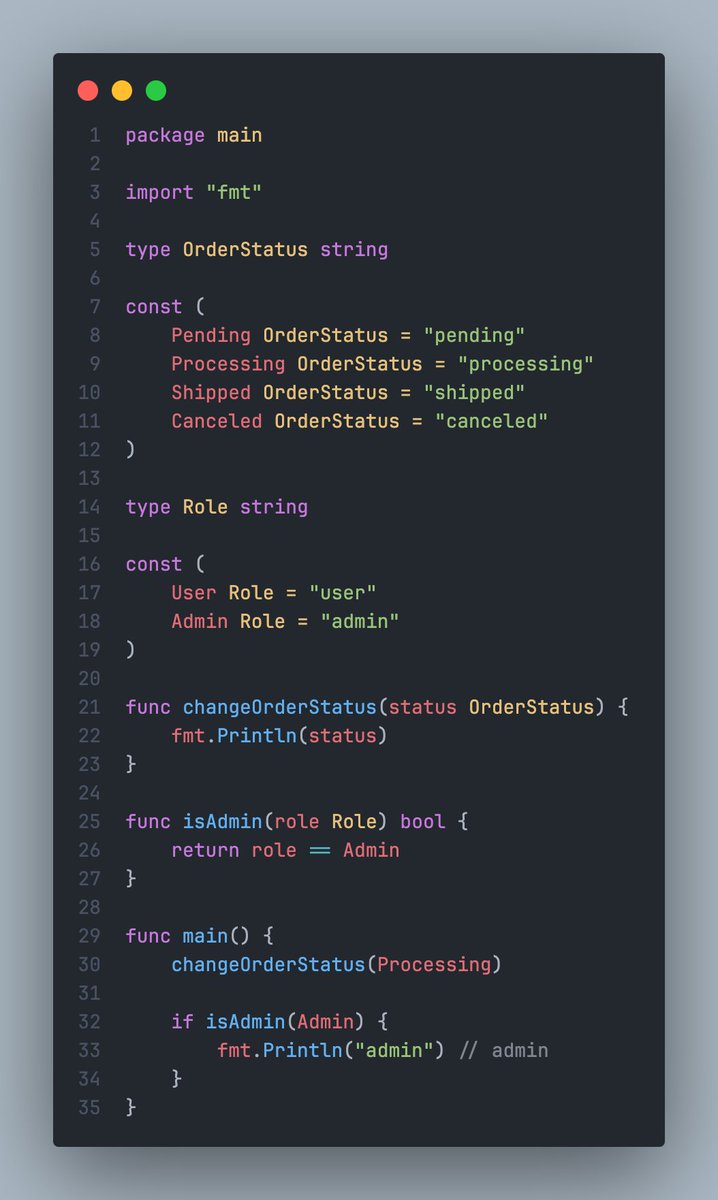
🔢 Step 22: Working with enums in #Golang! Go doesn't have built-in enums, but you can create them using `iota`: type Status int const ( Pending Status = iota Active Inactive ) fmt.Println(Pending, Active, Inactive) Simple and effective for constant values! #GolangLearning
Something went wrong.
Something went wrong.
United States Trends
- 1. Pearl Harbor 39.2K posts
- 2. Lando 420K posts
- 3. #AskFFT N/A
- 4. Roman Wilson N/A
- 5. Tulane 21K posts
- 6. #CFBPlayoff 4,358 posts
- 7. Oscar 196K posts
- 8. McLaren 119K posts
- 9. Harry Wilson 1,363 posts
- 10. Go Bills 5,274 posts
- 11. Full PPR 1,218 posts
- 12. #sundayvibes 6,999 posts
- 13. #AbuDhabiGP 316K posts
- 14. Yuki 133K posts
- 15. Neal 3,966 posts
- 16. Good Sunday 80.7K posts
- 17. Duke 65.7K posts
- 18. Kincaid 1,837 posts
- 19. Cuellar 6,612 posts
- 20. #23yearsOfHOONmoon 52.4K posts