
#howtofindmultiplelayersinfigma 검색 결과

Canvas, meet code: Building Figma’s code layers figma.com/blog/building-…


Get output in figma format with many layers and objects. Helps make tweaks with more control.

The other half of this problem is formatting equations to be easier to understand. Examples I have bookmarked: • row1.ca/pixels-and-the… from @rowancockett • github.com/distillpub/pos… from @ch402 • x.com/amalex5/status… • andrewhead.info/assets/pdf/aug… from Andrew Head


My laborious attempt last weekend to visualize for my students all the different ways we usually write complex numbers:
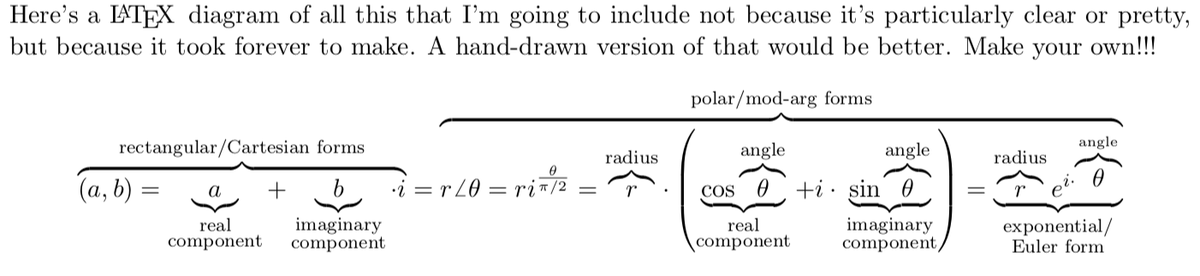

Full breakdown and Figma notes on Dribbble: dribbble.com/shots/26687878…. The invisible-arrow hack might not be pretty under the hood, but it works.

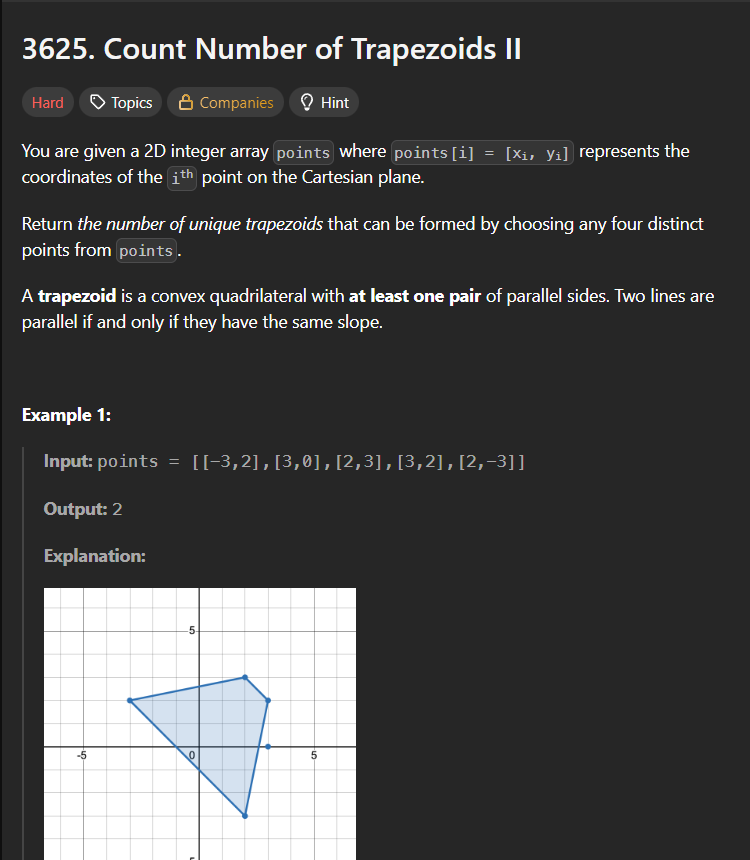
No way I could have thought of this solution on my own. It looks simple once you see it, but getting there from scratch is insanely difficult. First, we need to separate pairs of points by slopes based on their different intercepts. These intercepts help us count the number of…

(4/N) Inspired by graph wavelets, we use an MLP to combine individual waveforms which are each found by running a PDE (heat, wave, sprott model) to a different timepoint starting from the initial condition.



Just got @NanoBanana to auto-generate the full layer structure of a Menu component in @figma Purely from a YAML file I dropped in. Sharing the YAML in the thread 👇. The result speaks for itself.


Multi-Element Composite Build; Complex Multi-Object Scene Assembly Explanation: A multi-layer composite scene with several characters and props interacting. Final Prompt: “[@Element1] sitting on [@image1], [@image1] placed at [@image3], [@image4] carrying [@image5] with…
![alexgnewmedia's tweet image. Multi-Element Composite Build; Complex Multi-Object Scene Assembly
Explanation: A multi-layer composite scene with several characters and props interacting.
Final Prompt: “[@Element1] sitting on [@image1], [@image1] placed at [@image3], [@image4] carrying [@image5] with…](https://pbs.twimg.com/media/G7GAjzuWQAAAqMS.jpg)
![alexgnewmedia's tweet image. Multi-Element Composite Build; Complex Multi-Object Scene Assembly
Explanation: A multi-layer composite scene with several characters and props interacting.
Final Prompt: “[@Element1] sitting on [@image1], [@image1] placed at [@image3], [@image4] carrying [@image5] with…](https://pbs.twimg.com/media/G7GEpUAWEAAbfTp.jpg)
Multi-Layer Composite Explanation: Built a scientist, a glowing cube, and an underground chamber, them made the man get the cube. Final Prompt: “[@Element1] grabs the object from [@Image1] inside the world of [@Image2].”
![alexgnewmedia's tweet image. Multi-Layer Composite
Explanation: Built a scientist, a glowing cube, and an underground chamber, them made the man get the cube.
Final Prompt: “[@Element1] grabs the object from [@Image1] inside the world of [@Image2].”](https://pbs.twimg.com/media/G7F9pLIXAAAP4qJ.jpg)
![alexgnewmedia's tweet image. Multi-Layer Composite
Explanation: Built a scientist, a glowing cube, and an underground chamber, them made the man get the cube.
Final Prompt: “[@Element1] grabs the object from [@Image1] inside the world of [@Image2].”](https://pbs.twimg.com/media/G7F9pLBXkAARdVy.jpg)
![alexgnewmedia's tweet image. Multi-Layer Composite
Explanation: Built a scientist, a glowing cube, and an underground chamber, them made the man get the cube.
Final Prompt: “[@Element1] grabs the object from [@Image1] inside the world of [@Image2].”](https://pbs.twimg.com/media/G7F9pLHXkAA9nlB.jpg)

This is how you get there. I know there might be an easy method, but my logic is always like that, going for difficult ways 1st.

Controllable Layer Decomposition for Reversible Multi-Layer Image Generation. arxiv.org/abs/2511.16249

So 3 layers... erase the bad layer... then erase the black-and-white layer... wow, nice work.

Wait until you add key framing, adjustments, then layers, then key framing on all the layers, to the equation.




Then the reference code becomes easy to understand. Here, i_grid and j_grid are the logical-view indices, corresponding to outer and inner. The expressions mm = i_grid // (atom_m[0] * atom_m[1]) kk = j_grid // atom_k compute which scaling-factor tile we’re in. Inside each tile:…



Note : To achieve the above result, we have to define multiple bands with their respective colors and heights and then calculate the final color and height by combining all bands using masking as shown above in code.

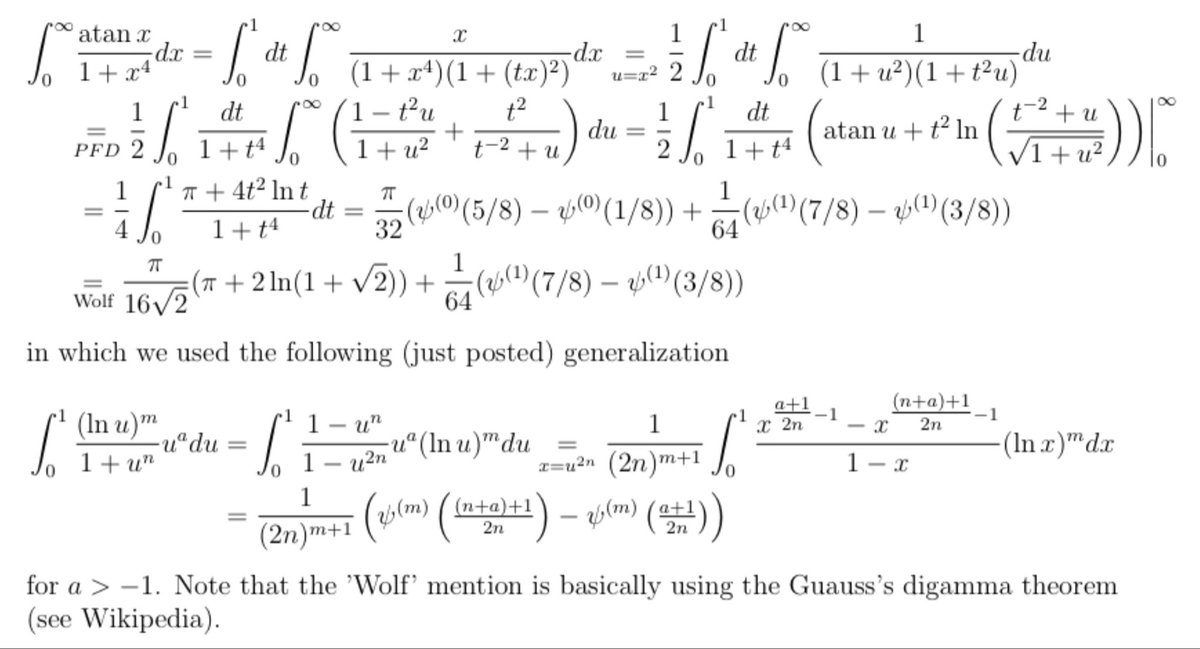
Using a just posted result on polygamma (see x.com/cpierre67/stat…) and starting similarly to @PatternRekogntn (see x.com/patternrekognt…) …

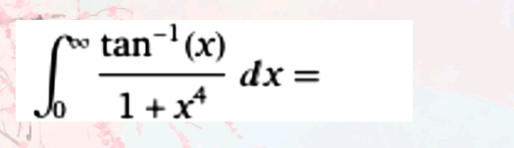

if you add multiple layers and change each layer from (I think it starts as n) to M for multiply you should be able to work from only that layer and it doesn’t erase anything underneath
Something went wrong.
Something went wrong.
United States Trends
- 1. Brian Cole 18K posts
- 2. #Kodezi 1,004 posts
- 3. Chronos 1,429 posts
- 4. Walter Payton 10.7K posts
- 5. #NationalCookieDay 1,272 posts
- 6. Price 264K posts
- 7. Woodbridge 3,916 posts
- 8. #TrumpAffordabilityCrisis N/A
- 9. Tong 18.1K posts
- 10. The FBI 118K posts
- 11. Merry Christmas 68.1K posts
- 12. TPUSA 72.8K posts
- 13. #thursdayvibes 3,464 posts
- 14. Paramount 8,796 posts
- 15. soobin 72.6K posts
- 16. #RedSeaIFFxFaye 101K posts
- 17. Earl Campbell 4,207 posts
- 18. GLOWING FAYE AT RED SEA FILM25 106K posts
- 19. The Blaze 6,257 posts
- 20. Hilux 13.5K posts