
Semiotic Sense 🧠
@SemioticSense
Decoder of culture, brands & brains | M.A. in Cognitive Semiotics | Lifting the veil on experience—with a smattering of philosophy and psychology.
It's always odd to me when people rail against AI taking jobs. Stockholm Syndrome is wild y'all. We have before us an opportunity to change the paradigm. To change our relationship with the economic apparatus. You are not your economic output.
So apparently nowadays you just need to threaten to cancel your subscriptions, and everyone is giving out discounts when you do...
Fasting must be good for you. It’s never mentioned on mainstream media.
HADD = Hyperactive Agency Detection Device. Your brain’s built-in glitch that spots “someone” in every shadow. Why? Evolution’s math: Mistake wind for a tiger → you sprint. Mistake tiger for wind → your lunch. False alarms cost calories. Fatal misses cost life.

Wilde’s “A cynic knows the price of everything, value of nothing” skewers those fixated on costs over meaning. It’s a dig at shallow materialism, urging us to see beyond numbers to art, beauty, and depth.
You can probably finish these lines without even thinking: “After these messages…” “Coming soon to a theater…” “Like a good neighbor…” “Maybe she’s born with it,…” (Finish these lines in the comment if you know them.) This is exactly how language works in our minds.
Association bias sneaks into daily life, quietly shaping decisions through subtle mental links we barely notice. Right now, marketers and influencers exploit association bias in ways most folks gloss over. It’s not just logos or jingles—it’s the font on a product label screaming
The problem with abstract nouns is they mean different things to different people. You can’t say “freedom”, “democracy”, or “rights” and expect everyone to be on the same page. This is why whoever tethers these ideas to something concrete has the power. They get to frame the
In heated times, what we say matters — but how and when we say it may matter even more. A mark of maturity is not rushing to score points, but pausing to choose words that open space for understanding. Left, right, or anywhere between, our discourse could use more of that
One of the most unnoticed aspects of media is what is called "motivated cuts". These aren’t just random edits. They’re intentional transitions between shots that guide what you think, feel, or assume. But it’s not just the cut--> it’s the camera angle, zoom, and reaction shot
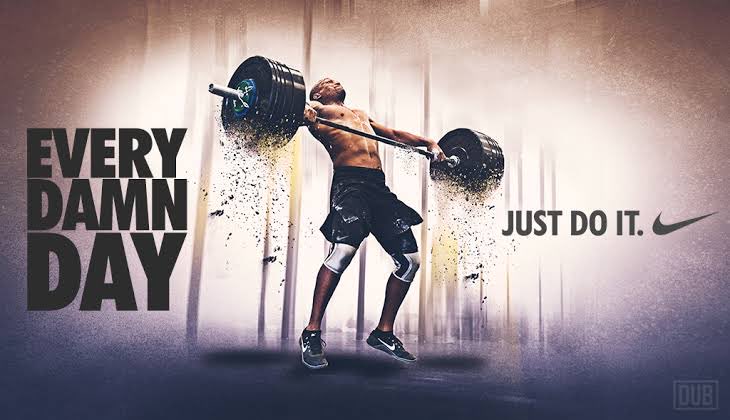
Nike (“Just Do It”): The semiotic framing of SPORT as a MYTHIC STRUGGLE—heroism, grit, transcendence. Ads use warriors, sweat, and victory imagery to signal empowerment, turning sneakers and other clothing into a symbol of personal triumph.
People don’t buy benefits and features anymore. What they’re actually buying now is transformation.
We don’t always answer the question we think we’re answering. When a judgment is too complex, our brain quietly swaps it for an easier one. This is attribute substitution—and it happens everywhere. Examples: •Startup success: Hard question: Will this company succeed? Easier
When we perceive something — whether a photo, a face, or a scene — our mind doesn’t just record raw data. It instantly sorts what we see into categories based on our culture, prior knowledge, and values. There’s no stage where we simply see without interpreting.
“Can a photograph exist without ideology? Barthes suggests every snap carries cultural weight—do we notice the narrative it imposes? 🤔 #MediaCritique #Photography”
There are no ideologically neutral sign systems: signs function to persuade as well as to represent (representation always serves purposes).
“Advertisers conventionalize our conventions.” – Erving Goffman Ads don’t invent culture from scratch—they exaggerate what we already believe, packaging it until it feels natural. That’s how ads shape reality without us noticing.



















































United States Trends
- 1. Eric Dane N/A
- 2. McSteamy N/A
- 3. Knicks N/A
- 4. Pistons N/A
- 5. Cade N/A
- 6. #TheTraitorsUS N/A
- 7. #thepitt N/A
- 8. Aliens N/A
- 9. Grey's Anatomy N/A
- 10. Mark Sloan N/A
- 11. Mike Brown N/A
- 12. robby N/A
- 13. Brunson N/A
- 14. UFOs N/A
- 15. Paul Reed N/A
- 16. Alysa Liu N/A
- 17. Maura N/A
- 18. Tara N/A
- 19. Wes Rucker N/A
- 20. #TNAiMPACT N/A
Something went wrong.
Something went wrong.