

SQL, Excel, Power BI
@sql_power
Easy explanation of Data Analysis Tools for Non-Tech people.
SQL JOINs are just choices about what to keep or ignore. Day 5 of my 30-day SQL + AI clarity series. Follow to get tomorrow’s post: Regression vs Classification — explained like dating. ❤️📊
🧠 Real World? INNER JOIN: Orders matched with payments LEFT JOIN: Orders with or without delivery confirmation JOINs decide what data you include — it’s business logic, not just syntax.
SELECT * FROM bread LEFT JOIN filling ON bread.id = filling.id;
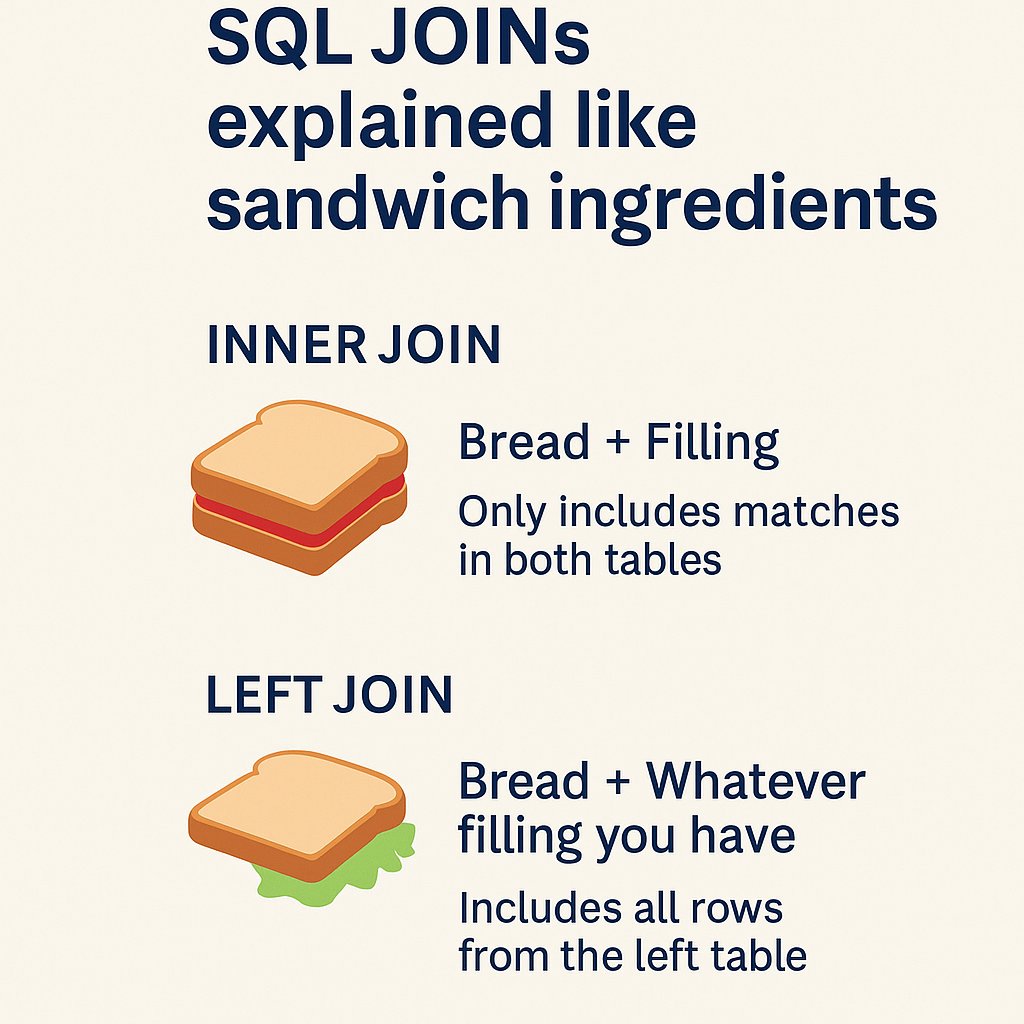
🥬 LEFT JOIN: Keep all bread slices, even if filling is missing. → Show every sandwich, even if some don’t have tomato 🍅
SELECT * FROM bread INNER JOIN filling ON bread.id = filling.id;
🥪 INNER JOIN: Only include records that exist in both tables. → Like: Only build sandwiches if you have both bread & filling.
SQL JOINs confused me for weeks. Until I saw them like sandwich ingredients. 🥪 INNER JOIN = Bread + Filling 🥬 LEFT JOIN = Bread + Whatever filling you have
Day 4 of my 30-day SQL + AI clarity series. Tomorrow: JOINs in SQL — explained like assembling a sandwich. Follow along 🍞
No need for jargon. If you’ve ever taught someone with examples, You’ve done supervised learning.
🧠 The formula: Data + Label → Model learns pattern Later: New data → Model predicts label That’s all supervised learning really is.
Over time, the child figures out: Yellow skin + oval shape = probably a mango 🍋This is what models do with: Emails (spam or not) Transactions (fraud or not) Users (will churn or not)
Imagine you're teaching a kid to recognize fruit. You show 100 fruits. For each one, you say: “This is a mango.” “This is not a mango.” That’s labeled data → core of supervised learning.
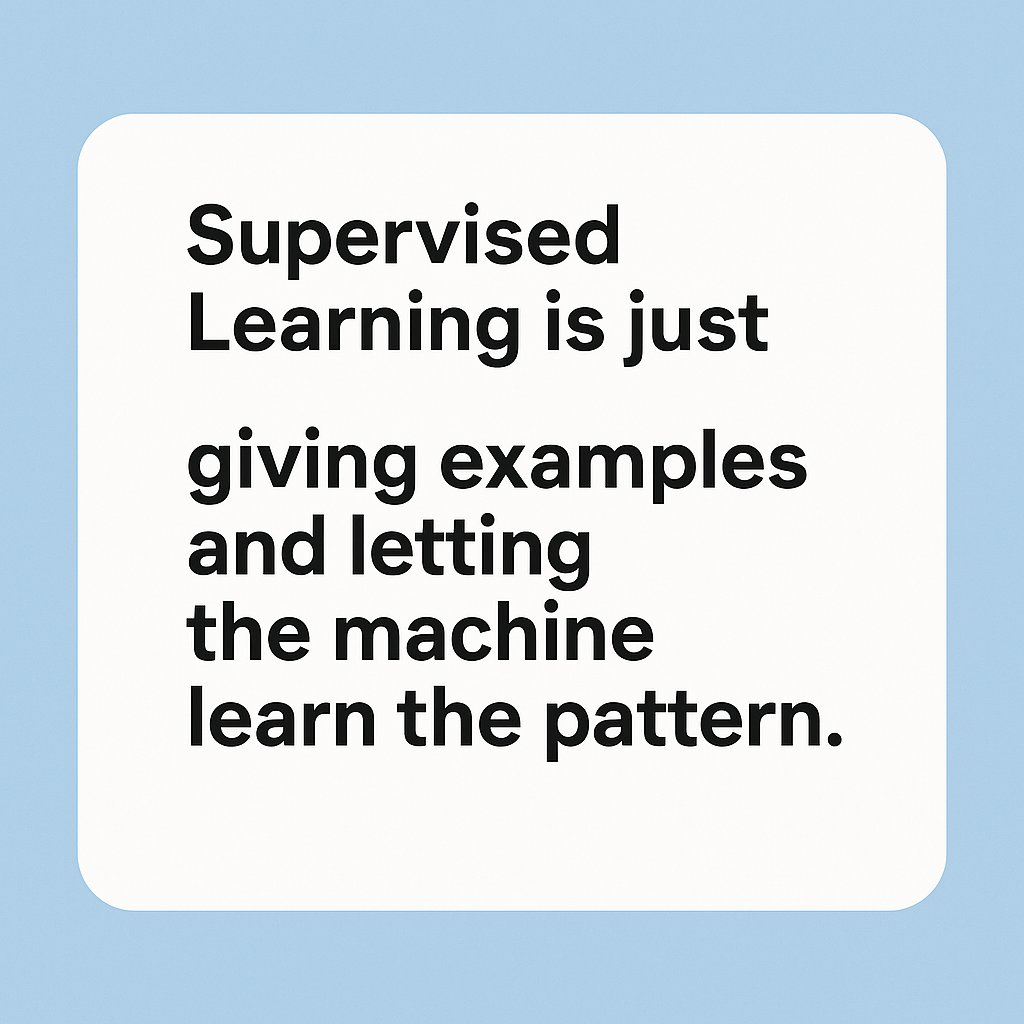
AI sounds complicated. But most of it is just this: Supervised Learning = Giving examples and asking the computer to learn the pattern. Just like teaching a child what a mango looks like.
Master this mindset and you're no longer afraid of SQL. Day 3 of my 30-day SQL + AI clarity series. Follow for tomorrow’s post — “Supervised Learning explained in plain English.”
This is the simplest building block of SQL. But it's also 80% of real-world business queries.
SELECT tells SQL what to show. WHERE tells SQL when to be picky.Together, they make your data query laser-focused.
But what if you only want organic apples? Then you filter. SELECT apples FROM supermarket WHERE type = 'organic'
Let me break it down... You enter a supermarket. You don't say, “Show me everything!” You say: “I want milk, rice, and apples.” e.g. SELECT milk, rice, apples FROM supermarket


















United States เทรนด์
- 1. #MerryChristmasJustin 10.9K posts
- 2. #wednesdaymotivation 3,387 posts
- 3. Good Wednesday 35.9K posts
- 4. Met Gala 49.6K posts
- 5. Rayman 2 1,530 posts
- 6. Hump Day 15.1K posts
- 7. #HumanRightsDay 30.5K posts
- 8. Waffle House 4,351 posts
- 9. Oslo 293K posts
- 10. #Wednesdayvibe 2,564 posts
- 11. FOMC 39.5K posts
- 12. Act III 2,547 posts
- 13. María Corina Machado 278K posts
- 14. María Corina Machado 278K posts
- 15. Happy Hump 10.7K posts
- 16. #NXXT_GridReform N/A
- 17. Toph 19.3K posts
- 18. Nobel 385K posts
- 19. Sophie Kinsella 2,488 posts
- 20. Zendaya 37K posts
Something went wrong.
Something went wrong.