
#clusteringalgorithmsfordatascientists نتائج البحث

10 Clustering Algorithms for Data Scientists tinyurl.com/5n7xkdtc #ClusteringAlgorithmsforDataScientists #AlgorithmsforDataScientists #ClusteringAlgorithms #DataScientists #AI #AINews #AnalyticsInsight #AnalyticsInsightMagazine


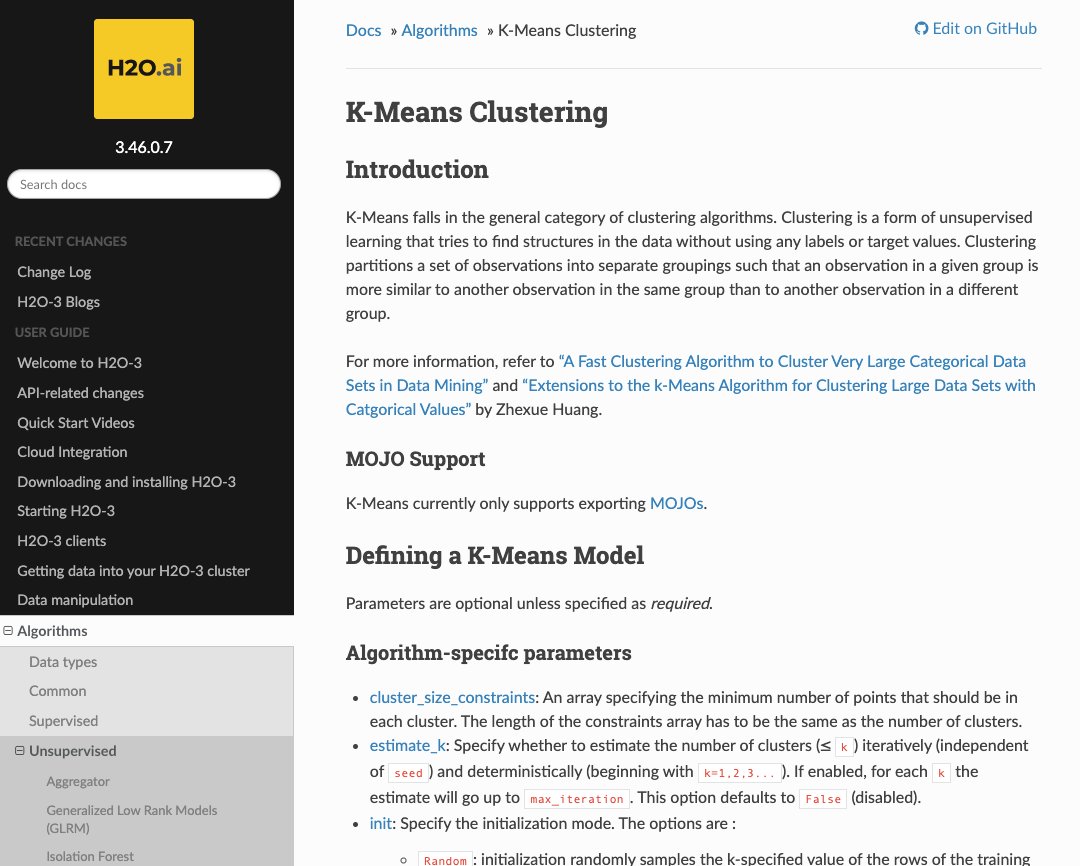
4. Clustering & segmentation: - fit HDBSCAN or K‑Modes/ K‑Means (scikit-learn) - For high-speed K-means, try the h2o implementation Website: docs.h2o.ai/h2o/latest-sta…

6. Spectral Clustering: This technique uses eigenvalues of a similarity matrix to reduce dimensions before applying clustering. It's great for non-convex shapes.

A Clustering-Based Variable Ordering Framework for Relaxed Decision Diagrams for Maximum Weighted Independent Set Problem. arxiv.org/abs/2512.15198

#ClusterAnalysis can easily identify natural groupings in your data. This helps businesses in many ways. Here’s a 📽️ glimpse of how cluster analysis works inside @ZohoAnalytics👇 To know more👉 zma.page/p9e

Clustering with Light (but Massive) Relics. arxiv.org/abs/2512.14672

Just like how ornaments cluster together on a Christmas tree to create something beautiful, clustering algorithms help us group similar data points together to reveal hidden patterns in biological data! 🎁 EARLY BIRD GIFT: Data Visualization in Bio Course 2025!

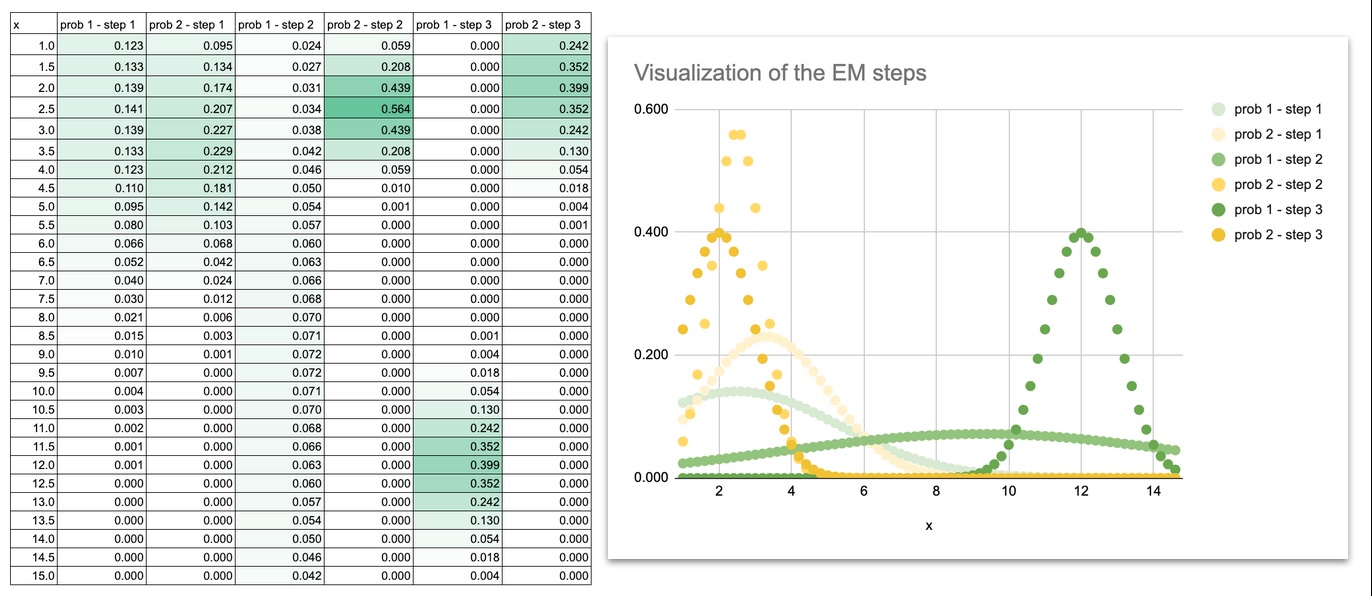
For those familiar with k-Means, this article explains the next logical step in clustering. Learn how Gaussian Mixture Models incorporate variance and covariance for more nuanced results. By Angela Shi towardsdatascience.com/the-machine-le…
One of the technical points that is the hardest to communicate is that you can put any data you want into a clustering algorithm and the algorithm will produce clusters, whether there actually are clusters or not
10 Clustering Algorithms for Data Scientists tinyurl.com/5n7xkdtc #ClusteringAlgorithmsforDataScientists #AlgorithmsforDataScientists #ClusteringAlgorithms #DataScientists #AI #AINews #AnalyticsInsight #AnalyticsInsightMagazine

Doing cluster analysis, #inferential #MachineLearning? Have you tried agglomerative, density-based clustering? A very flexible method to find groupings in your data! To help my students, I built out this super cool interactive #Python dashboard with @matplotlib. I shared it on…

Using a new algorithm called FLSHclust, researchers have revealed rare and previously unknown #CRISPR-Cas systems. The approach and results provide novel opportunities for understanding the vast functional diversity of microbial proteins. scim.ag/5dK

Using a new algorithm called FLSHclust, researchers have revealed rare and previously unknown #CRISPR-Cas systems. The approach and results provide novel opportunities for understanding the vast functional diversity of microbial proteins. scim.ag/4W6

Need to cluster your customers? I've just tried a new R package to do just that... It's called Tidyclust. And I have NEW R tutorial coming tomorrow. 😀 Register for my R-Tips Newsletter to get it: learn.business-science.io/r-tips-newslet… #datascience #rstats

What clustering algorithm is better than DBSCAN? Of course Conformal DBSCAN Clustering of Trajectories using Non-Parametric Conformal DBSCAN Algorithm' sites.rutgers.edu/jie-gao/wp-con… #conformalprediction #machinelearning


Cluster Analysis in R Cluster Analysis in R, when we do data finnstats.com/index.php/2021… #rstudio #datascience #rstats #statistics #programming
finnstats.com
Cluster Analysis in R » Unsupervised Approach » FINNSTATS
Cluster Analysis in R In clustering need observations in the same group with similar and observations in different groups to be dissimilar.

A bit more on clustering. If you observe the entire population and assignment is at the unit level, there is not need to cluster. If assignment is at the group level -- to all units -- cluster at the group level. (Hopefully there are many groups.) #metricstotheface
Let's dip our toes into the clustering issue. Here's a scenario. In the U.S. you administer an RCT -- say, for a job training program after a random sample of N = 1,000 is drawn from the population. You regress Y on 1, D, where D is the treatment dummy. #metricstotheface

'How Machines Make Sense of Big Data: an Introduction to Clustering Algorithms' by Peter Gleeson medium.freecodecamp.com/how-machines-m…
Something went wrong.
Something went wrong.
United States Trends
- 1. Rays 13K posts
- 2. Shane Baz 2,922 posts
- 3. Tucker 172K posts
- 4. Merry Christmas 174K posts
- 5. Brandon Lowe 2,459 posts
- 6. NextNRG 3,679 posts
- 7. #FanCashDropPromotion 3,309 posts
- 8. Happy Holidays 50.3K posts
- 9. Western Michigan 2,057 posts
- 10. Kennesaw State 1,911 posts
- 11. Kennedy Center 181K posts
- 12. #FursuitFriday 14.5K posts
- 13. #jonita 40.9K posts
- 14. Mangum 1,464 posts
- 15. Burrows 2,402 posts
- 16. Jake Paul 30.1K posts
- 17. Astros 3,446 posts
- 18. Ben Shapiro 96K posts
- 19. Bodine 2,000 posts
- 20. #Rashmer 28.7K posts