
#errorfreecoding search results

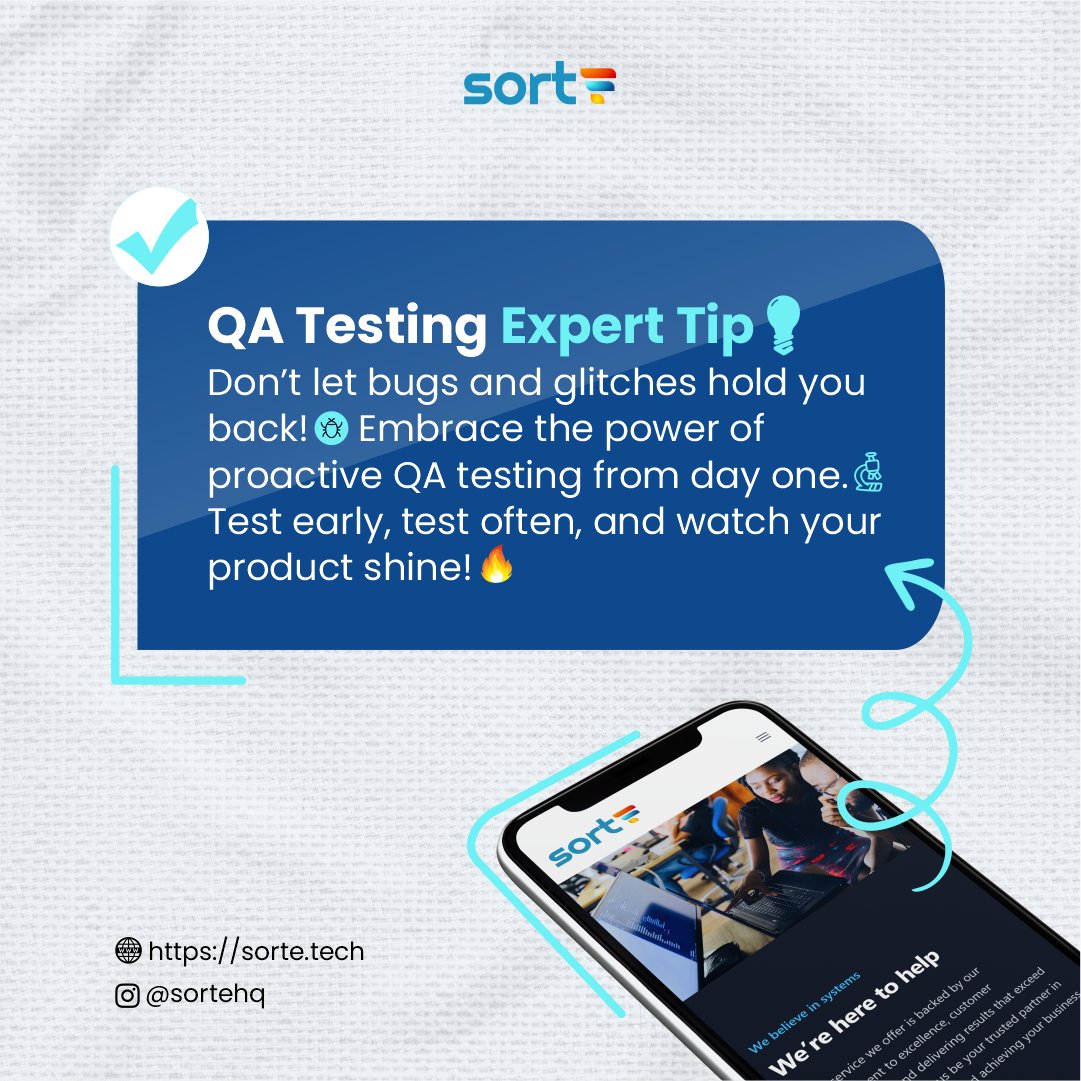
Ready to skyrocket your startup’s success? 🔥 With our proactive QA testing, we've got you covered with a bug-free journey! Don't wait, get in touch and let's ensure your product’s success! ✨ #qatesting #errorfreecoding #codingtips #qatips

No room for errors in medical coding – it’s all about diligence! 📋🔍 #errorfreecoding #medicalcoding #healthcare #patientcare #coder #onlinecoach #globalskillacademy #india

Want to level up your coding skills? Let's dive into day 5 of our programming series focusing on the == and is operators and reverse! Stay tuned for more valuable insights and practical tips in our daily coding series! #ReverseTechniques #EfficientCode #ErrorFreeCoding

Tweet 3: Forget about code errors! AI Copilot analyzes your code as you type, offering valuable insights and catching mistakes before they escalate. Boost your coding confidence with this intelligent tool! #ErrorFreeCoding #AICopilot

"The best error message is the one that never shows up." - Thomas Fuchs #ErrorFreeCoding #CodeQuality #DeveloperMindset #BugFreeProgramming #DeveloperJokes #ProgrammingLife #TechQuotes #SoftwareDevelopment #CodingFun #DeveloperCommunity

That satisfying feeling when your C++ code compiles without any errors on the first try. 🙌💻 #ErrorFreeCoding #CPlusPlusSuccess #ProgrammingAchievement #CodingMemes #DeveloperHumor

The best error message is the one that never shows up. Double-check your code before hitting run! 🚀 #CodeQuality #ProgrammingTips #ErrorFreeCoding

🚀🐍 Python pals, rejoice! 🥳 I've cracked the code on that pesky 'AttributeError: module enum has no attribute IntFlag' 🙌 Say goodbye to the error & hello to smooth coding! 🌈💻 Check out my nifty solution here: lxadm.com/attributeerror… #PythonSolved #ErrorFreeCoding

Precision in Code Generation: Experience code generation with unparalleled accuracy as the Whisper AI: ChatBot translates complex instructions into precise and error-free code snippets. #CodePrecision #ErrorFreeCoding iOS app link: rb.gy/13rcm1

Something lighthearted with which to end a challenging year. On behalf of everyone at @DominoPrint_UK, I'd like to wish you all a very Merry Christmas and a happy (and healthy) New Year. #supportingmanufacturers #errorfreecoding domino-na.wistia.com/medias/qj89pe4…
Want to level up your coding skills? Let's dive into day 5 of our programming series focusing on the == and is operators and reverse! Stay tuned for more valuable insights and practical tips in our daily coding series! #ReverseTechniques #EfficientCode #ErrorFreeCoding
The best error message is the one that never shows up. Double-check your code before hitting run! 🚀 #CodeQuality #ProgrammingTips #ErrorFreeCoding
"The best error message is the one that never shows up." - Thomas Fuchs #ErrorFreeCoding #CodeQuality #DeveloperMindset #BugFreeProgramming #DeveloperJokes #ProgrammingLife #TechQuotes #SoftwareDevelopment #CodingFun #DeveloperCommunity
Ready to skyrocket your startup’s success? 🔥 With our proactive QA testing, we've got you covered with a bug-free journey! Don't wait, get in touch and let's ensure your product’s success! ✨ #qatesting #errorfreecoding #codingtips #qatips
No room for errors in medical coding – it’s all about diligence! 📋🔍 #errorfreecoding #medicalcoding #healthcare #patientcare #coder #onlinecoach #globalskillacademy #india
Something went wrong.
Something went wrong.
United States Trends
- 1. Sherrone Moore 9,392 posts
- 2. Mets 53.5K posts
- 3. Vini 35K posts
- 4. Alonso 91.8K posts
- 5. Mel Tucker N/A
- 6. Biff Poggi N/A
- 7. Sheen 25.8K posts
- 8. Erika 92.3K posts
- 9. Orioles 21.6K posts
- 10. Rudiger 27.1K posts
- 11. Bryce Underwood N/A
- 12. Rodrygo 54.9K posts
- 13. Courtois 17.4K posts
- 14. Real Madrid 160K posts
- 15. Powell 77.9K posts
- 16. Jimmy Neutron 20.2K posts
- 17. Michigan Man 1,353 posts
- 18. Soto 25.2K posts
- 19. Martinelli 23K posts
- 20. Jim Knowles 1,750 posts