

Southern Cross GeoScience
@SCGeoscience
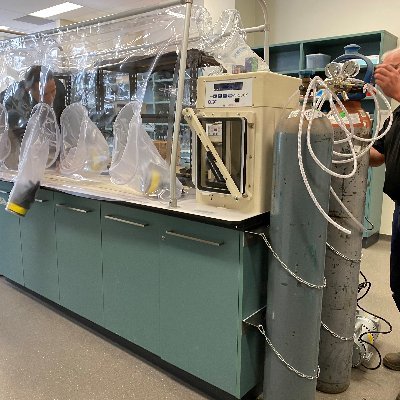
Southern Cross GeoScience specialises in multidisciplinary research that broadens our understanding of ancient and contemporary geo-environmental systems.
You might like



Are trees a climate catch 22? Leaves remove CO2 from the atmosphere, but their stems emit the potent greenhouse gas methane...unless bacteria consume it first go.nature.com/2P7xGiU @Luke_Jeffrey

In a world-first, published in @NatureComms, #SouthernCrossUniversity researchers reveal the unique, methane-eating microbial communities living in the bark of a common Australian tree species, the paperbark. Read more➡️ bit.ly/3mLt9PB @Luke_Jeffrey
'We found methane-eating bacteria living in a common Australian tree. It could be a game changer for curbing greenhouse gases.' 👇 🌳theconversation.com/we-found-metha… Read a related paper by @Luke_Jeffrey, @Dr_Damo77, et al. 👇 📖nph.onlinelibrary.wiley.com/doi/10.1111/np…
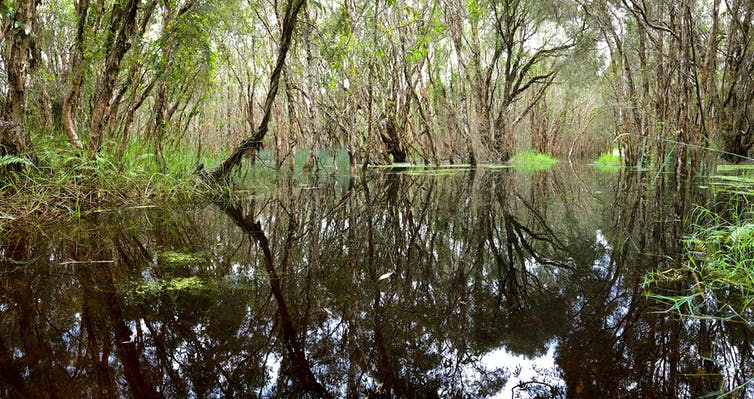

@Luke_Jeffrey does some #scicomm on his new tree-mediated methane #treethane paper in @ConversationEDU tinyurl.com/zrmwyt6w . Significant methane oxidation within the bark of trees! Paper #openaccess in @NatureComms nature.com/articles/s4146…
nature.com
Bark-dwelling methanotrophic bacteria decrease methane emissions from trees
Nature Communications - The photosynthesis performed by trees makes them an important sink for atmospheric carbon dioxide, but trees are also sources of the potent greenhouse gas methane. Here the...

Bark-dwelling methanotrophic bacteria decrease methane emissions from trees nature.com/articles/s4146…
nature.com
Bark-dwelling methanotrophic bacteria decrease methane emissions from trees
Nature Communications - The photosynthesis performed by trees makes them an important sink for atmospheric carbon dioxide, but trees are also sources of the potent greenhouse gas methane. Here the...

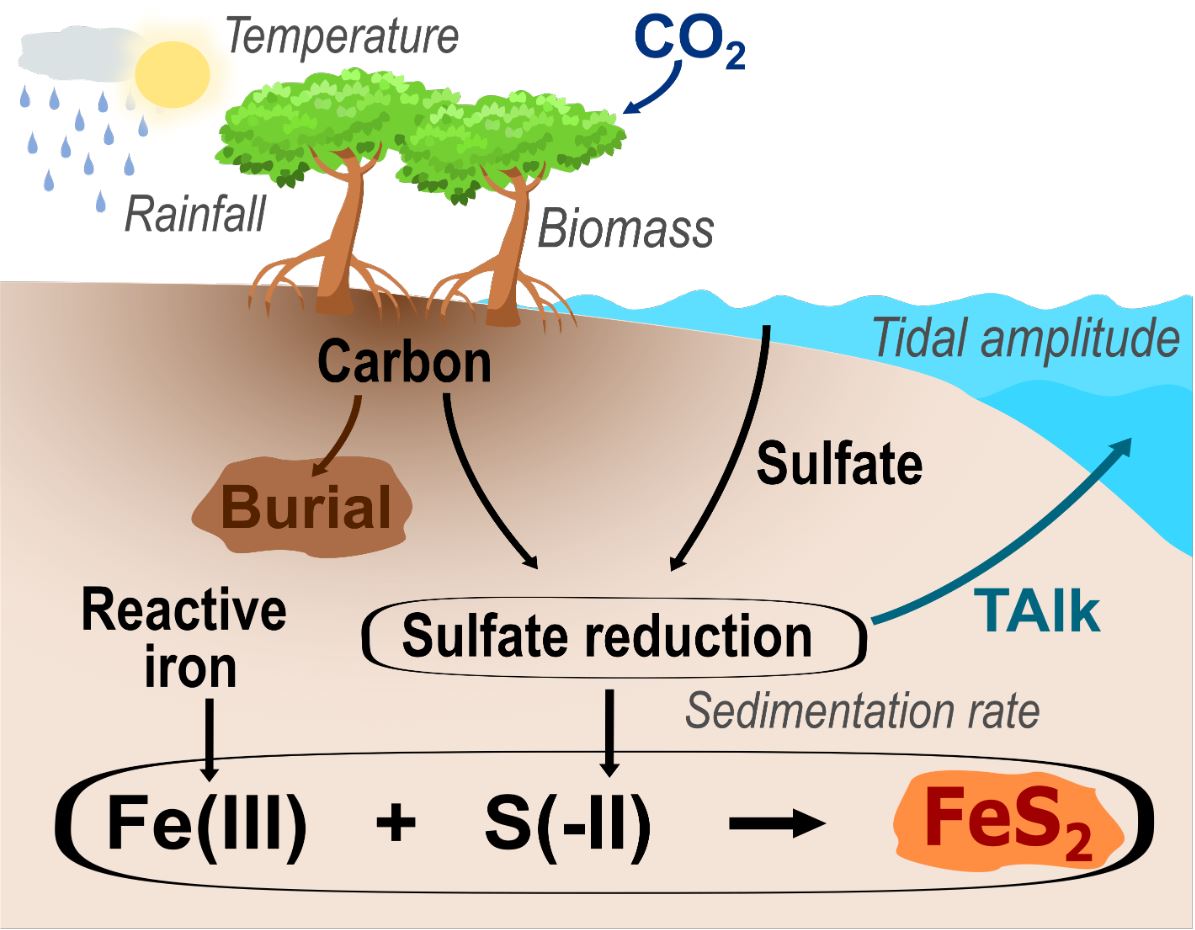
Our paper "Alkalinity Production Coupled to Pyrite Formation Represents an Unaccounted Blue Carbon Sink" is now published in GBC. dx.doi.org/10.1029/2020GB…
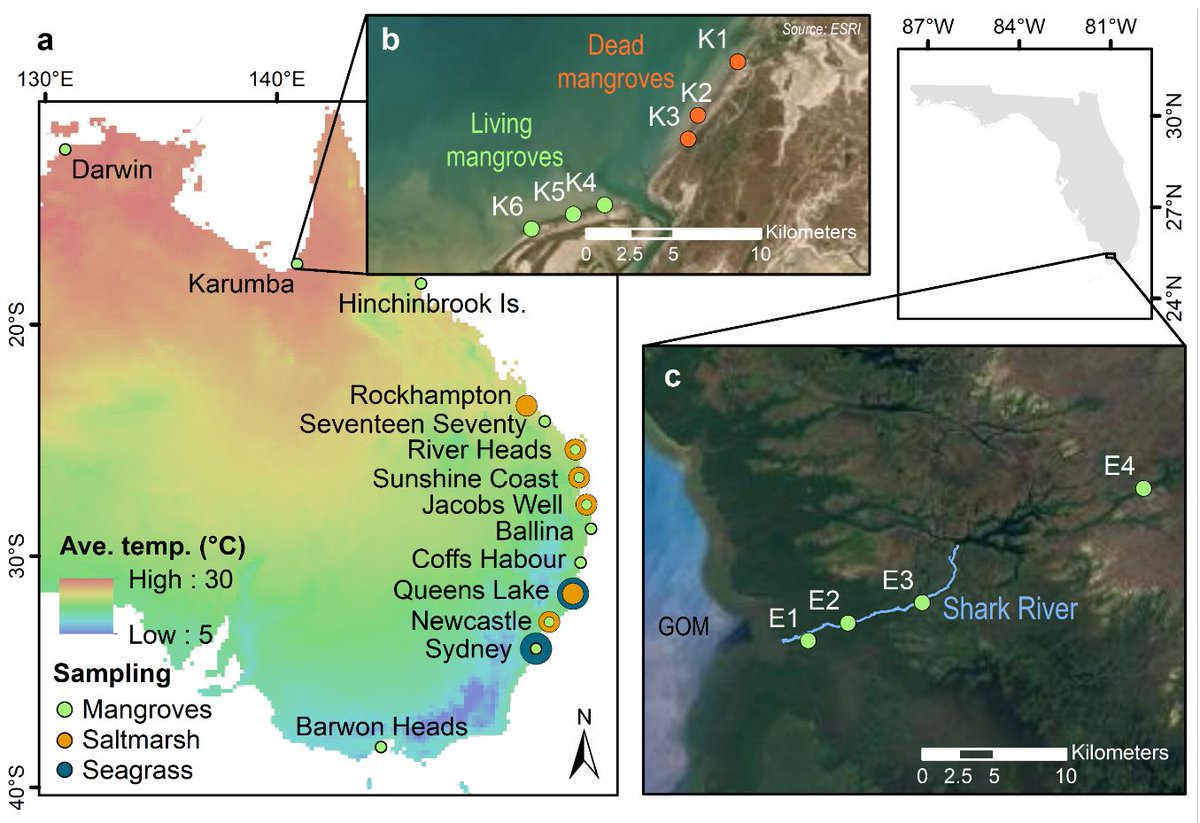


Excited to now share our @NatureComms paper: Bark-dwelling #methanotrophic bacteria decrease #methane emissions from trees. nature.com/articles/s4146… Awesome collaborative effort with @greeninglab @ele_chiri @ScottJoh_dirtDr @Dr_Damo77 🙌#Treethane #MOB #Microbiology #Oxidation
nature.com
Bark-dwelling methanotrophic bacteria decrease methane emissions from trees
Nature Communications - The photosynthesis performed by trees makes them an important sink for atmospheric carbon dioxide, but trees are also sources of the potent greenhouse gas methane. Here the...
A #SciComm piece I wrote for @ConversationEDU about the significance of the global #Treethane research frontiers and our new @NatureComms publication revealing that microbes living in tree bark consume #Methane theconversation.com/we-found-metha…
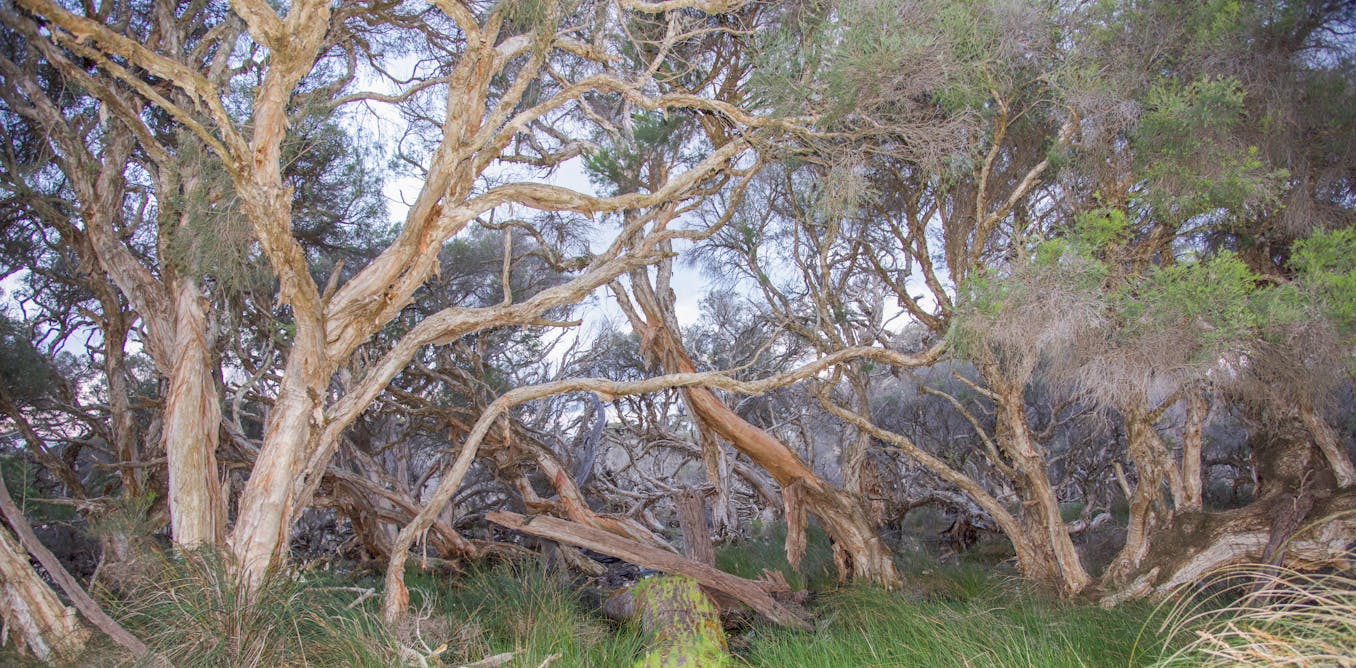
1/6) Pls check out our newly accepted @NewPhyt paper revealing #Isotopic evidence for axial tree stem #Methane #Oxidation within subtropical lowland forests 🌱> tinyurl.com/57k3zaa9
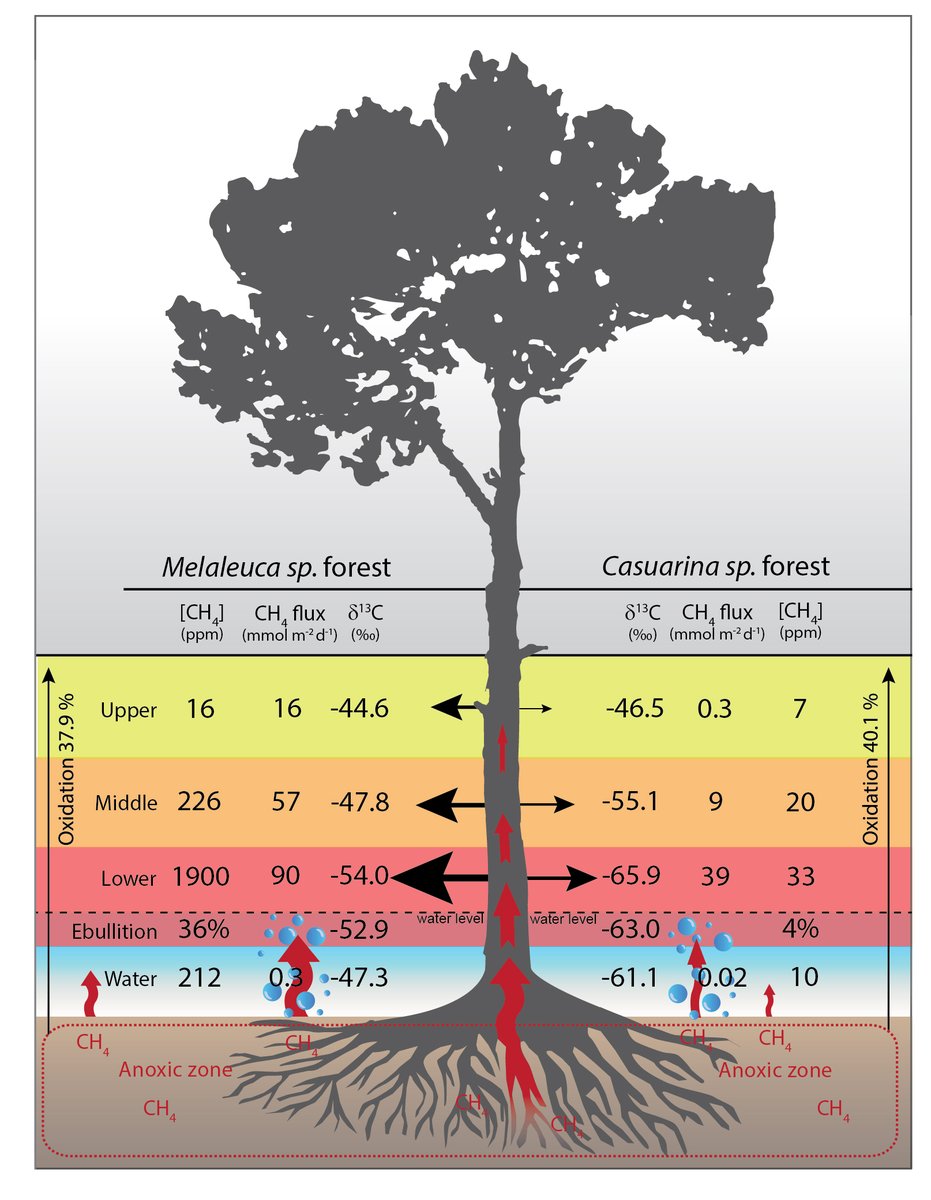
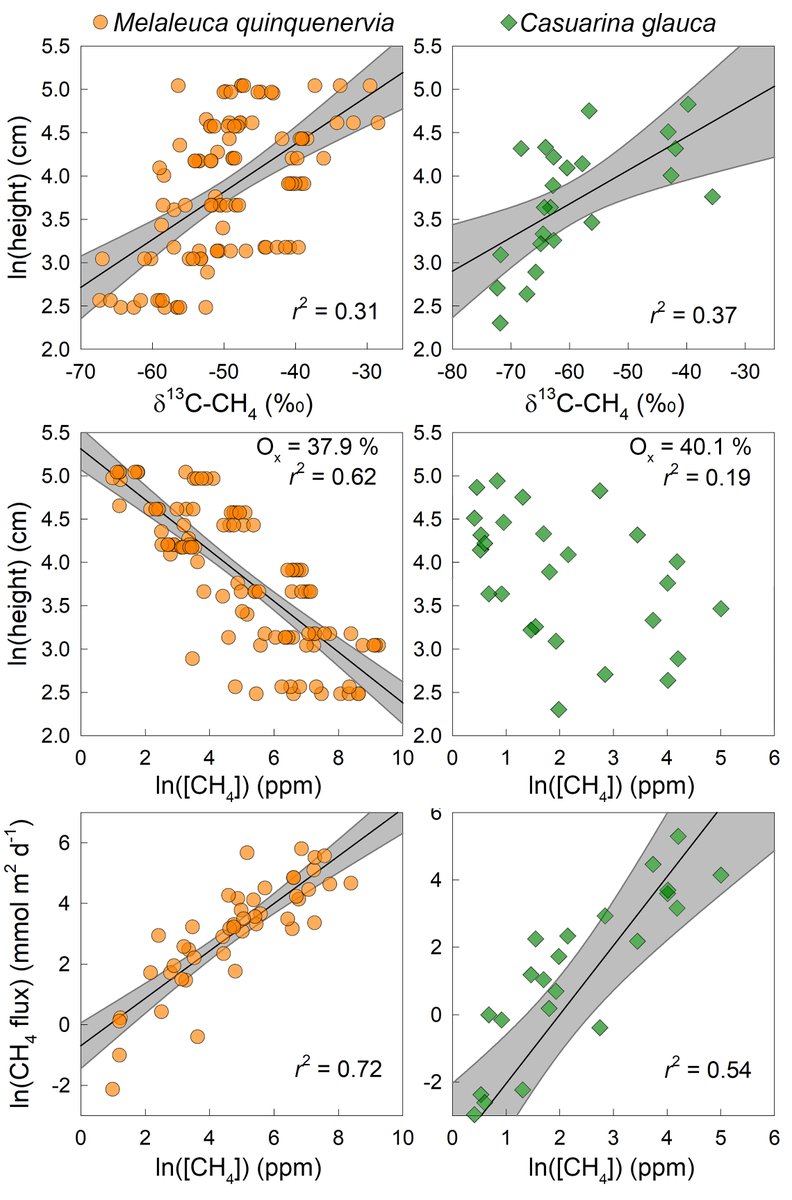

Submitted my Ph. D. thesis. A big thanks goes to everyone who supported me during the last three years. Now I am looking for postdocs in Europe.


Happy International Women and Girls in Science Day💕👩🔬👩🏻🎓@SCUonline @SCGeoscience #WomenScienceDay #WomenInScience
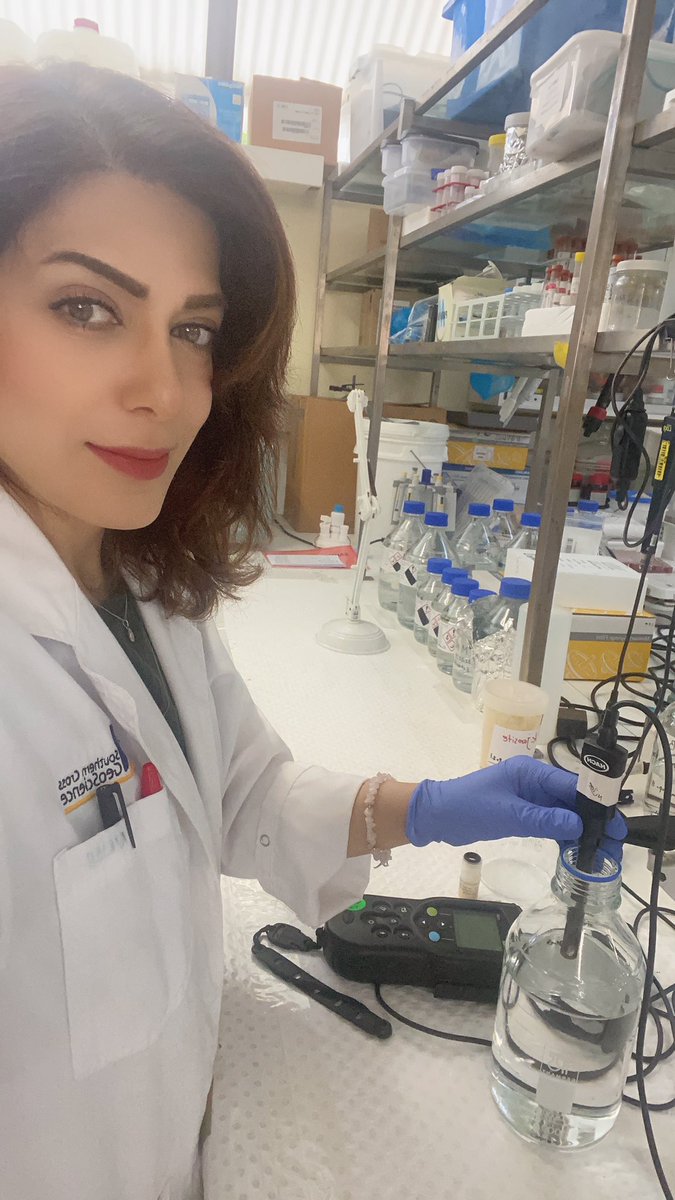
Fantastic #PhD opportunity 👇 ✅A frontier project investigating forest #Methane fluxes🌴🌳 ✅Funded 3-year #PhD scholarship💲 ✅World-class @SCGeoscience labs +equipment👩🔬👨🔬 ✅Beautiful @SCUonline subtropical Australian location ✅ Please RT or tag any whom may be interested 🙏
Check out @GReithmaier's new #PhD chapter on subtropical urban #Estuarine #Biogeochemical dynamics driven by rainfall. Love the new duel 32-syringe autosampler methods capturing 2-week #Timeseries @ 1.5hr resolution #Alkalinty #DOC #Nutrient fluxes👏🙌
Check out our new publication “Rainfall drives rapid shifts in carbon and nutrient source-sink dynamics of an urbanised, mangrove-fringed estuary”. @Dr_Damo77 @Barefoot_Lab @Drexl_Michael #Mangrove #biogeochemistry #estuary #bluecarbon Available at: sciencedirect.com/science/articl…
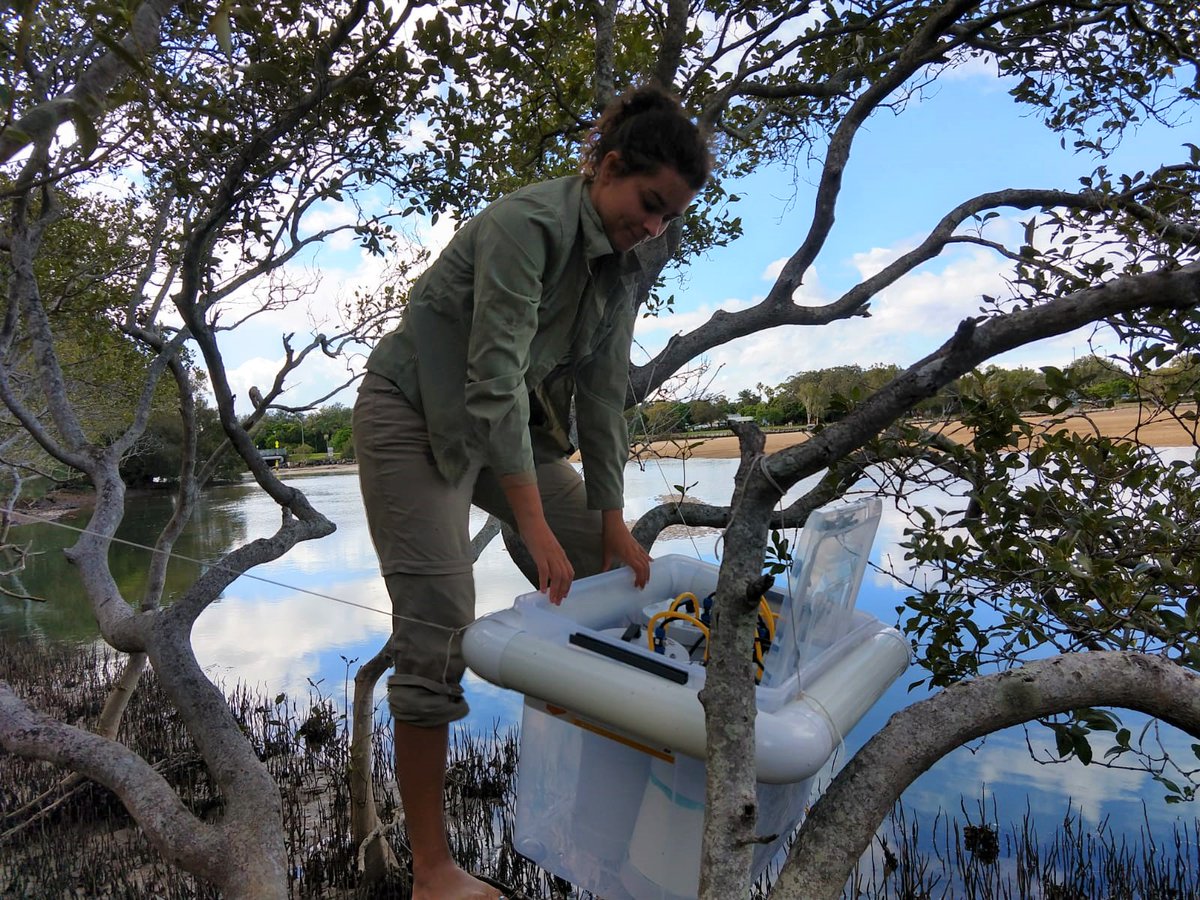
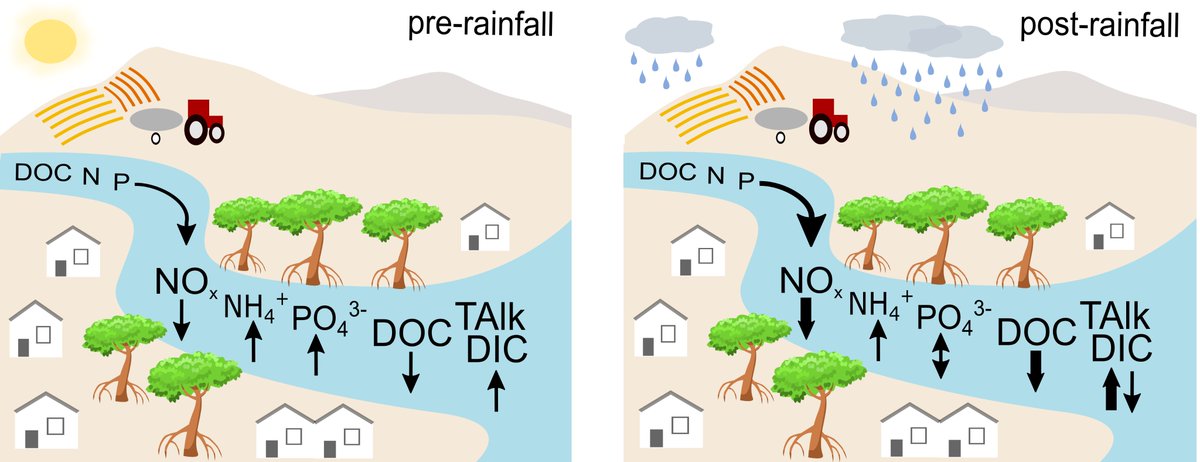
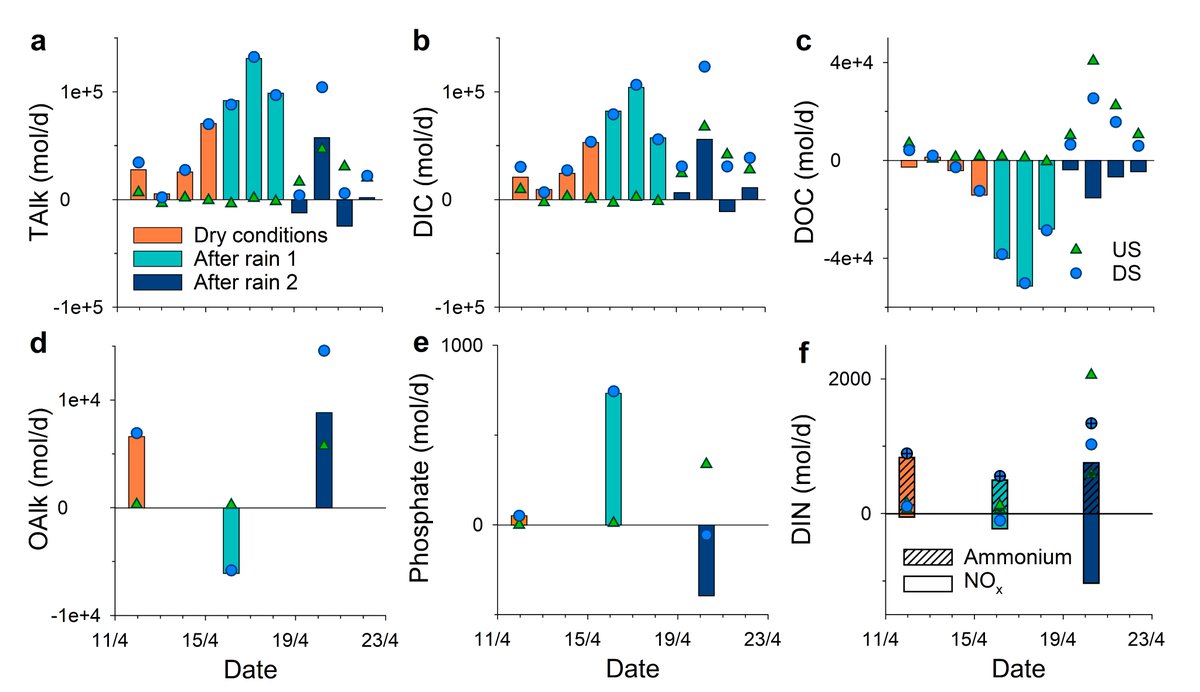
Check out our new publication “Rainfall drives rapid shifts in carbon and nutrient source-sink dynamics of an urbanised, mangrove-fringed estuary”. @Dr_Damo77 @Barefoot_Lab @Drexl_Michael #Mangrove #biogeochemistry #estuary #bluecarbon Available at: sciencedirect.com/science/articl…

Happy to share our new paper on antimony interactions with manganese oxides by @nkarimia @ScottJoh_dirtDr and myself in the Journal of Hazardous Materials (doi.org/10.1016/j.jhaz…). Thanks to @arc_gov_au & @GeoloJess_ + Peter Kappen at @ausynchrotron. @SCUonline @SCGeoscience
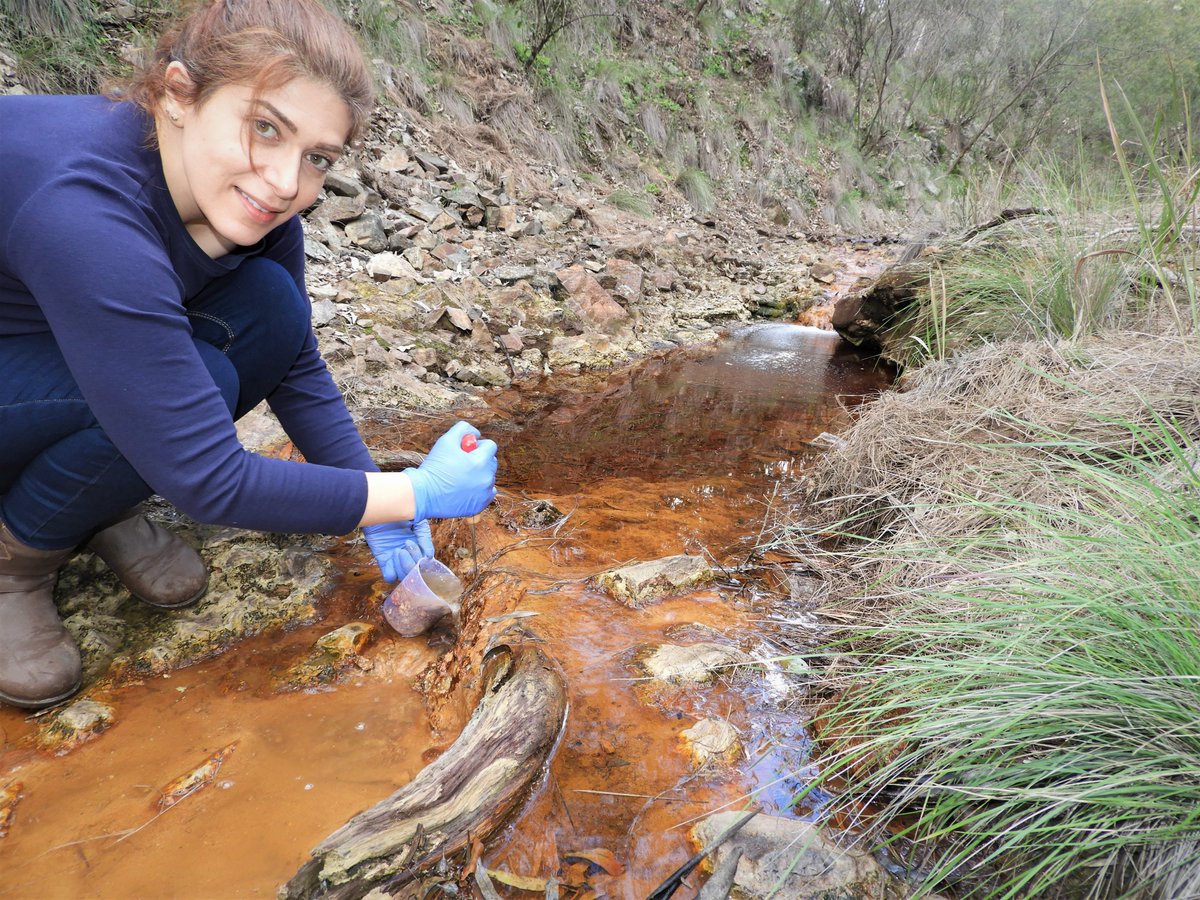
Our new paper shows that agricultural drainage has increased REE leaching from acid sulfate soils under farmlands in Finland, leading to REE enrichment in estuarine sediments mainly via sorption to clay minerals (borenv.net/BER/archive/pd…). @SCUonline @SCGeoscience @ResearchSCU
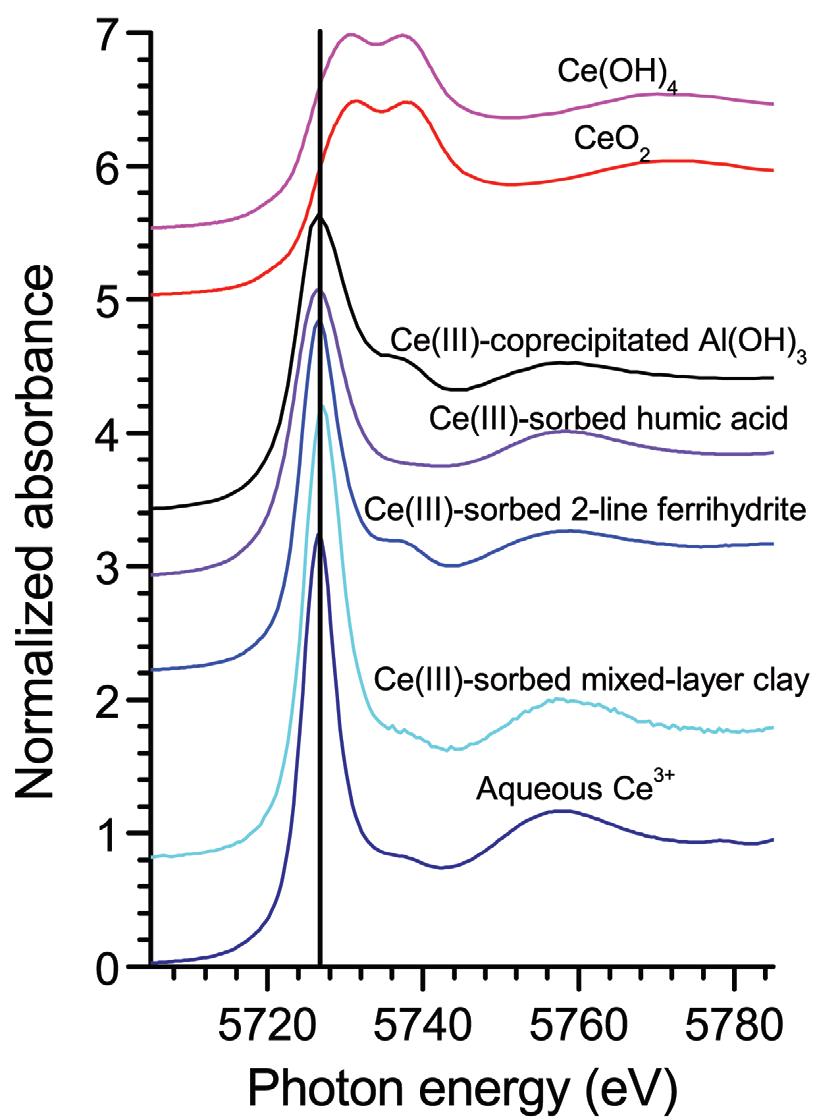
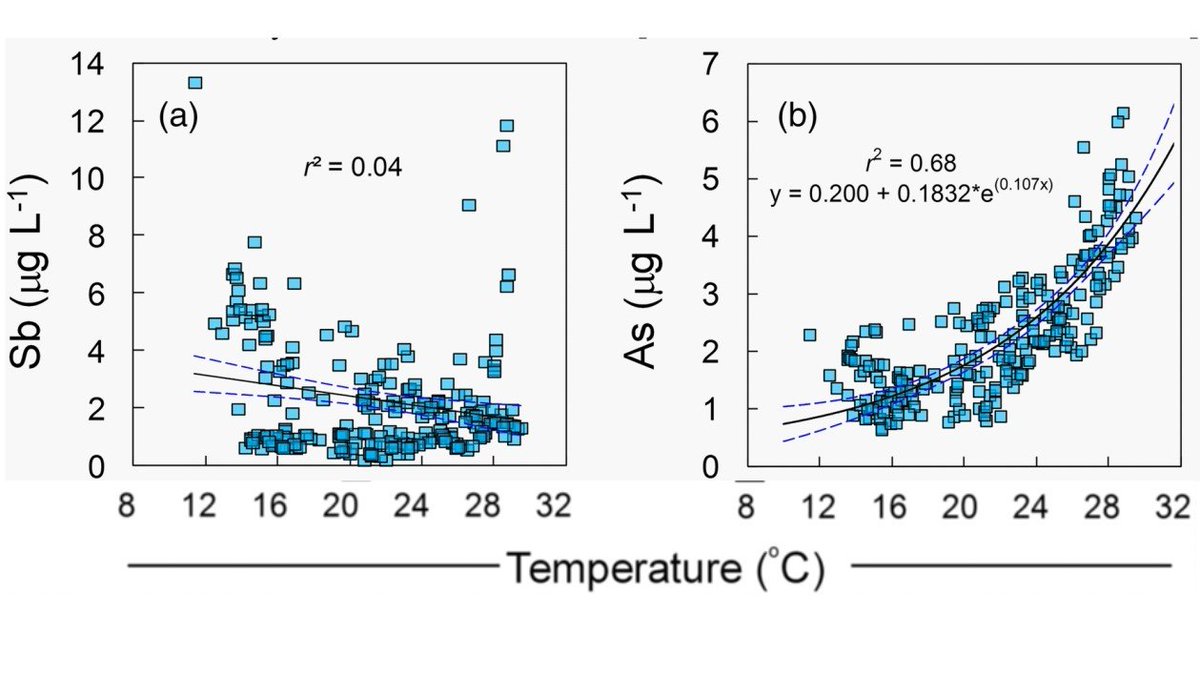
How will climate change impact arsenic & antimony mobility in rivers? Our new paper from @ScottJoh_dirtDr @nkarimia and myself in Water Resources Research provides new clues (check it out at dx.doi.org/10.1029/2020WR…). @SCUonline @ResearchSCU @SCGeoscience #mining #geochemistry
Here is a link to the OA paper bg.copernicus.org/articles/17/47… A big thanks to collaborators from @UQ_News @GriffithARI
bg.copernicus.org
Reconstructing extreme climatic and geochemical conditions during the largest natural mangrove...
Abstract. A massive mangrove dieback event occurred in 2015–2016 along ∼1000 km of pristine coastline in the Gulf of Carpentaria, Australia. Here, we use sediment and wood chronologies to gain...
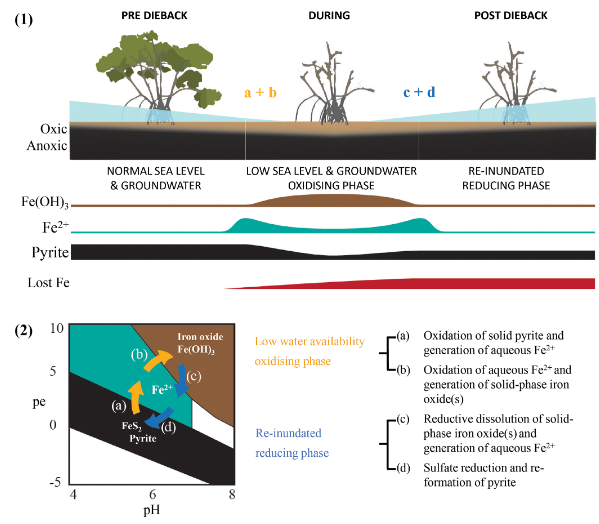
Great to see this final paper of twitterless James Sippo's PhD out in @EGU_BioGeo. Combining dendochronology and sediment geochemistry to unravel impacts of mangrove dieback on iron. Great collaboration with @ANSTO research funded by @arc_gov_au
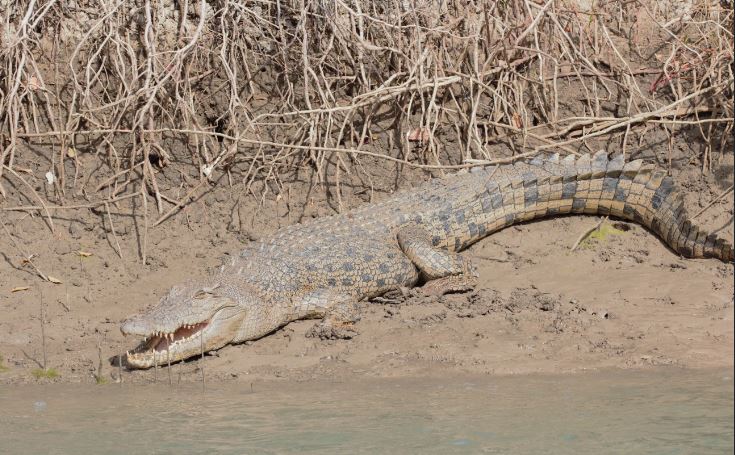

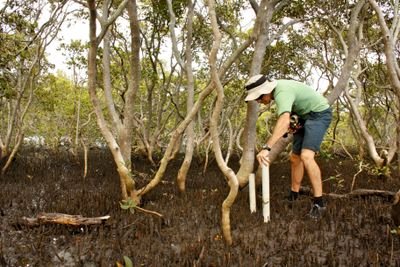
The new #MakingADifference features the story of a research team from @SCGeoscience who were first on the scene in 2016 to investigate the unprecedented dieback of mangrove forests in northern Australia’s Gulf of Carpentaria. @Luke_Jeffrey @Dr_Damo77 ow.ly/5uj950BagPU










































































United States Trends
- 1. Mark Pope 1,583 posts
- 2. Derek Dixon N/A
- 3. Brunson 7,124 posts
- 4. Knicks 13.5K posts
- 5. Jaylen Brown 7,556 posts
- 6. Kentucky 28.6K posts
- 7. Celtics 14.9K posts
- 8. Notre Dame 37.2K posts
- 9. Caleb Wilson N/A
- 10. Duke 29.2K posts
- 11. Miami 97K posts
- 12. UConn 8,690 posts
- 13. Van Epps 128K posts
- 14. Braylon Mullins N/A
- 15. Hubert Davis N/A
- 16. Jordan Walsh 1,073 posts
- 17. Bama 24K posts
- 18. #kubball 1,186 posts
- 19. Tennessee 216K posts
- 20. Rupp 2,571 posts

Something went wrong.
Something went wrong.