

おすすめツイート


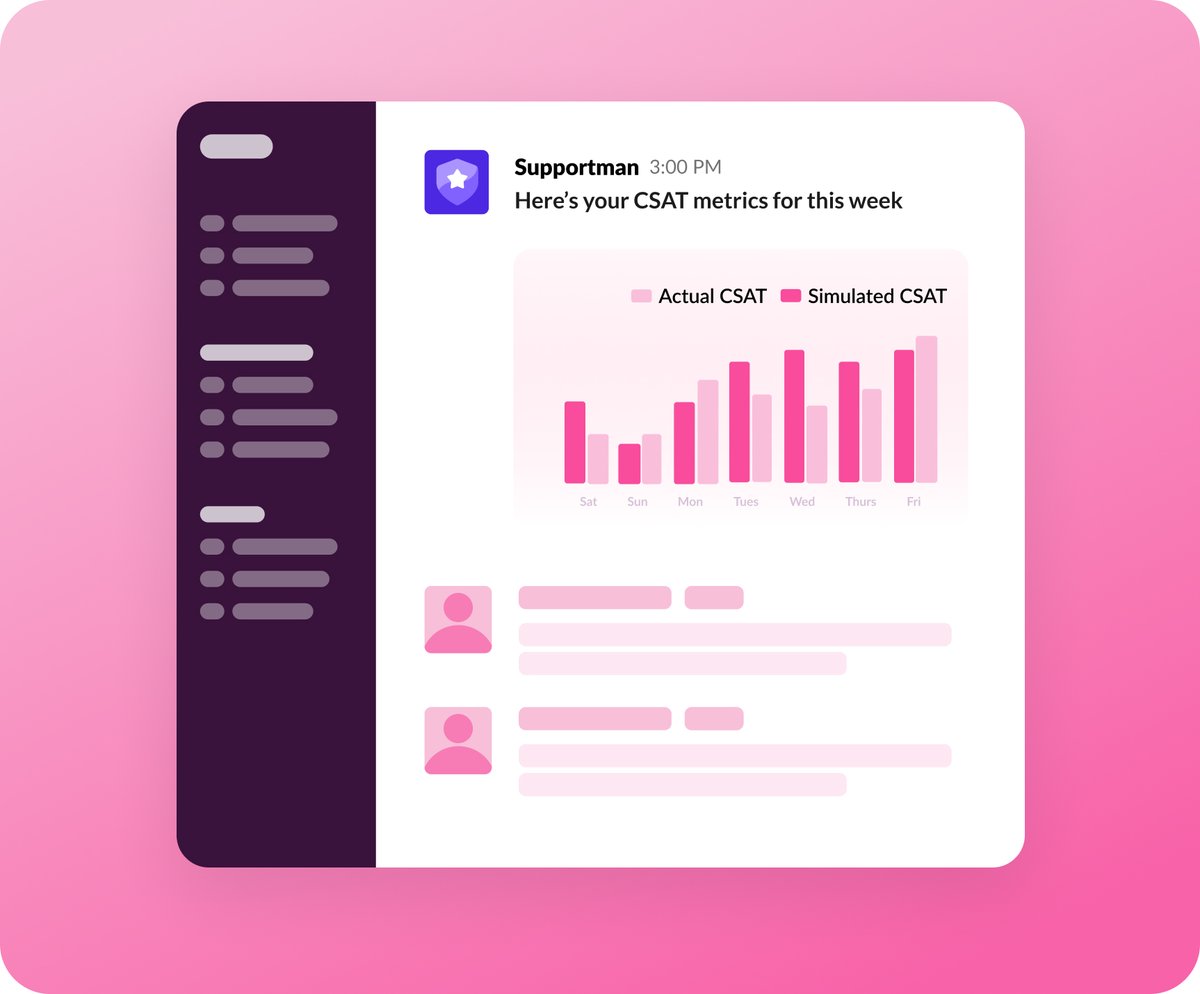
Your CSAT form is only useful if you act on it. Supportman pushes Intercom ratings into Slack, flags the bad ones, and adds AI-generated feedback. No more “I’ll get to it next week.” 🚀 supportman.io
Tone is a feature. Standardize welcome messages: warm, concise, “we’ve got you.” Kill the extremes (over-casual or robotic). Track CSAT deltas after the change—you’ll see it. #VoiceAndTone #Writing #CustomerExperience
Nothing like rolling the dice and calling it ‘quality assurance.’ 🎲 Spoiler: random ≠ representative. Real QA is about patterns, not chance. #SupportOps
Try this for a week: review negative CSAT, add screenshots to every answer, log product gaps. Report your CSAT delta. #Experimentation
A isn’t just about random. It has to be representative. 👀 Stacy Justino (PetDesk) shares how her team balances recency, ticket type & fairness in reviews. #CustomerSupport #SupportQA
Six moves to kickstart QA this week: 1) Review negative CSAT first 2) Do 10 deep reviews, not 100 shallow 3) Peer-to-peer feedback 4) Screenshot everything 5) Jira escalations by feature 6) Slack nudges after day 3 of staleness Report back with one team-wide standard. #QuickWins
Customer feedback ≠ “throw it in a spreadsheet” Feedback workflow basics: 1️⃣ Acknowledge it 2️⃣ Tag it properly 3️⃣ Route it to product 4️⃣ Follow up Closed-loop feedback isn’t magic. It’s a workflow.
Sometimes customers just want a real person.🗣️ That’s why every AI chat gets QA — to check answers and guide people where they need to go. When someone types “human please,” they mean it. AI’s useful, but it still needs a human guardrail. #AI #CX
Support teams lose knowledge when it isn’t shared. Chloé’s team solved it by creating a dedicated channel where every new insight from support sessions gets posted for everyone to see. Simple, but powerful. #CustomerSupport #KnowledgeManagement #SupportQA
What’s one thing you should never skip in support? QA. Even a simple process like spreadsheets, peer notes, or basic reviews can save time, money, and headaches as your team grows. Start early. #CustomerSupport #SupportQA
Customer support is a real skill, and not everyone wants to be customer-facing. That’s okay. Let engineers solve the problems and let support handle the conversations. #CustomerSupport #CXSkills #SupportQA
Not every specialist wants to give feedback, and that’s okay. Some lean into peer reviews, others prefer guidance from leads. The key is giving agents a choice while making sure negative CSAT always gets addressed. #CustomerSupport #SupportQA #CXLeadership
Filing feedback isn’t enough. Customers want proof it was heard. That only happens when support + product are real partners, not just passing tickets. #CustomerSupport #ProductManagement #CXLeadership
AI drafts. Humans ensure empathy. QA your bot conversations and teach from the results. #AIinSupport
Great QA isn’t about pointing fingers, it’s about sitting down together and making feedback actionable. When coaching feels constructive, your team actually grows from it. #CustomerSupport #TeamCoaching
Ever get a 3-star rating and wonder what really went wrong? Sometimes the fix isn’t about your agents at all, it’s about the platform. Here’s how a quick QA follow-up turned one “meh” rating into real insight. #Support #CustomerSupport #CXLeadership
Prevent > apologize. A small QA team, with just a few chats a week, led to higher CSAT and real product fixes. It started with negative CSAT, went deeper on fewer reviews, and added screenshots to close the loop. #custserv #SupportOps
Elyse Mankin changed how I think about recognition. She starts every 1:1 with: “How do you like to be praised?” It’s a small question with a big impact. Some want a Slack shoutout. Others just want a quiet thank you. You won’t know unless you ask.






























































United States トレンド
- 1. Brunson 6,963 posts
- 2. Knicks 12.9K posts
- 3. Celtics 13.8K posts
- 4. Jaylen Brown 6,674 posts
- 5. Duke 28.5K posts
- 6. Notre Dame 35.8K posts
- 7. Jordan Walsh N/A
- 8. #WWENXT 11K posts
- 9. Miami 96K posts
- 10. Bama 23.3K posts
- 11. Van Epps 128K posts
- 12. Tennessee 215K posts
- 13. #kubball 1,079 posts
- 14. Braylon Mullins N/A
- 15. Mikal Bridges 1,529 posts
- 16. Brandon Garrison N/A
- 17. Nashville 33.1K posts
- 18. Caleb Wilson N/A
- 19. Behn 79.2K posts
- 20. Isaiah Evans 1,422 posts









Something went wrong.
Something went wrong.