
Brandon Tinklenberg
@bmt8909
York philosophy Phd student who spends most of his time thinking about cognitive science.
You might like


Now out, with @SimonFitzx "Animal culture and animal welfare" Captive animals have culture too, and noticing that can help captive animal welfare. cambridge.org/core/journals/…

Thanks so much to @bmt8909 and @loopingeffect for two really fascinating talks!

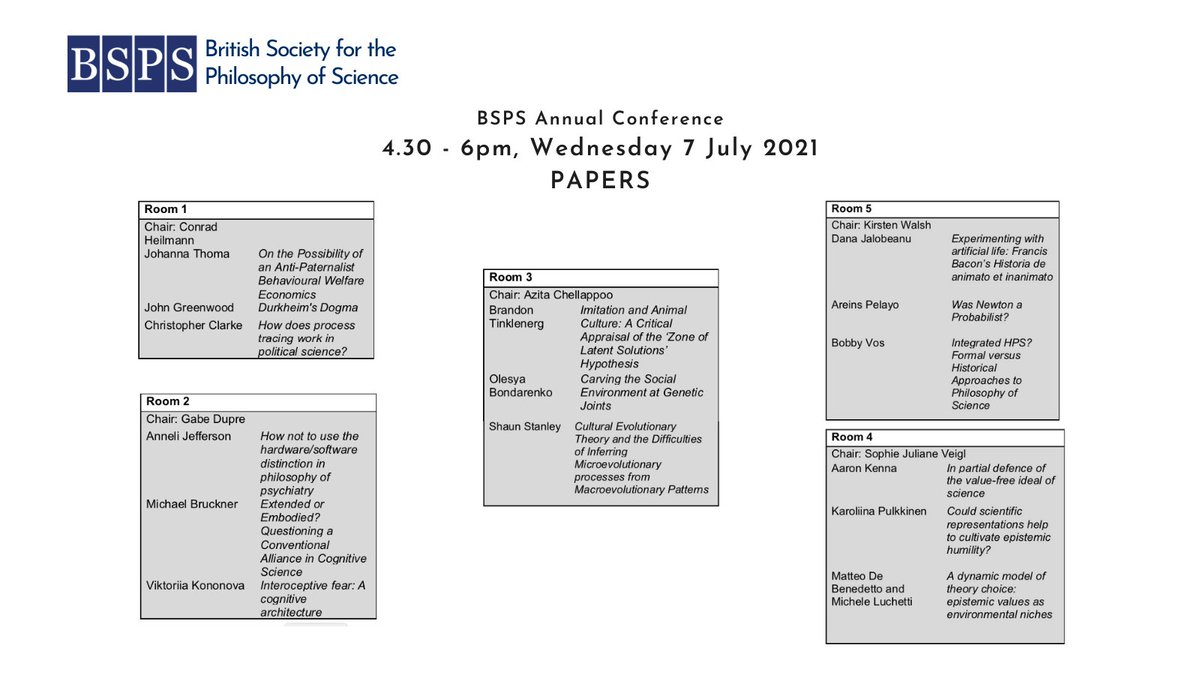
From 4.30pm, UK time, we've got the first round of paper sessions at #BSPS2021. Once more, we are spoilt for choice! (Free registration via the link in the tweet above.)
It was my great pleasure to completely rewrite the Animal Cognition entry with @Susana_MonsO And stay tuned for SEP additional entries on subtopics by @MartaHalina @cameronjbuckner and @CommunicatMind in the next year or two.
From 4.30pm, UK time, we've got the first round of paper sessions at #BSPS2021. Once more, we are spoilt for choice! (Free registration via the link in the tweet above.)

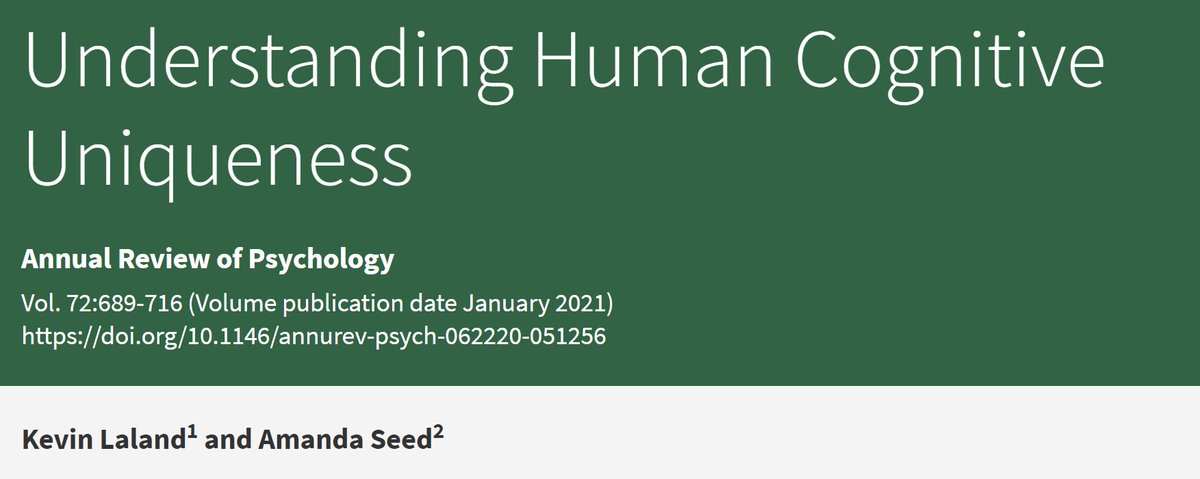
Understanding human cognitive uniqueness annualreviews.org/doi/10.1146/an… 👉there are no individual traits present in humans and absent in other animals that explain our species’ superior performance 👉our proficiency arises through interactions and reinforcement between cognitive domains
What is folk psychology anyway? Evan Westra, Shannon Spaulding, and I try to finally explain in our introduction to the special issue we edited for Synthese on Pluralistic Folk Psychology. link.springer.com/article/10.100…

How to Study Animal Minds, where I argue scientists should presume animal consciousness, form relationships with the animals they study (even bees, yes), and focus on balancing biases rather than eliminating them, is available to read free until July 28. bit.ly/3hbhkyd

phylogenetic & neural origins of human social cognition v exciting to see an independent team successfully adapt our ape eye-tracking paradigms to provide the first evidence that monkeys can anticipate the behavior of an actor with a false belief! sciencedirect.com/science/articl… 1/5
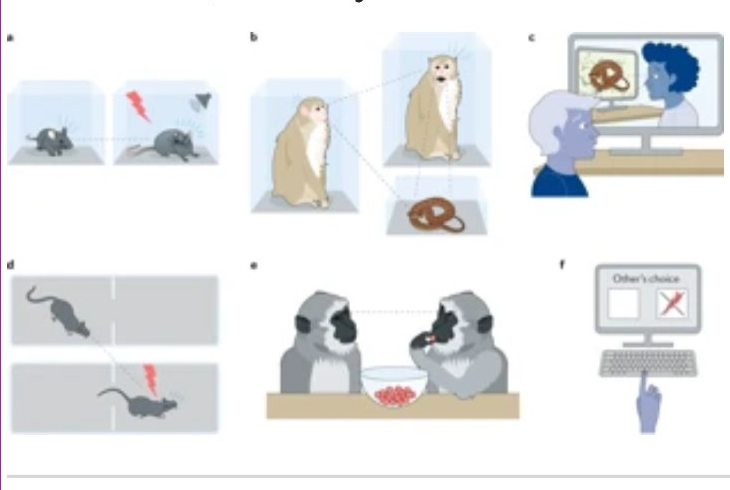
The neural systems of social learning (= crucially involved in cultural evolution) 👉follows the same principles as self-experienced value-based learning 👉implemented in circuits activated across task domains + regions processing social information nature.com/articles/s4158…
Last week’s most read! Dedicated to all the rats I’ve worked with.

They are sentient beings with rich emotional lives, yet we subject them to experimental cruelty without conscience. Why? Last week’s most read: ow.ly/vRDN50yKxk2
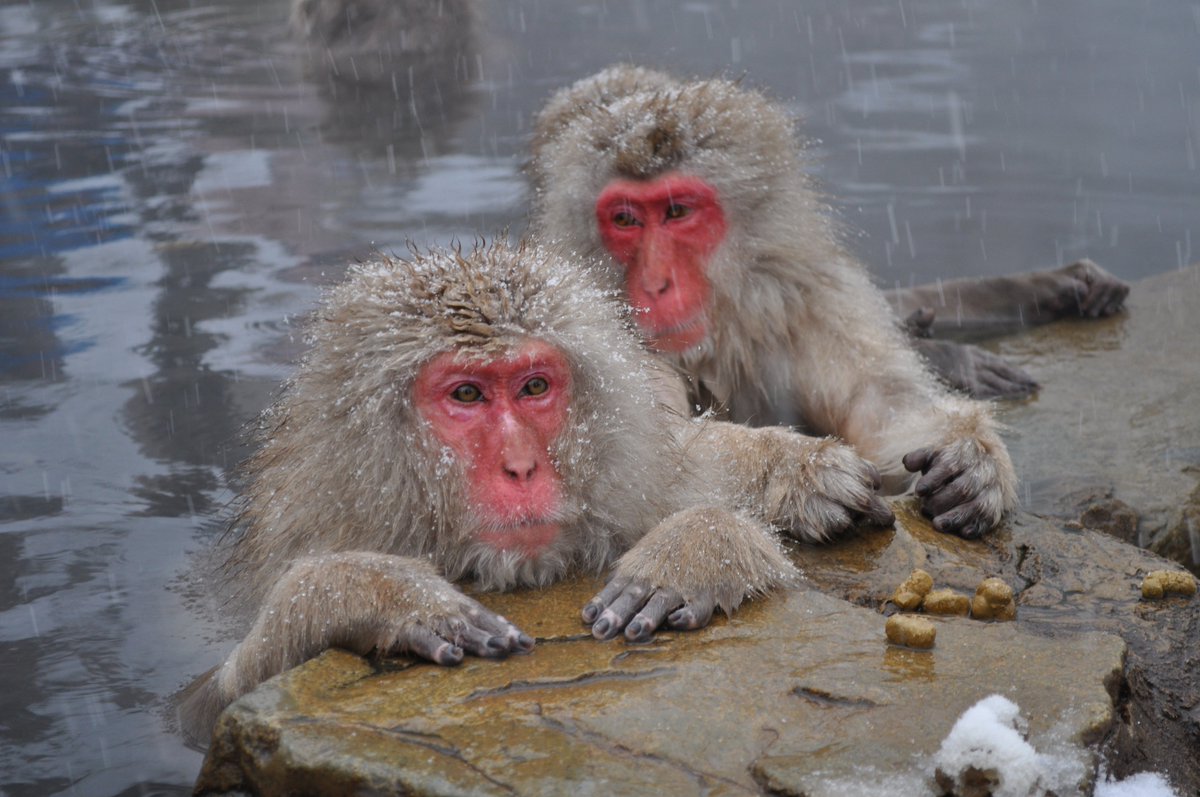
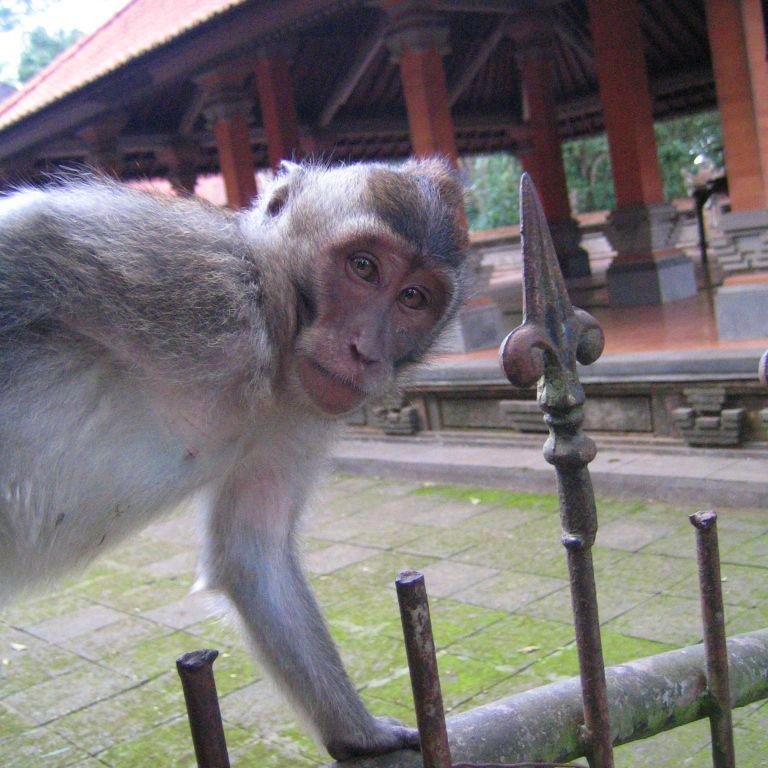
Macaques at Uluwatu Temple in Bali steal inedible objects from visitors, and exchange them for food with temple staff. The expression of robbing & bartering is socially influenced, supporting the cultural nature of this behaviour in the Uluwatu macaques. link.springer.com/article/10.100…

Do apes have theory of mind? Clever experiments are suggestive, but alternative explanations still remain. Imagine we applied such rigorous scrutiny to human psych data as we do to studies of animal cognition? Few of our wild explanations would hold up. theatlantic.com/science/archiv…

With an all new chapter “Belief and Representation in Nonhuman Animals” coauthored with Sarah Beth Lesson and @bmt8909

Ten years ago we published the first edition, ten years later it's all grown up, with six new chapters. Big shout out to @johnfsymons and Paco Calvo who were there when it was a baby, Sarah Robins for making the sequel happen @Routledge_Phil @ku_philosophy routledge.com/The-Routledge-…



Thanks for people pointing me to this. I just read it. Excellent study! Clear evidence for social learning (as long assumed). Evidence also for what we called "step-wise traditions" in 2009 (Tennie et al., in Phil Trans; where we distinguished this from cumulative culture).
Ten years ago we published the first edition, ten years later it's all grown up, with six new chapters. Big shout out to @johnfsymons and Paco Calvo who were there when it was a baby, Sarah Robins for making the sequel happen @Routledge_Phil @ku_philosophy routledge.com/The-Routledge-…

The loss of an animal isn’t just the loss of its body. It's also the death of the knowledge in its brain--and that is not easily replaced. theatlantic.com/science/archiv…

Check out my latest post on Brainwandering Blog! 'Are Captive Primates Robbed of their Culture?' brainwandering.wordpress.com/2018/09/04/are…

How can you state evidence for individual differences in cognitive tasks? In press at Psychonomic Bulletin and Review (with @JeffRouder): Some do and some don’t? Accounting for variability of individual difference structures. Preprint: psyarxiv.com/zwjtp.

Cf. @OliverWithAnI's review of Cognitive Gadgets: docs.google.com/viewer?a=v&pid…
Philosophers should read our new #PhilTransB paper bc it reviews the fundamental challenges that come with measuring cognitive abilities and how they factor into discussions of the evolution of cognition
Ten years ago we published the first edition, ten years later it's all grown up, with six new chapters. Big shout out to @johnfsymons and Paco Calvo who were there when it was a baby, Sarah Robins for making the sequel happen @Routledge_Phil @ku_philosophy routledge.com/The-Routledge-…
Causes and Consequences of Individual Differences in Cognitive Abilities. Special Issue of Phil Trans @RSocPublishing edited by @NeeltjeBoogert @JMorandFerron @CornishJackdaws and Joah Madden Our intro is #OA rstb.royalsocietypublishing.org/content/373/17… Whole Issue rstb.royalsocietypublishing.org/content/373/17…































































































United States Trends
- 1. Ford N/A
- 2. #WWENXT N/A
- 3. Wemby N/A
- 4. Chet N/A
- 5. #TheRookie N/A
- 6. #kubball N/A
- 7. Peyton Watson N/A
- 8. Kansas N/A
- 9. Iowa State N/A
- 10. TJ Sabula N/A
- 11. Austin Swartz N/A
- 12. Dale Partridge N/A
- 13. #ThunderUp N/A
- 14. Seton Hall N/A
- 15. Rock Chalk N/A
- 16. Allen Fieldhouse N/A
- 17. Jaida Parker N/A
- 18. Weathers N/A
- 19. #RHOSLCReunion N/A
- 20. Jayhawks N/A





Something went wrong.
Something went wrong.